A termite warranty is a written promise from a pest control company about what it will do if termites come back after treatment. An annual renewal is how that promise continues past its first term. The two words get used loosely, and what they actually cover varies a great deal from one company to the next.
Most people first hear about a warranty right after treatment, and then a renewal notice shows up a year later. This guide explains the common warranty types, what Stewart’s own guarantee is, and the questions to ask so you know exactly what a renewal gets you. If you are still deciding on treatment itself, start with our overview of termite control for Pittsburgh area homes.
What a termite warranty is, and what it is not
A termite warranty, sometimes called a termite bond or termite guarantee, is a service agreement between you and the company that treated your home. It describes what happens if termite activity shows up again during the coverage period.
It is not homeowners insurance, and it does not work like a product warranty that replaces something broken. Its value depends entirely on the written terms, which is why two warranties with the same name can mean very different things.
Retreatment and repair warranties: the two industry terms
Across the pest control industry, termite warranties generally fall into two broad types. These are general terms you will see when comparing companies, not a description of any one company’s contract.
- Retreatment warranty. If termite activity returns during the coverage period, the company comes back and treats again. It covers the treatment, not the damage.
- Repair warranty. Some companies offer agreements that may also pay toward repairing damage caused by new activity, usually with limits, exclusions and conditions.
The two can sound alike in a quick conversation, so ask directly which type you are being offered, and read the written terms before you sign.
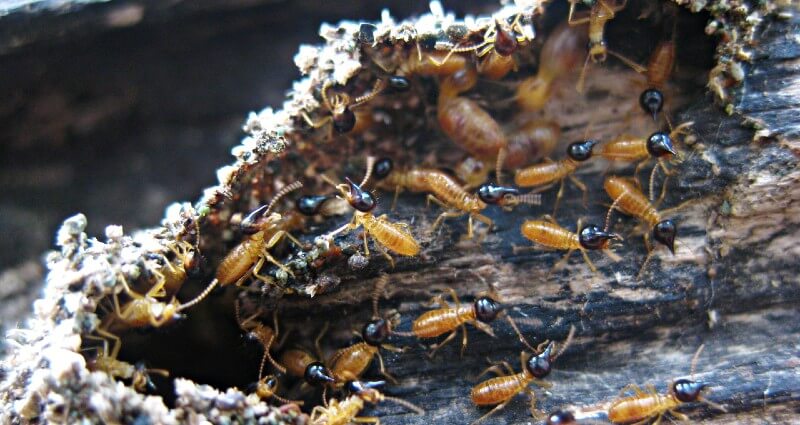
Soldiers and workers on damaged wood. A warranty is about what happens if live activity like this returns.
It also helps to know who handles damage. Stewart treats termites; if damaged wood is ever found, the repair itself is a job for a contractor, separate from the treatment.
How Stewart’s termite guarantee works
Stewart’s termite treatment, whether liquid treatment or bait stations, is guaranteed for one year. After that first year, renewals are offered.
Renewal terms are something to go over with Stewart directly. Before you renew, ask what your renewal covers, how long it runs, and what you need to do on your end to keep it in good standing. Getting those answers in writing is good practice with any company. If you are still choosing a method, our post on how liquid treatment and bait stations work explains both.
The key takeaway: the name on the paperwork matters less than the terms. Know whether an agreement covers retreatment, repairs or both, and ask exactly what a renewal includes before you pay for one.
Questions to ask about any renewal
Renewal offers differ between companies. Rather than assume what one includes, ask. These questions work whether you are reviewing a renewal notice or comparing companies before treatment:
- Does the renewal include an inspection, and if so, which parts of the house does it cover?
- Will I get the findings in writing?
- If activity returns, is retreatment included, or is it billed separately?
- Does the agreement cover any repairs, or treatment only?
- Which parts of the structure are covered? Are additions, porches or a detached garage included?
- What are my responsibilities as the homeowner?
- What happens if I miss the renewal date?
- Does the coverage transfer if I sell the house?
A reputable company answers these clearly and does not rush you. Our list of questions to ask a termite company before signing a contract covers the treatment side too.
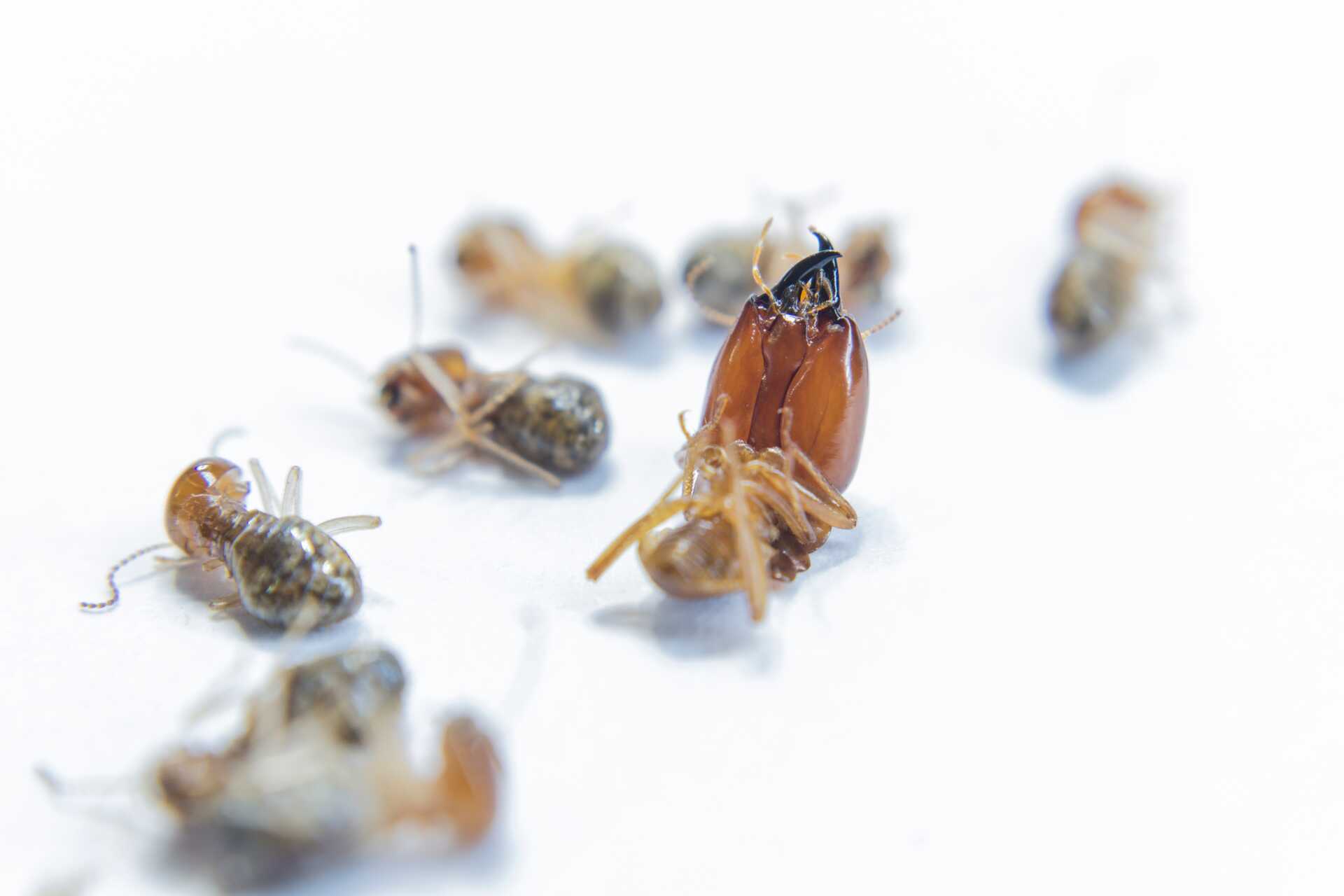
Eastern subterranean termites, the species established in Pennsylvania. They rarely show themselves in the open.
Why ongoing attention matters here

The eastern subterranean termite lives underground and travels through mud tubes. It feeds on wood from the inside, so the surface often looks normal for a long time. That is the main reason a single treatment followed by years of nobody looking is a risk.
Conditions around a house also change. Soil shifts, foundations settle, a new porch goes on, mulch gets piled higher each spring. Any of those can open a new path from the soil to the wood. Professional eyes on the areas homeowners rarely check, like foundation walls, sill plates and crawl spaces, are how changes get caught early.
Worker termites feed inside wood, which is why a board can look sound on the surface while it is being eaten.
Western Pennsylvania adds a few local pressures. Wet springs and humid summers keep soil damp. Hillside lots send water toward foundations. Many neighborhoods have older stone, block or brick foundations with decades of settling, and freezing and thawing slowly widens small gaps in masonry each winter. Termite swarms here usually appear in spring, which surprises homeowners who assumed they were in the clear. To see what is at stake when activity goes unnoticed, read how much termite damage really costs Pittsburgh homeowners.
What happens if coverage lapses
When a guarantee or renewal ends, so does whatever it covered. If termites show up afterward, you are generally looking at a new inspection and a new treatment decision, rather than a covered response. Depending on the company, getting coverage back may not be as simple as paying late.
The bigger risk is time. A lapse does not cause termites, but it can remove the regular check that would catch them early. By the time swarmers appear on a windowsill or a floor feels soft, a colony may have been feeding for a long while. Ask your provider what reinstatement involves before you let a renewal date pass.
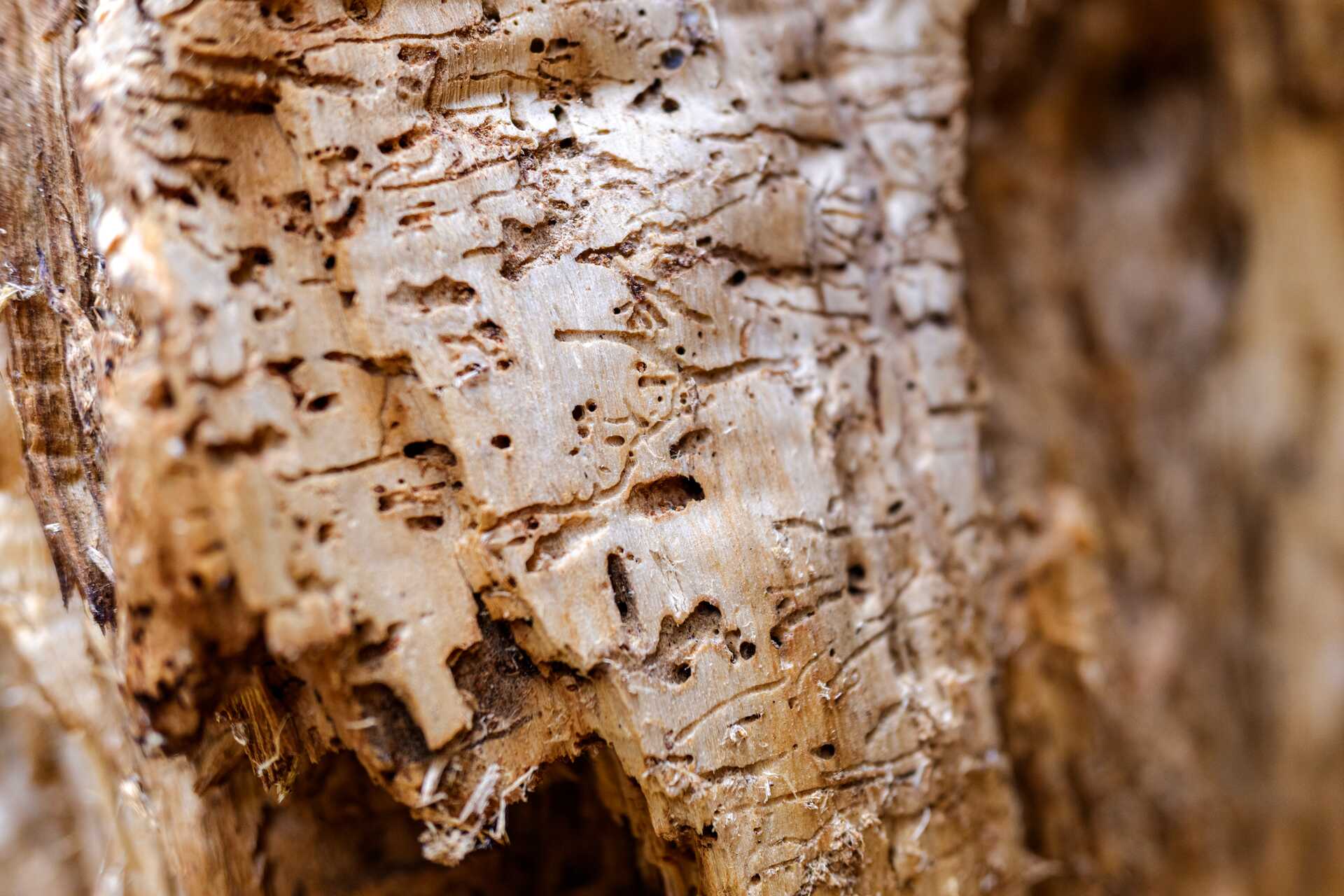
Wood riddled with tunnels. Damage like this builds quietly when no one is checking.
Warranties and home sales
A record of professional termite treatment can be useful when you sell. Buyers, their inspectors and lenders often ask about termite history, and paperwork showing when the house was treated and inspected answers those questions more clearly than “we never noticed anything.” If you expect to sell, ask whether your coverage transfers to a new owner and what the buyer would need to do to keep it.
Is a warranty the same as insurance?
No. Most standard homeowners insurance policies exclude termite damage, generally treating it as a maintenance issue. A termite warranty is a service agreement with your pest control company, not an insurance policy. Check your own policy with your agent, and see our post on whether home insurance covers pest control for the general picture.
How to keep your protection working
Whatever your agreement says, a few habits make any termite treatment work better:
- Keep gutters clean and make sure downspouts carry water away from the foundation
- Fix leaking outdoor faucets and deal with basement dampness quickly
- Keep firewood, lumber and cardboard off the ground and away from the house
- Keep mulch low and pulled back from the foundation
- Call your termite provider before finishing a basement, adding a deck or regrading the yard, since construction can disturb treated soil
- Put your renewal date on the calendar so coverage does not lapse by accident
If you have never had termites and are wondering whether protection is worth it at all, our post do you need termite treatment if you do not see termites covers that question.
Stewart Termite & Pest Control has treated Pittsburgh homes for termites since 1987. Treatment is guaranteed for one year, renewals are offered after that, and termite inspections are free for homeowners. Call 412-822-7610 or visit our termite control page to ask about coverage or schedule an inspection.
Frequently Asked Questions
How long is Stewart’s termite treatment guaranteed?
One year, for both liquid treatment and bait stations. Renewals are offered after the first year. Ask Stewart what your renewal covers before you renew.
What is the difference between a retreatment warranty and a repair warranty?
These are general industry terms. A retreatment warranty means the company treats again if activity returns. A repair warranty may also pay toward damage from new activity, usually with limits. Always ask which type you are getting.
Does Stewart repair termite damage?
No. Stewart treats termites and does not do structural or carpentry repairs. Damage repair is a separate job for a contractor.
Does renewing mean my house gets treated again every year?
Not necessarily, and terms vary by company. Ask your provider what the renewal includes and when additional treatment would be done.