
Most homeowners only picture the end result of termite treatment: termites gone, house protected. What actually happens in between is a fairly predictable sequence of steps, and knowing it ahead of time makes the day go smoother. This post walks through a typical professional termite treatment from the first inspection to the follow up afterward.
It covers what the inspection is looking for, how trenching and drilling work for a liquid treatment, how bait stations go in, what you need to do before and after, and how long each part tends to take. If you are still deciding between the two methods, our comparison of termite bait stations vs liquid treatment covers that question on its own.
Step one: the inspection sets the plan
Nothing gets drilled or dug until someone has looked at the whole house. The inspection decides where the treatment goes, which method fits, and how much of the foundation needs attention. In the Pittsburgh area the target is almost always the eastern subterranean termite, which lives in the soil and comes up into the structure through cracks, voids and wood that touches the ground.
The inspector is building a map of the problem. Typical findings that shape the plan include:
- Mud tubes on basement walls, piers or sill plates, and where they lead
- Damaged or hollow wood, and whether termites are still in it
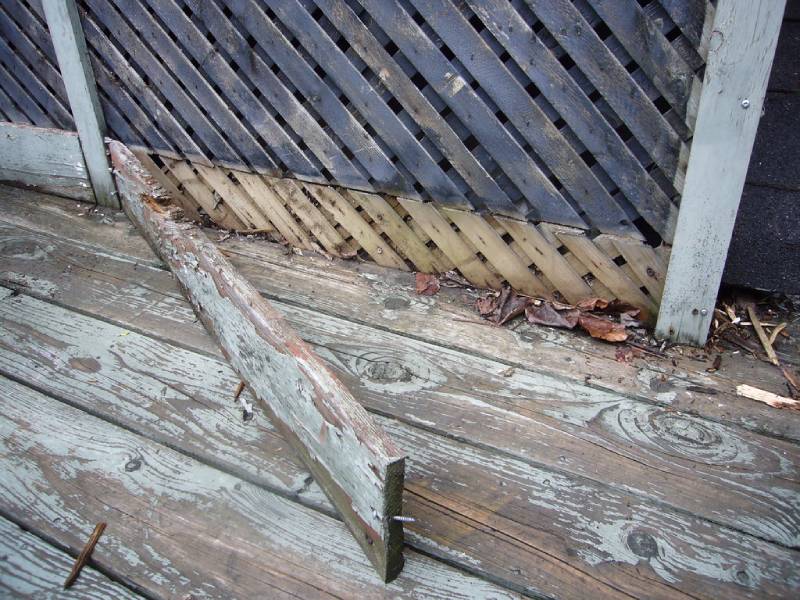
- Wood to soil contact at porches, decks, steps and lattice
- Concrete that covers the soil next to the house, such as a garage slab, patio or front stoop
- Hollow block or stone foundation walls with voids inside
- Damp soil from gutters, downspouts or grading that sends water toward the house
Wood sitting directly on soil, like this deck board and lattice, is one of the first things an inspector notes because it gives subterranean termites a hidden bridge into the house.
Termite inspections are free for homeowners with Stewart. If you want the full picture of that first visit, what happens during a termite inspection goes room by room.
Before treatment day: what the homeowner does
Preparation is light, but it matters, because the technician needs to reach the foundation inside and out. A little clearing ahead of time means more of the visit goes to treating instead of moving things.
- Pull stored boxes, shelving and furniture a couple of feet away from basement and garage walls
- Clear access to the crawl space entrance and any utility room where pipes come through the floor
- Move planters, firewood, trash cans and stored items away from the outside of the foundation
- Point out finished basement walls, built in bookcases or anything covering the foundation, since those areas need a different approach
- Tell the technician about wells, cisterns, springs, sump pits or French drains on the property
- Mention any recent swarm, even a handful of wings on a window sill, and where you saw it
- Plan to keep pets and children away from the work area while the technician is treating
You do not need to leave the house for a typical treatment. Most of the work happens outside and along basement walls, and the technician can tell you which areas to stay out of and for how long.
Step two: trenching along the foundation
For a liquid treatment, the outside work usually starts with a narrow trench dug along the foundation where soil meets the wall. The termiticide is applied to the soil in that trench, and the soil is put back as it is treated. The goal is a continuous treated zone, with no gaps a foraging termite could slip through.
The termiticides commonly used by professionals today are designed so termites do not detect them. Instead of steering around the treated soil, termites move into it and pick up the product, then pass it to other termites through grooming and feeding. That is why a good liquid treatment both protects the structure and reduces the population that was feeding on it.
Mulch beds and plantings along the foundation may need to be pulled back for the trench. Shrubs usually stay where they are, and the trench is worked around their roots.
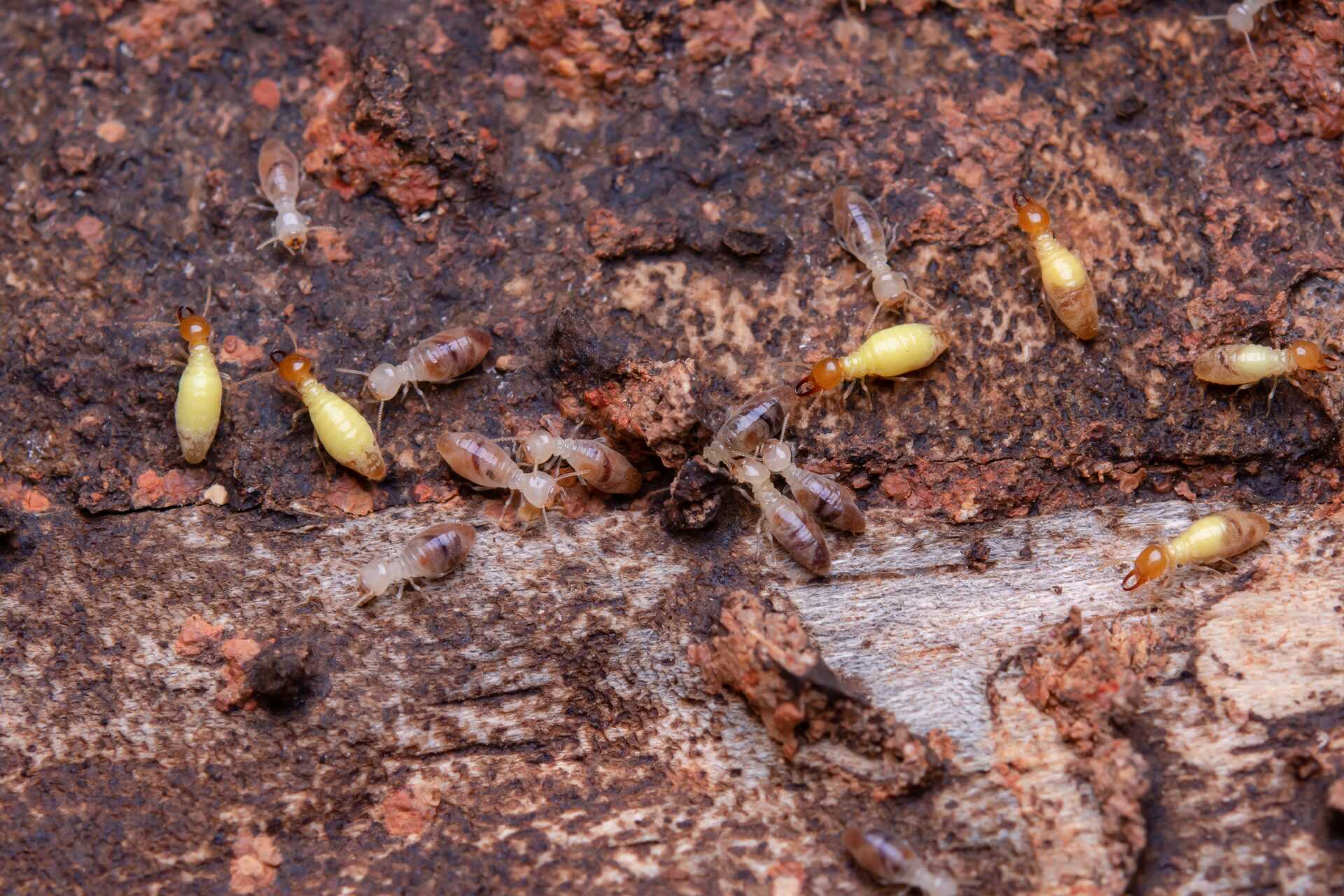
Subterranean termites travel through the soil at the base of a structure, which is exactly the zone a liquid treatment is designed to cover.
Step three: drilling where concrete covers the soil
Termites do not need open soil to reach a house. They travel under porches, garage slabs, patios, walkways and basement floors, and they use expansion joints and cracks to come up through the concrete. Where concrete sits over the soil next to or inside the foundation, the technician drills small holes through it and injects the termiticide into the soil underneath.
Drill holes are typically spaced at regular intervals along the treated line so the treated soil underneath connects into one zone. The holes are small and are usually filled afterward, though they can still be visible on close inspection.
Block and stone foundation walls
Many Pittsburgh homes sit on hollow concrete block or old stone foundations. Termites can travel inside the voids of a block wall without ever showing on the surface. On these homes, treatment may include drilling into the block itself to reach those voids. Stone and rubble foundations are harder, because the gaps are irregular, which is one reason an older home sometimes calls for a combined plan rather than liquid alone.
The inspection drives everything. Trench length, how much drilling, whether wall voids get treated and whether bait stations make sense are all decided by what the inspector found, not by a standard package.
Step four: installing bait stations
When bait stations are part of the plan, installation is the quiet part of the day. Each station is a small cylinder set into the ground so its cap sits about level with the soil. The stations go in at intervals around the outside of the home, with closer spacing near areas of known activity, conducive conditions or past damage.
- A hole is bored into the soil with an auger or similar tool
- The station is set in place with its monitoring material or bait inside
- The cap is fitted so it sits low enough for a lawn mower to pass over
- Station locations are recorded so the same ones are checked every time
Bait stations work through the colony rather than at the wall. Worker termites find the station, feed on the bait and share it back at the colony, where it disrupts their growth. That takes time, usually weeks to months, so a station is only as good as the monitoring that follows it.
How long treatment day takes
There is no single number, because the size of the house and the amount of concrete drive the time more than anything else. A home with open soil all the way around and an unfinished basement moves quickly. A home with an attached garage, a long front porch, a patio and block walls takes longer because of the drilling.
| Part of the job | What affects the time |
|---|---|
| Trenching and soil treatment | Length of the foundation, plantings, hard or rocky soil |
| Drilling through concrete | Garage slabs, porches, patios, basement floor along the walls |
| Block wall voids | How much of the foundation is hollow block |
| Bait station install | Number of stations and how hard the ground is |
Ask for an estimate of how long your specific job will take when the plan is explained. Whoever is doing the work should be able to give you a realistic answer once they have seen the house.
After treatment: what the homeowner does
Once the technician leaves, your part is mostly about not undoing the work. The treated soil along the foundation is doing its job as long as it stays where it was put.
- Avoid digging, regrading or planting new beds right along the foundation without asking first
- Leave bait stations in place and do not open them or move them
- Keep gutters clear and downspouts pointed away from the house
- Keep mulch thin against the foundation and firewood off the ground and away from the walls
- Fix leaks in the basement and crawl space so wood near the foundation stays dry
- Write down the date and where you see any new mud tubes or swarmers
If you are planning a new deck, patio or addition, mention it before work starts. New construction against the foundation can break the treated zone.
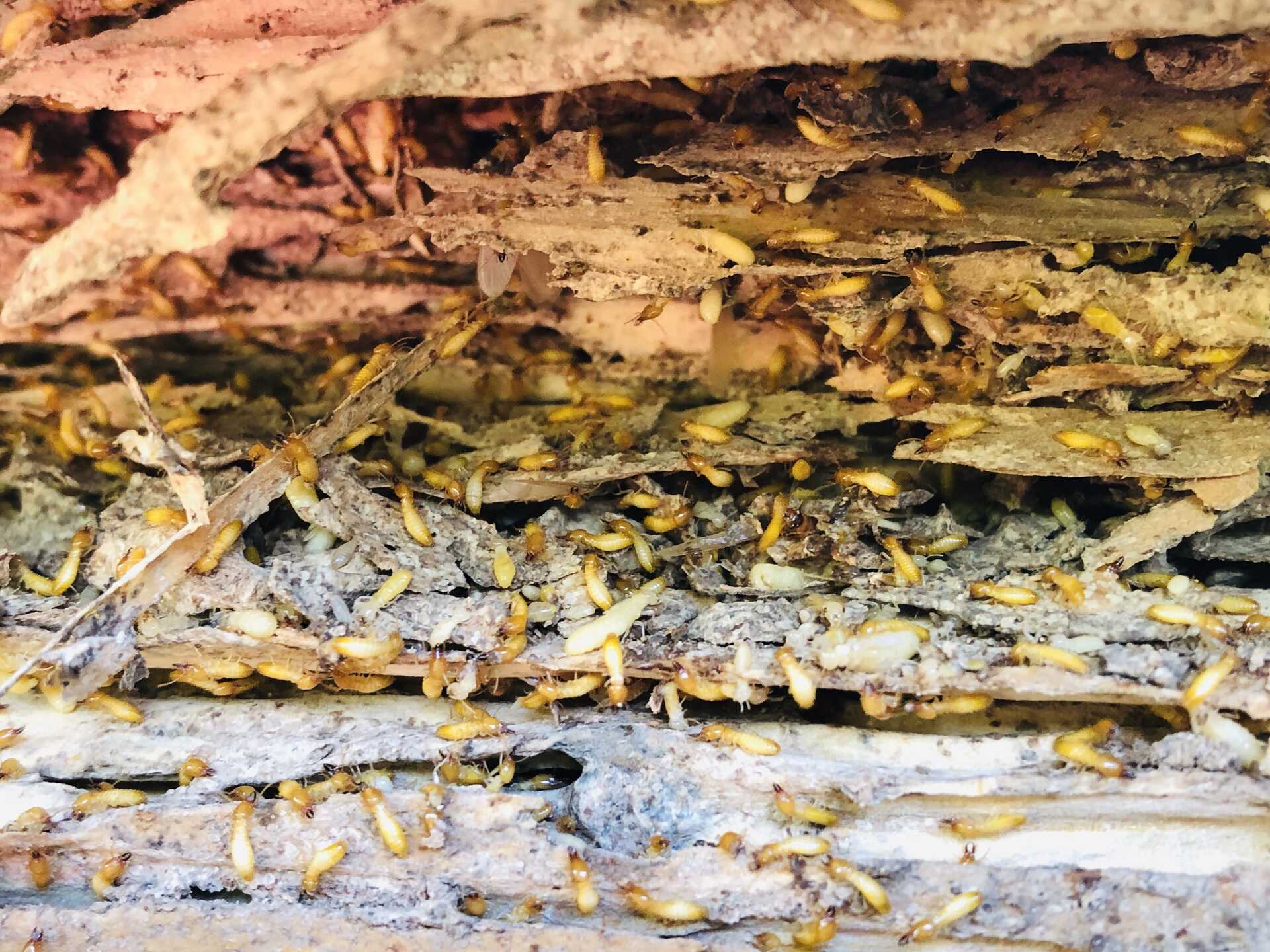
Subterranean termites favor damp, layered wood, so drainage and moisture control after treatment help keep the house unattractive to them.
Is it normal to see termites after treatment?
It can be. Termites already inside the wood may stay active for a while before the treatment reaches them, and a mature colony can still produce a swarm in the first season after treatment. Seeing activity after treatment does not automatically mean the treatment failed, but it is always worth reporting. The person who treated the house should come back and look rather than guess over the phone.
Step five: follow up
Treatment day is not the end. With a liquid treatment, follow up means checking that activity has stopped and looking for new entry points as the house settles and concrete cracks over time. With bait stations, follow up is the treatment itself: the stations have to be checked and the bait kept in place for the system to work.
Stewart guarantees termite treatment, liquid or bait, for one year. Renewals are available after the first year. Ask exactly what your renewal covers, how often the property will be checked, and what happens if termites come back.
Damaged wood is a separate question from treatment. Treatment stops termites; it does not restore wood they already ate. If the inspection found damage, have it evaluated by a contractor once activity is under control.
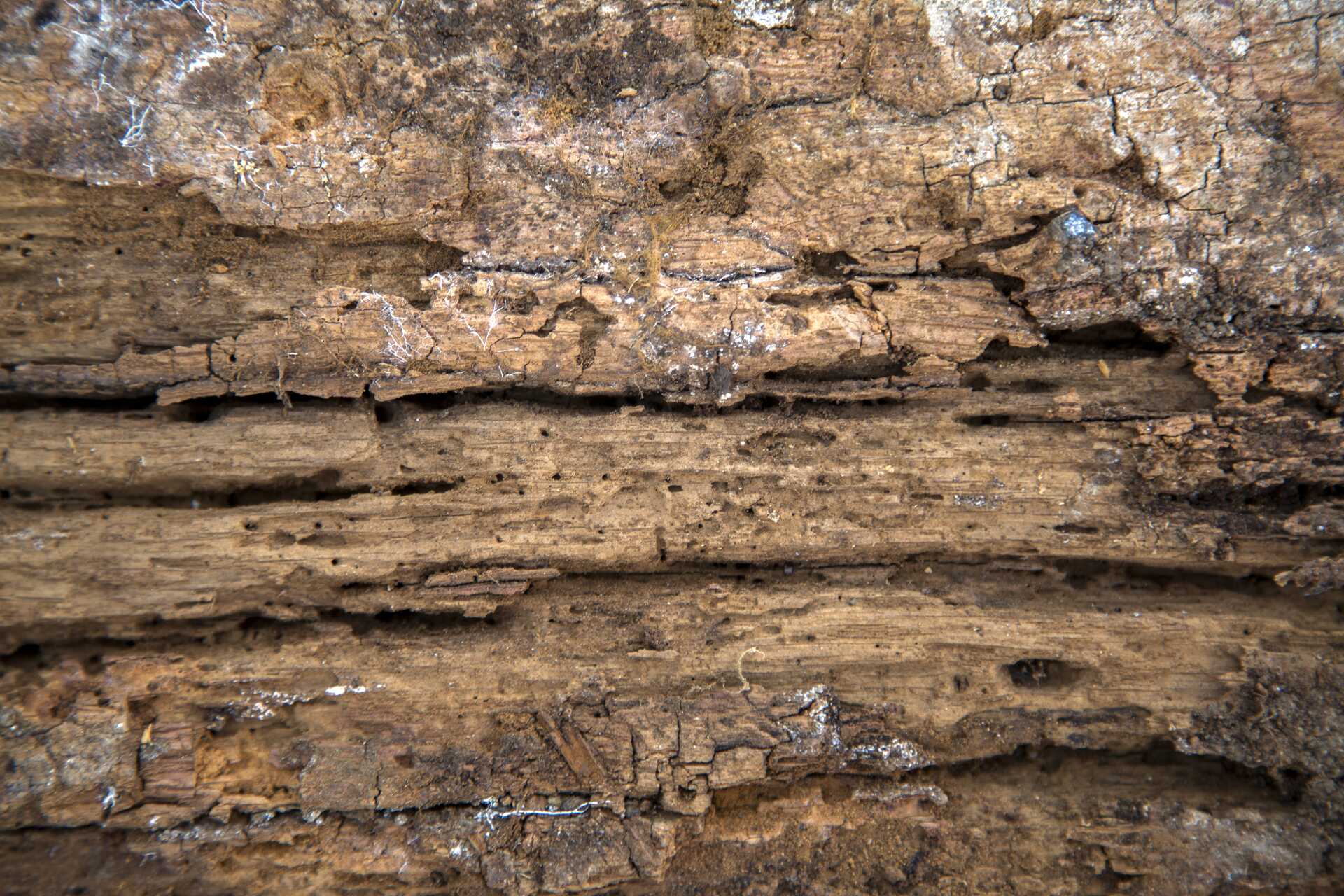
Termites eat the soft growth rings first and leave the harder grain, so damaged wood can look solid on the surface while it is hollow inside.
Before you sign anything, our list of what to ask a termite company before signing a contract covers the questions worth asking about follow up and guarantees.
Stewart Termite & Pest Control has treated Pittsburgh homes for termites since 1987 with both liquid treatment and bait stations, and termite inspections are free for homeowners. Call 412-822-7610 or visit our termite control page to schedule an inspection.
Frequently Asked Questions
Do I have to leave the house during termite treatment?
Usually not. Most of the work is outside and along basement walls. Keep pets and children away from the areas being treated, and ask the technician which spaces to avoid and for how long.
Why do they drill holes in my garage floor or porch?
Termites travel through the soil under concrete. Drilling small holes lets the termiticide reach that soil so the treated zone stays continuous around the house.
How should I prepare for termite treatment?
Move stored items away from basement and garage walls, clear the outside of the foundation, open access to the crawl space, and tell the technician about wells, sump pits or finished walls.
What happens after the treatment visit?
Avoid digging along the foundation, leave bait stations alone, keep water away from the house, and report any new mud tubes or swarmers so they can be checked.