Liquid treatment and bait stations both stop subterranean termites, but they get there in very different ways. One builds a treated zone in the soil around the house. The other uses the termites themselves to carry bait back to the colony. Neither is automatically better, and the right termite control plan depends on the house, the soil and how active the termites are.
This post is about choosing between them: where each method fits, the honest pros and cons of each, and when a combined approach makes sense. If you want to know what the technician physically does on the day, see what happens on termite treatment day.
The short version
| Liquid treatment | Bait stations | |
|---|---|---|
| How it works | Treated soil zone around and under the foundation | Termites feed on bait and share it through the colony |
| Speed | Starts working as soon as it is applied | Gradual, usually weeks to months |
| Disruption | Trenching and drilling through concrete | Small stations set into the soil |
| Ongoing visits | Checks for new activity and entry points | Regular monitoring is required for it to work |
| Best fit | Active infestation with access to the foundation soil | Hard to drill homes, sensitive sites, long term monitoring |
Why the choice matters around Pittsburgh
The termite in question here is the eastern subterranean termite. Colonies live in the soil and reach houses through foundation cracks, hollow block walls, gaps around pipes and any wood that touches the ground. Drywood termites are not established in Pennsylvania, so local treatment decisions are about soil and foundations.
The local housing stock is what makes the choice interesting. A lot of homes in Allegheny County are decades old, built on stone, brick or block foundations, often with attached garages, front porches, patios and finished basements added later. Hillside lots and clay soil keep the ground damp against the walls. Each of those details pushes the decision one way or the other.
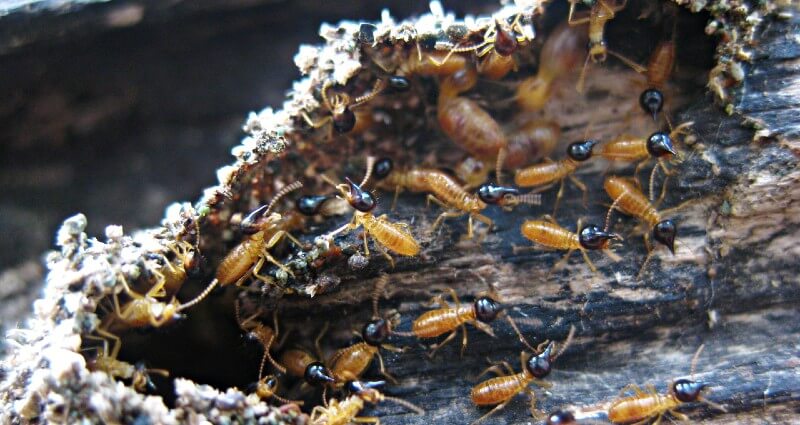
Soldiers and workers on damaged wood mean an established colony is feeding, which usually calls for the faster of the two methods.
When liquid treatment fits best
Liquid treatment is usually the first choice when termites are already active in the structure and the soil around the foundation can be reached. It protects the house as soon as it is in place and does not depend on termites finding anything.
- Active termites or fresh mud tubes inside the house
- Unfinished basements or open crawl spaces where the foundation is easy to reach
- Open soil along most of the foundation, with limited concrete to drill
- A heavy infestation where waiting weeks for a colony to decline is not acceptable
Pros of liquid treatment
- Fast. Protection starts the day it is applied
- Continuous. A properly applied zone covers the whole perimeter, not just the spots where stations sit
- Works on both fronts. Modern termiticides are made so termites do not sense them, so termites that pass through pick up the product and share it with others
Cons of liquid treatment
- More invasive. Trenching disturbs beds, and drilling leaves small filled holes in slabs, porches and garage floors
- Harder on some foundations. Rubble and fieldstone walls, additions on different footers and finished basement walls make even coverage difficult
- Limited near water. Wells, cisterns, springs and some drainage features restrict where soil treatment can go
- Can be broken later. New patios, regrading or planting along the foundation can disturb the treated soil
When bait stations fit best
Bait stations make the most sense when drilling and trenching would be difficult or restricted, or when the goal is to watch for activity over the long term. They work by attraction rather than by blocking.
- Homes with wells, cisterns, springs or streams close to the foundation
- Finished basements, extensive hardscaping or foundations that are hard to drill
- Homeowners who want as little disturbance to the house and yard as possible
- Ongoing monitoring after an infestation has been brought under control
Worker termites forage widely through the soil. When they find a station, they feed on the bait and share it as they feed other members of the colony.
Worker termites feeding on wood. Baiting depends on these foragers finding a station and carrying the bait home.

Pros of bait stations
- Low disruption. No trench along the beds and no drilling through the patio or garage floor
- Targets the colony. The bait reaches the population that may live well away from the house
- Useful where soil treatment is restricted, such as near a well
- Doubles as an early warning system once activity is gone
Cons of bait stations
- Slow. Termites have to find the stations, and the colony declines over weeks to months, depending on season and activity
- Depends on monitoring. A station nobody checks, or one that has run out of bait, protects nothing
- No barrier at the wall. Termites already inside the structure may keep feeding until the colony declines
- Seasonal swings. Activity near the surface slows as the ground cools, so termites may take longer to find stations in late fall and winter
Liquid treatment trades disruption for speed. Bait stations trade speed for low disruption and ongoing monitoring. The right choice is the one whose tradeoff fits your house and the activity the inspection found.
How the bait actually reaches the colony
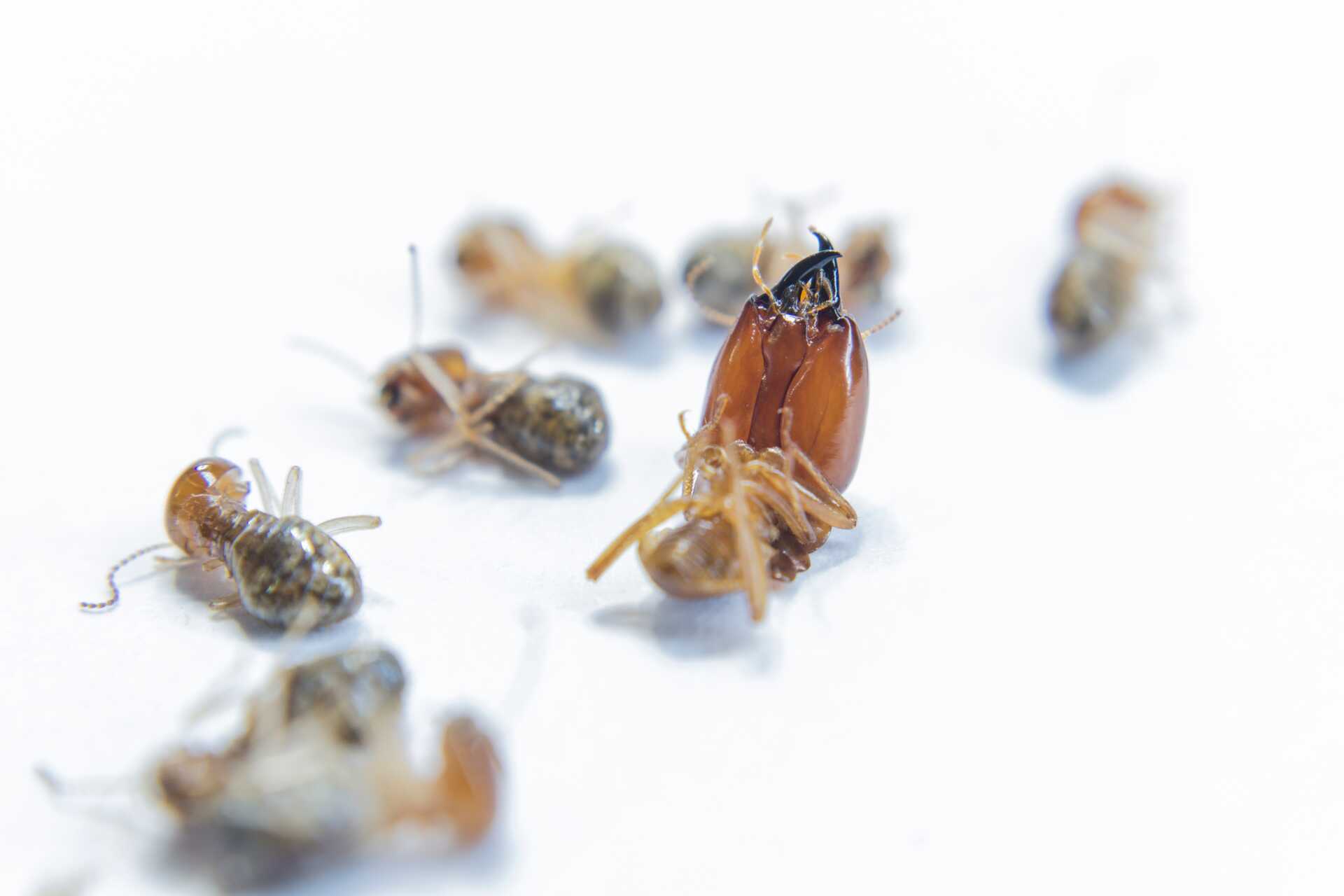
Most termite baits use an insect growth regulator, an ingredient that stops termites from molting properly. Because it works gradually, the workers who eat it live long enough to share it widely through the colony. Over time, termites that cannot molt die off, and the colony declines and eventually collapses.
That slow action is the whole point. A fast poison would kill the first termites at the station before they could spread it. The tradeoff is time, and it is why patience and regular checks are part of choosing bait.
Termites grow by molting, which is the step the active ingredient in most termite baits disrupts.
When a combined approach makes sense
Plenty of homes get both. Stewart uses liquid treatment and bait stations, and the two methods cover each other’s weak spots well.
- Liquid treatment where termites are active, with bait stations around the rest of the property
- Liquid treatment to stop a current infestation, then bait stations left in place to catch new activity early
- Bait stations along a section near a well or a finished wall where liquid is restricted, with liquid treatment elsewhere
Combining methods is especially common on homes with complicated construction, such as a stone foundation with a block addition, or a history of repeat activity.
What decides it for your house
No one should recommend a method before seeing the house. The decision comes from what the inspection finds, and these are the factors that usually tip it:
- Where the activity is, and whether termites are inside the structure now
- Foundation type: poured concrete, block, brick or stone
- How much concrete covers the soil next to the house
- Finished basement walls or other areas that cannot be reached
- Wells, springs, cisterns, sump pits and drainage near the foundation
- Landscaping and plans for new decks, patios or additions
A good contractor explains why they are suggesting one method over the other, instead of offering the same package to every house.
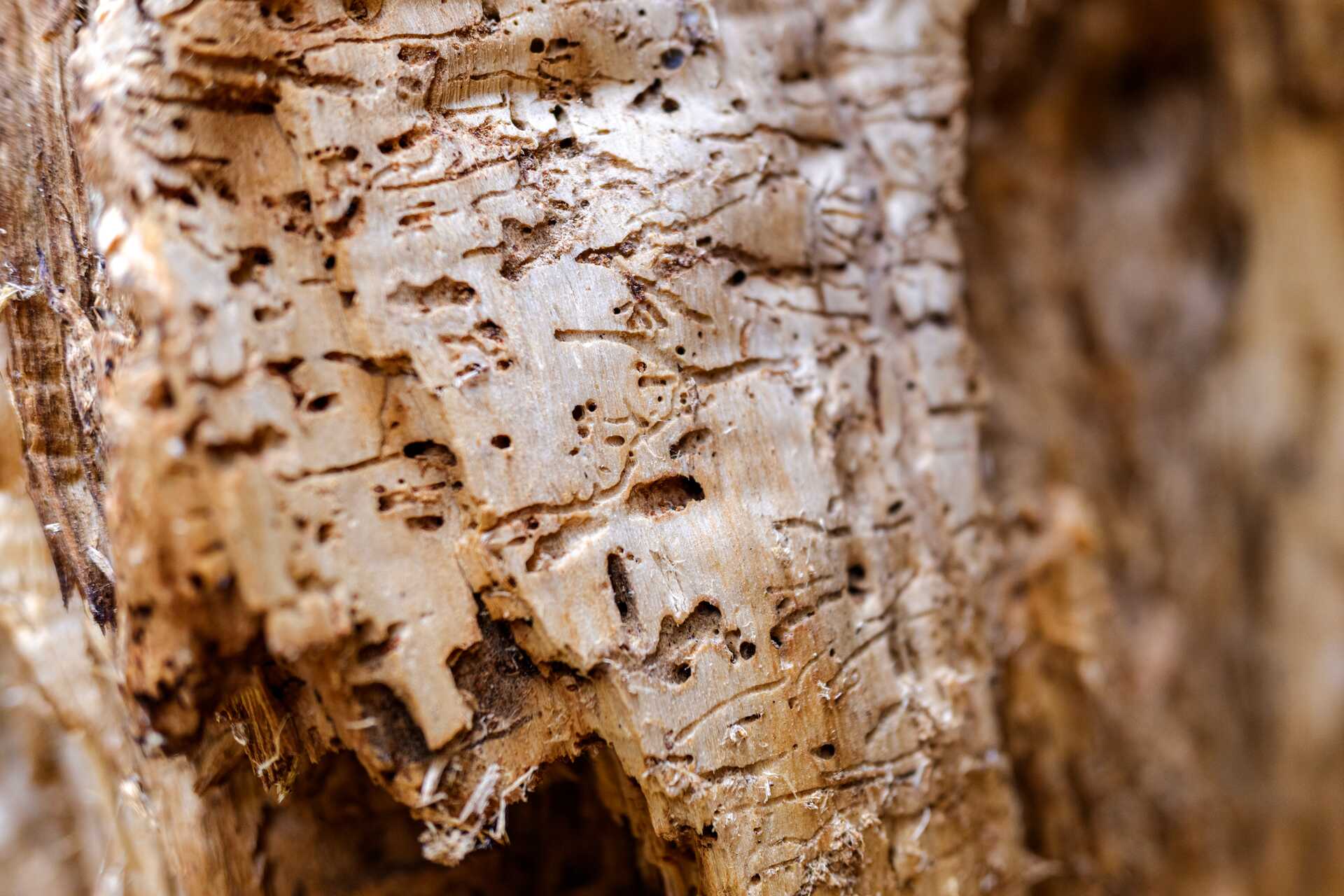
Tunnel damage like this often sits hidden inside wood, which is why the inspection, not a guess, should decide the method.
Guarantees and follow up for either method
Stewart guarantees termite treatment for one year, whether liquid or bait. Renewals are available after the first year, so ask exactly what your renewal covers and how often the property will be checked. Our post on what to ask a termite company before signing a contract has more questions worth raising.
Either way, the work does not stop at treatment. Keep gutters and downspouts sending water away from the house, keep wood off the soil and stored items away from foundation walls, and report new mud tubes or swarmers. Our guide to what attracts termites to a house covers the conditions to fix.
Stewart Termite & Pest Control has protected Pittsburgh homes from termites since 1987, using liquid treatment, bait stations or both. Termite inspections are free for homeowners. Call 412-822-7610 or visit our termite control page to schedule one.
Frequently Asked Questions
Are bait stations as effective as liquid treatment?
Both can work well. Liquid treatment protects the house faster, while bait stations work gradually through the colony and depend on regular monitoring. The better choice depends on the house and the activity found.
Which method is less disruptive?
Bait stations. They are small units set into the soil around the house, with no trenching along the beds and no drilling through concrete.
Can I have both liquid treatment and bait stations?
Yes. A common plan is liquid treatment where termites are active and bait stations around the rest of the property or as monitoring afterward.
Is liquid treatment safe near a well?
Soil treatment near wells, cisterns and springs is restricted, which is one of the main reasons bait stations are chosen for those parts of a property.