
Finding carpenter ants raises an immediate question that identification does not answer: is the structure actually being damaged, and how badly?
Foragers crossing a kitchen floor may be coming from a stump in the yard. The same ants may also be coming from a nest in a window header above them. The difference matters, and there are ways to tell without opening a wall. If the answer turns out to be yes, carpenter ant control addresses the nest and the moisture together.
Start with the debris

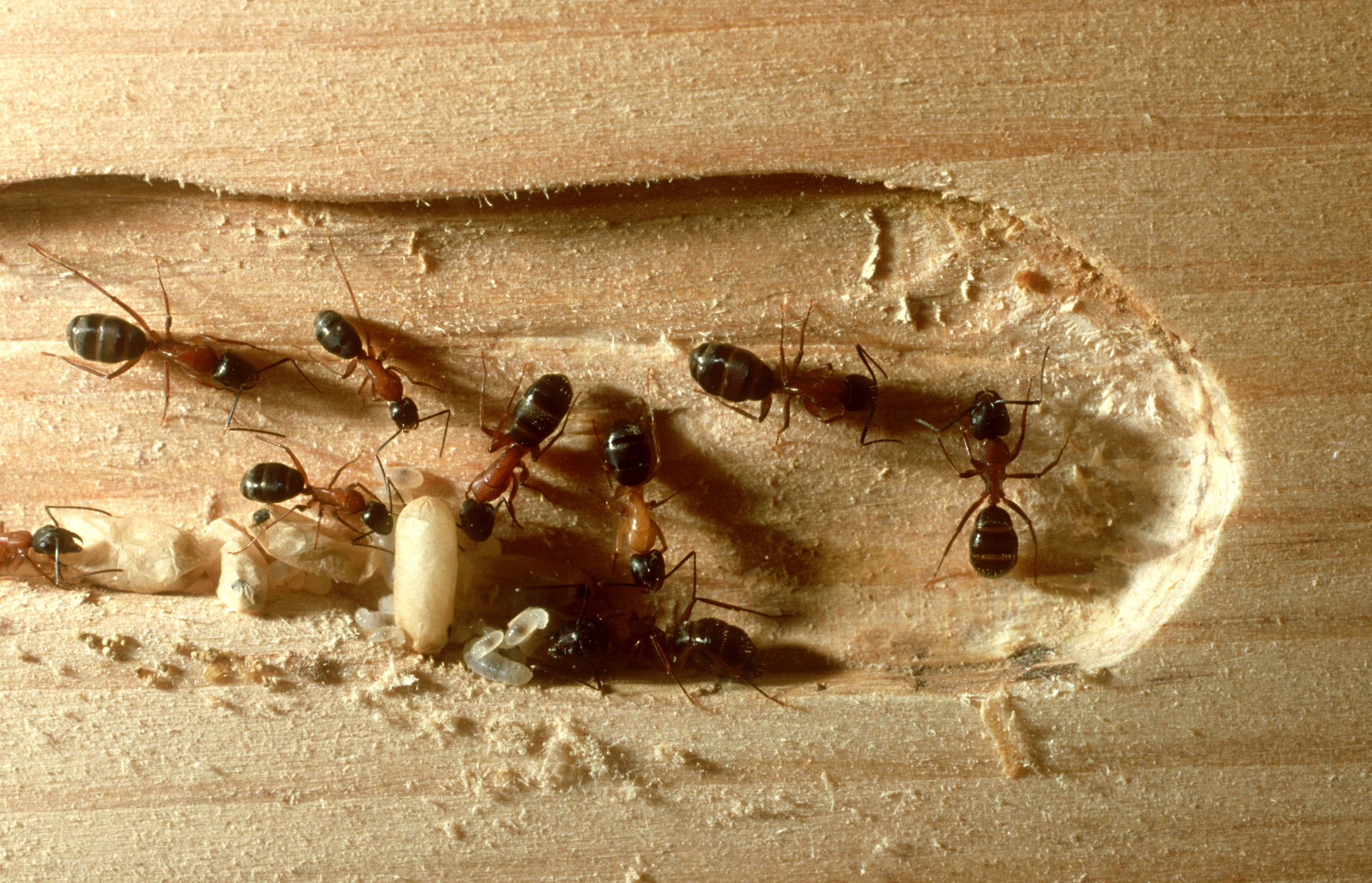
Carpenter ants excavate wood rather than eating it, and they push the waste out of the gallery. That waste, called frass, is the clearest evidence there is.
It looks like coarse sawdust or fine wood shavings, noticeably gritty rather than powdery, and it usually contains other material: fragments of insulation, dead ant parts and wings. That mixture is distinctive, and it separates frass from ordinary dust or drill shavings left by a tradesman.
It accumulates in a small pile or a fan shape below a slit, a crack or a small hole. Common spots are windowsills, the floor along an exterior wall, basement floors below the sill plate, behind or beneath furniture set against a wall, and the top of a basement beam.
Frass means the nest is in the structure, not in the yard. That is the finding that changes the answer.
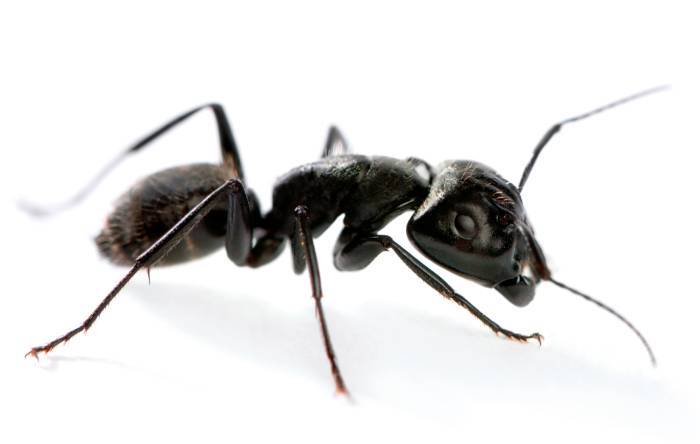
Large black ants on damp wood. Finding their frass indoors is what confirms a nest in the structure.
Sound and feel
Two low effort checks that are surprisingly informative.
Tapping. Run the handle of a screwdriver along suspect framing: a window header, a sill plate, a porch column, a basement beam, the trim below a known leak. Sound wood gives a solid, consistent note. A gallery behind the surface produces a hollow or papery sound, and the change from one to the other is usually obvious once you have heard it.
Probing. Press a screwdriver tip firmly into the same wood. Sound timber resists. Wood that has been excavated, or that has rotted enough to attract excavation, gives way, sometimes suddenly. Any spot where the tip sinks easily should be noted.
Listening. In a quiet room at night, a large colony in a wall void can produce a faint dry rustling, like paper being crumpled slowly. It is not loud, and it is not imagined.
What an active gallery looks like
If a section does get opened, carpenter ant galleries have a recognizable character. They are smooth and clean, almost sandpapered, following the softer spring growth of the wood. They contain no soil and no mud packing, which is the fastest way to distinguish them from termite work. And they are often damp, because the wood was damp before the ants chose it.
Termite galleries, by contrast, are packed with soil and fecal material and look dirty. Carpenter ants vs termites goes through the full comparison.
Follow the water
Rather than searching a whole house, search where water has been. Carpenter ants rarely start in dry, sound timber.
- Window and door headers below a failed seal, and sills under single pane glass that sweats
- Sill plates on a foundation wall that runs damp
- Porch columns and posts standing in water, and deck ledgers where flashing failed
- Roof framing and the deck beneath a slow leak, particularly near a chimney or valley
- Bathroom and kitchen subfloors near a long term drip
- Framing around a sweating pipe or a sump
Those six places are where most nests in a local home turn up.
Carpenter ants choose wood that moisture has already softened, so the leak marks the search area.
How serious is it
Honest answer: it depends on the colony’s age and where it is.
Carpenter ants work more slowly than termites because they are nesting rather than feeding. A young satellite nest in a window sill is a small repair. A mature colony that has been working a sill plate or a roof rafter for several years can remove enough material to matter structurally, and that is not rare in a house where a leak went unnoticed for a long time.
The two things that determine severity are how long the moisture problem has existed and whether the wood carries load. A damp decorative trim board is cosmetic. A damp sill plate or rafter is not.
What points to a mature, established colony
- Frass accumulating in more than one location
- Winged ants indoors, which only a mature colony produces
- Large numbers of workers rather than occasional singles
- Activity continuing through winter, which means the nest is inside a heated structure
- Audible rustling in a wall
- Wood that probes soft across a broad area rather than one spot
Any two of those together is worth a professional inspection rather than further investigation with a screwdriver.
What not to do
Two reflexes make assessment harder.
The first is spraying the opening where frass is appearing. Repellent product drives the colony to relocate within the structure, so the frass stops, the homeowner assumes it is resolved, and the nest continues somewhere less visible.
The second is cleaning up the frass and watching to see whether it returns. That is reasonable in principle, but it discards the evidence that locates the nest. Photograph it and note the exact spot before clearing it.
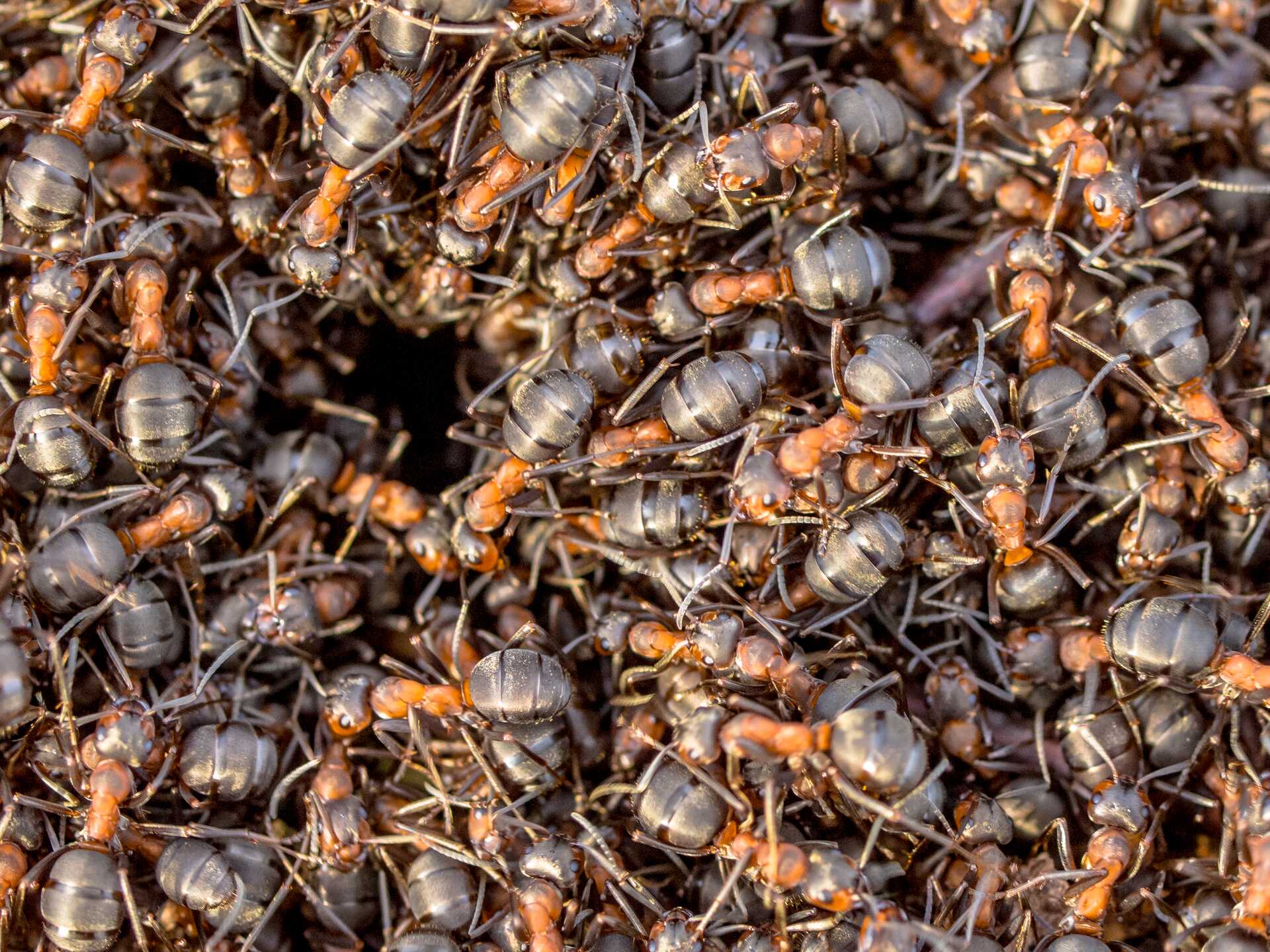
Spraying where ants gather scatters the colony and hides the nest.
Where the nest usually is relative to the frass
People find debris on a windowsill and open the wall directly behind it, which is often the wrong place.
Carpenter ants push frass out through the nearest convenient opening, and the gallery itself may run a foot or two in any direction from it, frequently upward. A pile on a basement floor can come from a sill plate well above it. Debris on a sill can come from the header above the window rather than the frame beside it.
The practical approach is to treat the frass as a marker for a general area, then work outward with the tapping and probing checks to find where the sound changes. That is also why treatment is more effective than demolition: material carried into the gallery reaches the colony wherever it actually sits.
The repair question
Treatment removes the colony. It does not restore wood, and it does not fix the leak that caused the whole thing. A complete job is three parts: eliminate the nest, correct the moisture source, then replace or reinforce any wood that has lost structural capacity.
Skipping the second part guarantees a repeat, usually within a year or two, because the conditions that attracted the first colony are still there. Why carpenter ants are so common here covers those conditions in detail.
Stewart Termite & Pest Control inspects for carpenter ant damage across the Pittsburgh area and has since 1987. Call 412-822-7610 or request an estimate online.
Frequently Asked Questions
How do I know if carpenter ants are damaging my house?
Look for frass, the coarse sawdust mixed with insulation and insect parts that collects below a small opening. Frass means an active nest in the structure rather than foragers from outside.
What does carpenter ant damage look like inside wood?
Smooth, clean galleries that follow the grain, with no soil or mud packing and often damp. Termite galleries by contrast are packed with soil and look dirty.
Can I check for damage myself?
Partly. Tapping framing with a screwdriver handle and listening for a hollow note, then probing for soft spots, finds most affected wood. Anything structural should be assessed properly.
How fast do carpenter ants damage a house?
More slowly than termites, because they nest rather than feed. A young satellite nest is a small repair; a colony that has worked a damp sill plate for years can affect structural capacity.
Does activity in winter mean something?
Yes. Ants active indoors through winter indicate a nest inside the heated structure rather than an outdoor colony foraging in.
Do I need to replace the wood after treatment?
Only where it has lost strength. Treatment removes the colony but does not restore wood or fix the leak, and both need addressing to prevent a repeat.