Two of the most common wood pests in Pittsburgh look similar at a glance and behave nothing alike. One eats the structure of the house. The other moves in because part of the house was already wet. Telling them apart changes how urgent the problem is and what the treatment looks like.
The short answer
Both are worth a professional visit, for different reasons, and a termite inspection is the usual starting point when nobody is sure which insect is involved. Termites consume structural wood and hollow it from the inside, which makes them expensive when ignored. Carpenter ants do not eat wood at all. They excavate it to nest, and their presence usually points at a moisture problem that needs fixing regardless of the ants.
Identification comes first, because the two treatment plans have almost nothing in common.
Termites
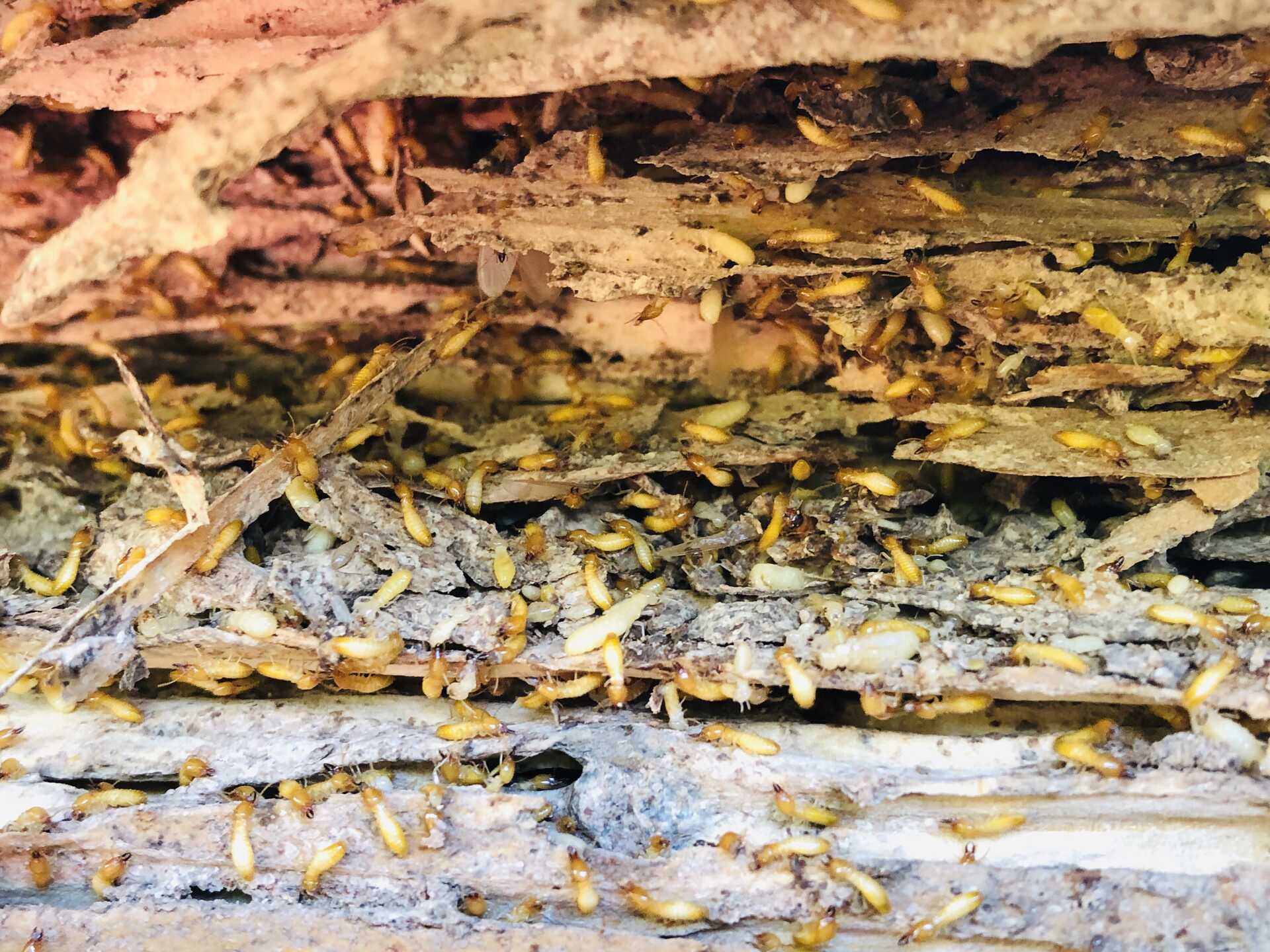
Termites eat wood from the inside out, so a beam can look sound while its core is a shell. By the time most homeowners notice, the colony has been feeding for months or years. Homeowners insurance almost never covers the damage.
In Pennsylvania the species that matters is the eastern subterranean termite, which nests in soil and travels up into the structure. Inspections look for earthen mud tubes on foundation walls and joists, wood that sounds hollow when tapped, and piles of matching shed wings near windows after a spring swarm.
Treatment targets the colony rather than the insects in view, using a liquid treated zone in the soil, bait stations, or both. Retail sprays do not reach a nest living several feet underground.
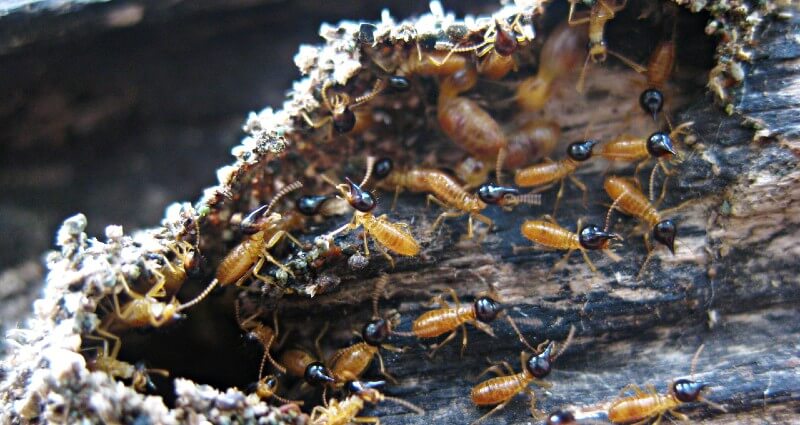
Termite galleries are packed with soil, which is what makes damaged wood look dirty inside.
Carpenter ants
Carpenter ants are messengers. They prefer wood that water has already softened, so finding them means looking for the leak that made the wood hospitable. A dripping supply line, a tired roof, a damp sill plate or a window that has been leaking quietly behind trim.
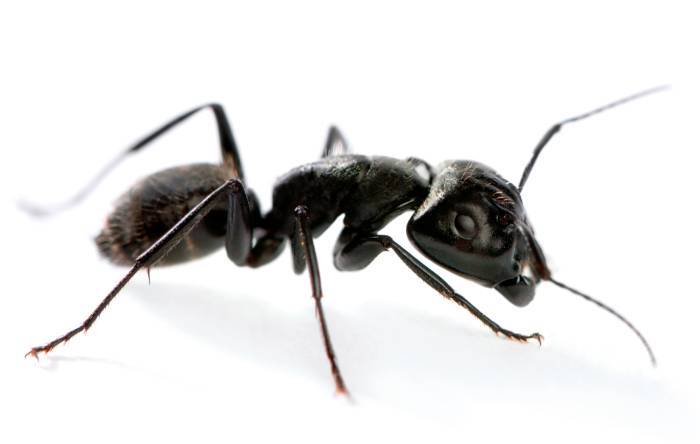
They carve smooth galleries to nest in and push out coarse sawdust, which collects on floors and sills below the opening. That debris is the usual first sign, along with large black ants moving indoors, particularly at night.
Workers forage a long way from the nest, so an ant on a kitchen counter does not mean the nest is in the kitchen. It may be in a wall, a window header, a porch column or a tree outside.
Carpenter ant galleries are smooth and clean, and the ants push coarse sawdust out of the opening.
Telling them apart
| Termites | Carpenter ants | |
|---|---|---|
| Do they eat wood | Yes, wood is the food | No, they excavate it to nest |
| Galleries | Packed with soil, rough and dirty | Smooth and clean |
| Debris | None visible, tubes instead | Coarse sawdust pushed out of openings |
| Visible insects | Rarely seen in the open | Commonly seen walking indoors |
| Waist | Thick and straight | Pinched |
| Antennae | Straight | Bent at an elbow |
| Wings on swarmers | Four, all the same length | Front pair longer than the back pair |
| What it signals | Soil contact and moisture | Water damage somewhere nearby |
Which is more urgent
Termites, on damage alone. A subterranean colony feeds continuously and works on the parts of the house that carry load, and the timeline from established colony to visible structural damage runs a few years. How fast can termites destroy a house covers that in detail.
Carpenter ants damage wood more slowly and usually in a more contained area. That does not make them harmless. A large colony in a wet window header or sill will do real damage over a few seasons, and the water that drew them is often doing damage of its own at the same time.
The honest ranking is that termites are the bigger structural threat and carpenter ants are the louder warning. Neither is a reason to wait.
Why the treatments differ
Termite work is about the soil to structure path: establishing a continuous treated zone around the foundation or placing bait stations that workers carry material back from. It is a perimeter problem.
Carpenter ant work is about finding the nest and the moisture feeding it. Treating the trail without locating the nest and repairing the wet wood produces a short quiet period followed by the same ants. Satellite nests are common, so one treated nest does not always end it.
That is why identification comes before any product. A termite plan applied to carpenter ants misses the nest entirely, and an ant plan applied to termites never touches the colony.
With carpenter ants, finding the water matters as much as treating the insects.
What happens if you guess wrong
Guessing costs time in both directions.
Treat carpenter ants as termites and you spend money on a soil treated zone while a nest sits in a wet window header doing its own damage. The perimeter work does nothing for it, and the leak that caused the problem goes unrepaired.
Treat termites as carpenter ants and the outcome is worse. Ant treatment targets nests and trails inside the structure. A subterranean colony nesting several feet down in soil is untouched by any of it, and the months spent watching for results are months of continued feeding on framing.
There is also a third possibility worth naming. Both can be present at once, usually because the same moisture problem suits both. Finding one does not rule out the other, which is why an inspection looks at conditions rather than stopping at an identification.
What to do first
- Photograph the insect and the damage before disturbing either
- Leave mud tubes intact apart from one small broken section
- Note whether debris is present, and whether it is fine or coarse
- Look for the water: a stain, a soft sill, a leaking line, a blocked gutter
- Have it identified before buying any product
Prevention overlaps more than the treatments do
The treatments differ sharply, and the prevention list barely does. Both species are drawn to moisture and to wood they can reach, so the same maintenance reduces pressure from each.
Fix leaks and keep framing dry. Extend downspouts so water discharges away from the foundation. Keep mulch thin and pulled back from siding. Move firewood off the ground and away from the house. Trim branches that touch the roof or siding, which carpenter ants use as a bridge. Replace wood that has already gone soft rather than painting over it, because softened wood is the thing both insects are looking for.
None of that removes an established colony of either kind. It does lower the odds of the next one, and it makes any treatment hold longer.
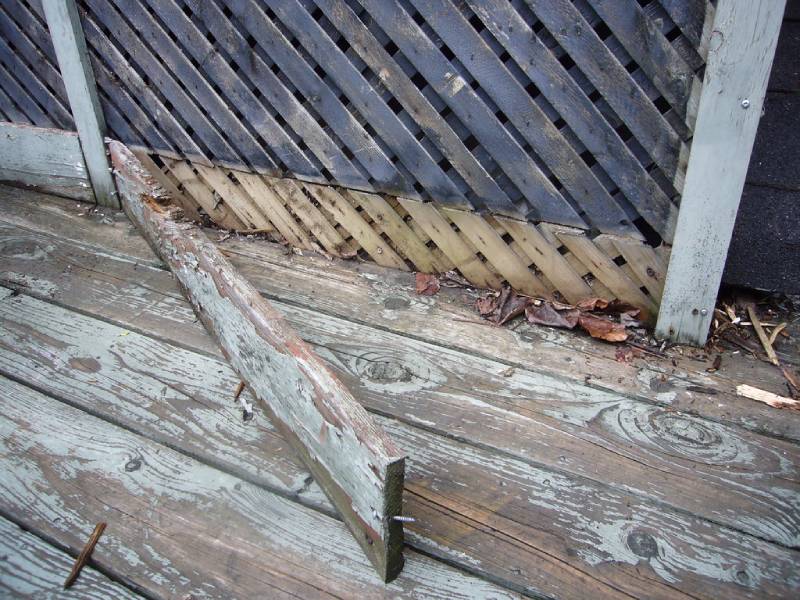
Dry wood and clearance from soil discourage both insects.
Stewart Termite & Pest Control has handled both in Pittsburgh homes since 1987. For an inspection and an identification, call 412-822-7610 or request an estimate online.
Frequently Asked Questions
How do I tell carpenter ants from termites?
Carpenter ants have a pinched waist, bent antennae and, when winged, front wings longer than the back pair. Termites have a thick straight waist, straight antennae and four wings of equal length. Carpenter ants also leave coarse sawdust, which termites do not.
Do carpenter ants eat wood?
No. They excavate wood to build nests and push the shavings out. The wood is a nest site, not food.
Which causes more damage?
Termites, by a wide margin, because they consume structural wood continuously. Carpenter ants damage a smaller area more slowly, though a large nest in wet wood still causes real harm.
Does finding carpenter ants mean I have a leak?
Usually. They favor wood that moisture has already softened, so an infestation is a strong hint that water is getting somewhere it should not.
Can I treat either one myself?
Rarely with success. Termite colonies live in soil out of reach of retail products, and carpenter ant treatment depends on finding nests and satellite nests rather than spraying trails.
Do carpenter ants swarm like termites?
Yes, winged reproductives appear in spring for both, which is when the two get confused most often. The wing lengths and the waist settle it.