Carpenter ants are one of the most common structural pests in this region, and that is not a coincidence. Pittsburgh housing stock, climate and tree cover line up almost perfectly with what a carpenter ant colony needs.
Understanding why they do so well here is useful, because every reason points at something a homeowner can change. For an active colony, carpenter ant control comes first, then the conditions.
The housing stock is old
A large share of homes across the city and older boroughs like Millvale, Etna and Shaler were built before the Second World War, and many more before 1970. Age is not the problem by itself, but it brings the things that are.
Older windows and door frames have had decades for seals and caulk to fail. Wood trim, porch columns and sills have taken sixty or eighty winters of freeze and thaw. Roof details around chimneys and valleys have been repaired more than once. Original single pane windows sweat heavily in winter, soaking the sill beneath them.
Each of those produces the same end result: a pocket of framing that stays damp. That is precisely what a carpenter ant queen is looking for, because softened wood is far easier to excavate than sound timber.
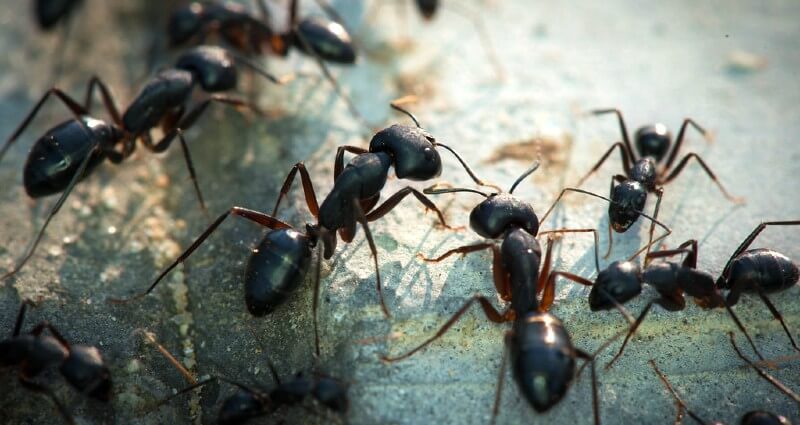
Carpenter ants follow moisture into older framing.
The climate keeps wood damp
This area gets substantial rainfall spread through the year rather than concentrated in a season, along with high summer humidity and long damp spells in spring and fall. Wood rarely gets a chance to dry out fully.
Winter adds the other half. Freeze and thaw cycling opens joints in masonry, lifts flashing and works caulk loose, creating new paths for water every year. A house in a drier climate with a hard winter does not accumulate the same damage.
Basements and the terrain
Pittsburgh is built on hills, which means a great many houses sit on cut and fill lots with foundations partly below grade on the uphill side. Water moves downhill through soil and arrives at those walls.
The result is a region full of basements that run damp, and sill plates sitting on top of foundation walls that stay cool and wet. A sill plate is structural framing, it is usually the lowest wood in the building, and it is one of the most common carpenter ant nest sites in a local home.
Mature trees everywhere
The tree cover that makes these neighborhoods pleasant is also the carpenter ant reservoir.
Carpenter ant colonies typically keep a parent nest outdoors in a stump, a dead limb, a hollow trunk or buried wood, with satellite nests elsewhere, including inside structures. Mature oaks and maples, old stumps left in place, firewood stacks and fallen limbs all support parent colonies within easy reach of a house.
Branches touching a roof or siding then act as a bridge, letting workers reach the building without crossing any treated ground. Clearance between trees and the house does more than most people expect.
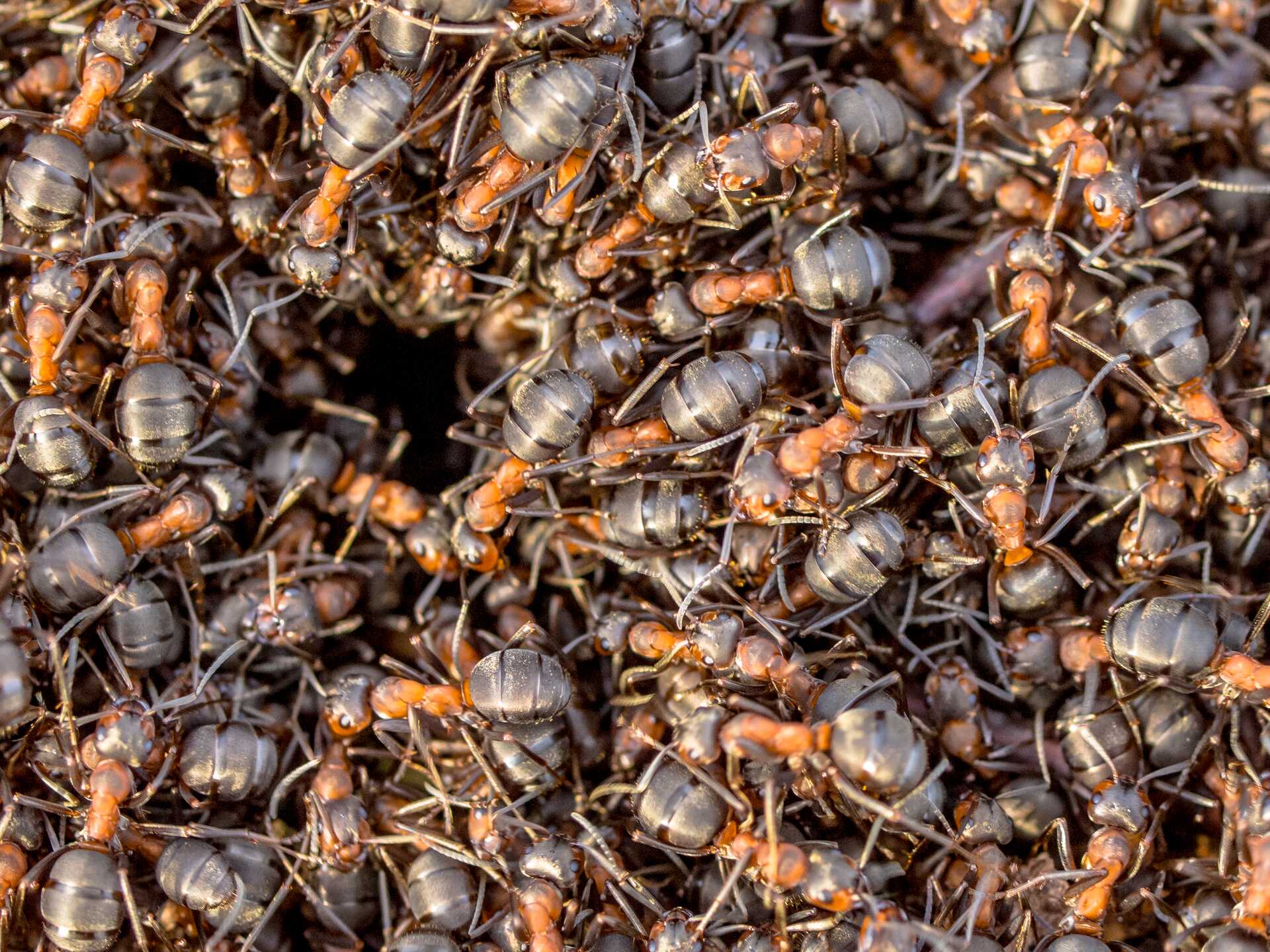
A parent nest in a stump or dead limb supplies satellite nests indoors.
Porches, decks and additions
Older local homes almost all have a covered front porch, frequently with wooden columns, a wooden deck structure and a roof that ties into the main wall. Decks and sunroom additions add more of the same.
These are vulnerable for a specific reason: they are exterior wood, often in contact with masonry or soil, and the joint where they attach to the house is a classic place for flashing to fail. A wet porch column or a rotted deck ledger is a very common first nest site, and from there the colony is already in contact with the structure.
Dense older neighborhoods make it harder
One factor nobody controls is what the neighbors are doing. Much of the city and the inner suburbs are built on narrow lots with houses close together, shared alleys and shared tree canopy.
A parent colony in a stump three doors down is well within foraging range, and satellite nests spread outward from it. That is why a homeowner can do everything right and still get activity, and why treatment focused only on the inside of one house tends to be temporary.
It also means timing matters. Spring, when the first large ants and winged swarmers show up indoors, is when activity is easiest to trace back to a nest.
What this means in practice
Every one of those factors is about water reaching wood. That is the whole lever.
- Keep gutters clear and make downspouts discharge well away from the foundation
- Repair failed window and door caulk, and replace rotted sills and trim rather than painting over them
- Check porch columns and deck ledgers for soft wood and standing water
- Ventilate or dehumidify a damp basement or crawl space
- Cut branches back so nothing touches the roof or siding
- Remove stumps where practical, and keep firewood off the ground and away from walls
- Pull mulch back from the foundation so the band of soil against the house can dry
The construction details that matter most
Beyond age in general, a handful of specific details in local housing account for a disproportionate share of nests.
Sill plates on block foundations. Common in houses from the 1920s through the 1960s here, and often with no capillary break between masonry and wood. The plate takes up moisture from the block and stays damp year round.
Wood windows with original sills. Decades of condensation running down single pane glass softens the sill from the inside, which is why nests turn up in windows that look sound from the outside.
Low slope porch roofs. These were built across the region and they fail at the wall junction, soaking the band of framing where the porch ties into the house.
Finished basements added later. Framing and paneling installed directly against a damp block wall creates an enclosed, humid cavity that nobody inspects. Activity in a finished basement is frequently well advanced before anyone notices.
What to watch for
The signs are specific enough to be useful.
Coarse sawdust, often with insulation and insect fragments in it, piled below a slit or hole on a sill, a basement floor or behind furniture. Large black ants indoors, especially after dark. Winged ants at a window in spring, which indicates a mature colony rather than a visitor. A faint dry rustling inside a wall at night. And wood that sounds hollow or gives under a screwdriver.
Any of those in an older local home is worth an inspection rather than a can of spray. Carpenter ants vs termites covers how to tell which you are dealing with.
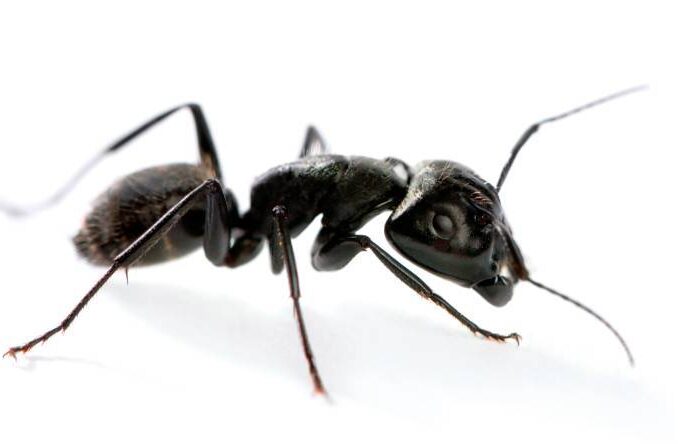
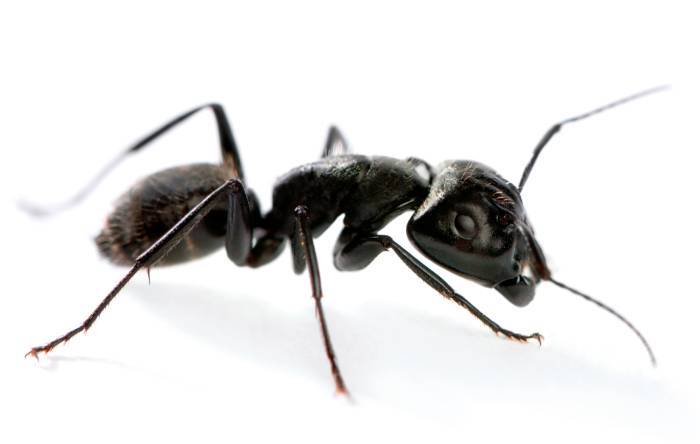
A carpenter ant worker. Large black ants indoors are the first sign worth acting on.
The combination of age, rainfall, hillside basements and heavy tree cover is not going to change, which is why carpenter ants are a standing issue here rather than an occasional one. Managing the moisture is what keeps a particular house off the list.
Stewart Termite & Pest Control has inspected and treated carpenter ants in older Pittsburgh homes since 1987. Call 412-822-7610 or request an estimate online.
Frequently Asked Questions
Why are carpenter ants so common in Pittsburgh?
Older housing stock with decades of settled trim and failed seals, steady rainfall and humidity, hillside lots with damp basements, and heavy mature tree cover supplying outdoor parent colonies.
Do carpenter ants mean my house has water damage?
Usually, yes. They nest in wood that moisture has already softened, so an active colony points to a leak, condensation or poor drainage somewhere nearby.
Where do carpenter ants nest in an older home?
Sill plates above damp foundation walls, window and door headers, porch columns, deck ledgers, bathroom subfloors and roof framing under a slow leak.
Do trees near the house cause carpenter ants?
They can. Parent colonies live in stumps, dead limbs and hollow trunks, and branches touching the roof or siding give workers a direct route in. Clearance helps.
What does winged ant activity at a window mean?
Winged reproductives indicate a mature colony, often inside or very close to the structure, rather than a passing forager. It is worth an inspection.
Can I stop carpenter ants without treatment?
Fixing moisture and clearing vegetation removes the conditions and prevents a repeat, but it does not remove a colony that is already established. The nest has to be dealt with first.