Professional pest control protects Strip District restaurants by combining routine inspections, sealed entry points, targeted treatments, and documented records that satisfy health inspectors. A licensed technician catches early activity long before it reaches the dining room, safeguarding your permit, your reviews, and your food supply. The work is preventive, not reactive — and that difference is everything.
I’ve walked through enough Pittsburgh kitchens to know that most owners don’t have a pest problem. They have a timing problem. By the time someone spots a roach near the dish pit, the population has been building behind the equipment for weeks.
Why the Strip District Is a Uniquely Tough Environment
The Strip is dense, old, and delicious — which is exactly what pests want. Buildings share walls, loading docks, and alleys. Produce wholesalers, butcher shops, coffee roasters, and full-service restaurants all sit within a few blocks of one another, and the smells travel.
Then there’s the age of the housing stock. Many of these buildings date back a century or more, with brick foundations, wooden door frames, and basements that hold moisture. A mouse doesn’t need an invitation. It needs a gap the width of a pencil.
Add the Allegheny River a few hundred feet away, and you’ve got humidity, rodent highways, and seasonal fly pressure that suburban restaurants rarely deal with at the same intensity.
How Professional Pest Control Protects Restaurants in the Strip District
Here’s what actually happens when a licensed technician takes over. First comes a full inspection — not a walkthrough, an inspection. That means pulling equipment, checking floor drains, inspecting the underside of prep tables, and looking at the dock door sweep at ground level.
Next, the technician identifies conducive conditions. Standing water under the ice machine. Grease buildup behind the fryer. A dumpster corral that hasn’t been power-washed since spring. These are the things that turn a minor issue into an infestation.
Treatment comes third, and it’s the smallest part of the job. Baits, monitors, and targeted applications get placed where pests travel, not where they’re visible. Finally — and this is the piece owners undervalue — everything gets documented. That logbook is what you hand an inspector when they ask.
I’ve seen a restaurant avoid a costly closure because their service records showed six months of consistent monitoring and a same-week response to a single fruit fly finding. Documentation buys you credibility.
Do Restaurants Have to Have Pest Control?
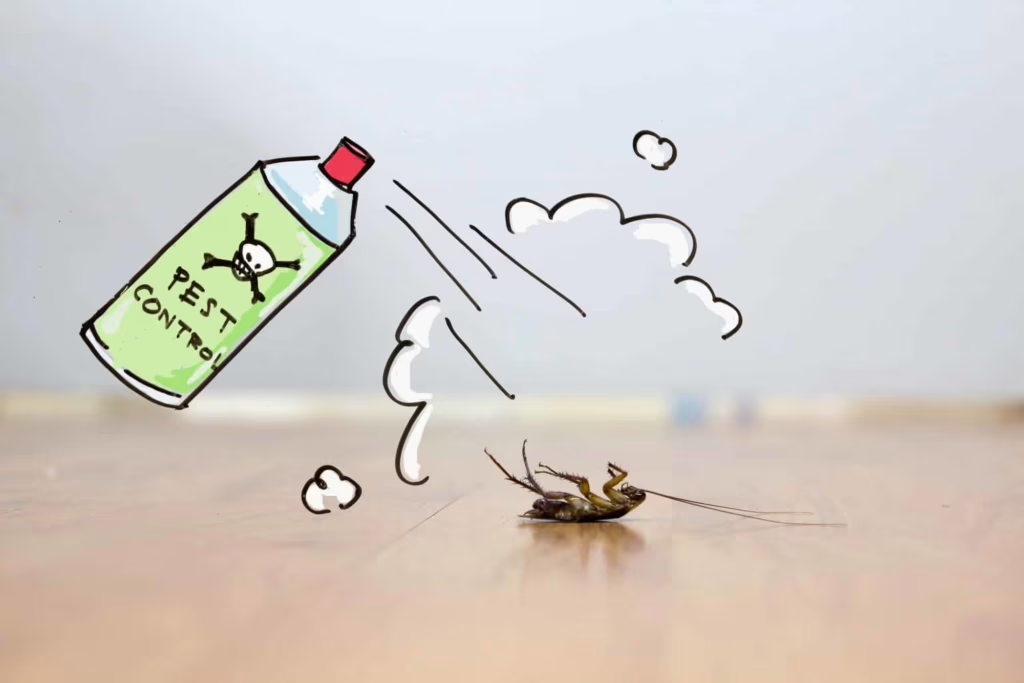
Pennsylvania and Allegheny County don’t require you to sign a specific contract with a specific vendor. What they do require is that your facility be free of pests and that you actively control conditions that attract them. In practice, that’s nearly impossible to prove without a professional program.
Article III of the county’s food safety regulations covers pest exclusion directly — tight-fitting doors, screening, controlled air currents, and protection of food-contact surfaces. You can read the full framework on the Allegheny County Health Department’s Food Safety Program page, which also publishes inspection reports the public can search.
So the honest answer: it isn’t technically mandated as a line item, but it’s functionally required. Inspectors want to see evidence of a plan. A shoebox of receipts from a hardware store isn’t evidence.
What Is the Best Way to Prevent Pests in a Restaurant?
Exclusion. Every time. Killing pests that are already inside is damage control; keeping them out is strategy.
Seal the building first
Door sweeps, weather stripping, sealed utility penetrations, and screened vents do more than any spray. A quarter-inch gap under a back door is an open gate for mice. Fix the envelope, and you cut your pest pressure dramatically before anyone applies a product.
Then attack the food and water
Pests need three things: food, water, harborage. Deep-clean under equipment on a schedule, not when it looks bad. Fix leaking faucets and condensate lines. Store dry goods off the floor in sealed containers, and rotate stock so nothing sits long enough to become an ecosystem.
Train the team
Your closing staff is your first line of defense. Teach them what droppings look like, where to check, and who to tell. A dishwasher who reports a sighting on Tuesday saves you a shutdown in October.
The Pests I See Most Often in Strip District Kitchens
Different pests, different playbooks. Here’s a quick reference I use when explaining priorities to owners:
| Pest | Where It Hides | Main Risk | Professional Response |
|---|---|---|---|
| German cockroach | Motor housings, hinges, cardboard | Contamination, rapid breeding | Gel baiting, monitors, sanitation plan |
| Norway rat | Basements, wall voids, alleys | Structural damage, disease | Exclusion, exterior stations, burrow work |
| House mouse | Dry storage, drop ceilings | Food loss, droppings | Sealing gaps, interior monitoring |
| Fruit fly | Drains, mop sinks, soda lines | Health violations | Drain treatment, organic buildup removal |
| Stored product pests | Flour, grains, spices | Product recalls, waste | Inventory audit, pheromone traps |
Notice that almost every response starts with a condition, not a chemical. That’s not an accident.
What Pest Control Can Be Used in a Food Facility?
This is where amateur solutions get restaurants in trouble. Not every product on a shelf is legal in a space where food is prepared and stored. I’ve personally seen inspectors confiscate consumer fly strips because the active ingredient wasn’t approved for occupied commercial spaces.
Licensed operators use Integrated Pest Management, which prioritizes exclusion, sanitation, and monitoring, then applies EPA-registered products labeled for food-handling areas. Crack-and-crevice applications, tamper-resistant bait stations, insect growth regulators, and non-toxic monitoring traps are all standard. Fogging a kitchen is almost never the answer.
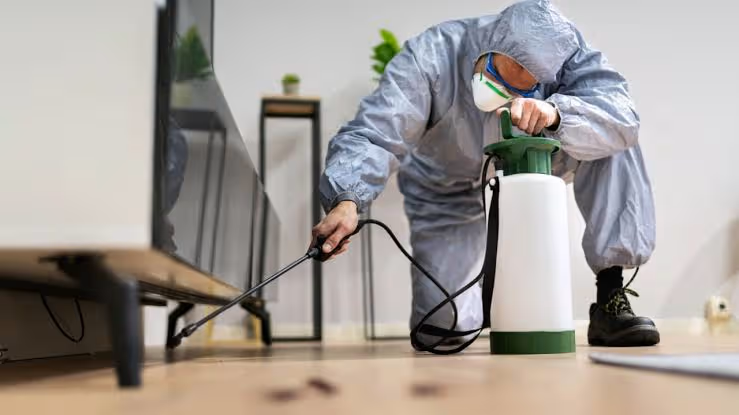
A technician also knows when to treat. Applications happen after close, with food surfaces covered and staff out of the building. Timing and placement matter as much as product selection.
If you’re wondering whether treatment holds up over time, this breakdown on Can Pest Control Services Prevent Future Infestations in Pittsburgh? walks through why recurring service outperforms one-off visits.
What Is the 30/30/30 Rule for Restaurants?
The 30/30/30 rule is a budgeting framework: roughly 30% of revenue toward food costs, 30% toward labor, and 30% toward overhead, leaving about 10% as profit. Some operators call it the 30/30/30/10 rule. It’s a benchmark, not gospel, and plenty of consultants argue the margins have shifted since it was coined.
Why bring it up in a pest control article? Because pest management lives inside that overhead 30% — and it’s one of the cheapest line items in the category. A monthly service plan typically costs less than a single shift of labor.
Now compare that to the downside. A health-department closure costs you a weekend of revenue, staff hours, emergency remediation, and a headline that lives online forever. When you run the math against a razor-thin 10% profit margin, prevention isn’t an expense. It’s insurance.
What a Real Service Schedule Looks Like
Most Strip District restaurants land on monthly service, though high-volume kitchens and buildings with shared walls often benefit from every-other-week visits during warm months. Seasonality matters here. Rodent pressure spikes in fall as temperatures drop; fly pressure climbs in July.
A solid program includes exterior station checks, interior monitor reviews, a written findings report, and specific corrective recommendations for your team. If your current provider shows up, sprays a baseboard, and leaves a receipt, you’re paying for theater.
Good pest control companies Pittsburgh restaurants trust will also make themselves available between visits. Emergencies don’t wait for the calendar.
Choosing the Right Partner
Ask three questions before you sign anything. Are your technicians licensed in Pennsylvania and trained specifically in food-service environments? What documentation do you provide for health inspections? How fast do you respond to an urgent call?
Experience in commercial kitchens matters more than company size. A provider who handles residential work exclusively won’t know to check your beverage gun holsters or the void behind your walk-in condenser. Look for pest control services Pittsburgh operators use for restaurants specifically, and ask for references from other food businesses.
Local knowledge counts too. A technician who has worked pest control Pittsburgh accounts in older riverfront buildings already knows the failure points in your foundation.
The Bottom Line
Restaurants in the Strip District operate in one of the most competitive and most pest-prone food corridors in the region. Understanding how professional pest control protects restaurants in the Strip District comes down to one shift in thinking: you’re not buying treatments, you’re buying a system that keeps problems from starting.
Get the building sealed. Get the conditions fixed. Get it documented. Then go back to cooking.