

Rodents get into garages and sheds for three reasons: shelter, food and warmth, with almost no risk attached. A mouse needs a gap about a quarter inch wide, roughly the width of a pencil. Once it finds birdseed, pet food or a box of old blankets, it stays.
That is the short version. The longer one explains why some garages get hit every fall while the one next door stays clear, and what to change. For an established population, rodent control deals with the animals first.
Why outbuildings get it worst

A garage or shed is a better target than a house for reasons that have nothing to do with how either is kept.
It is quieter. Nobody walks through at night, lights stay off, and a nest behind stored boxes goes undisturbed for months. Houses have people, pets, noise and routine.
It is less sealed. Garage doors sit on concrete that is rarely perfectly level, side doors are often older, and walls frequently have unfinished sections where the structure is open.
And it is where the food is. Birdseed, grass seed, pet food, bulbs, garden produce and trash cans all tend to live in the garage rather than the kitchen.
A garage offers shelter and food with none of the disturbance of a house.
What they are actually after in there
Walk a garage with this list and the draw is usually obvious:
- Bags of birdseed, grass seed or dog food standing on the floor
- Trash and recycling cans kept inside
- Cardboard boxes, old insulation and stacked lumber, which are nesting material and cover at once
- A second refrigerator or freezer, which provides a warm motor and a steady drip
- Stored upholstery, blankets, camping gear and car mats
- Bulbs, seed potatoes and stored garden produce
- A chest freezer or workbench with a gap behind it that is never moved
Rats work the same way with a stronger preference for ground level and for routes they can run repeatedly without being seen.
How they get in
The entry points in an outbuilding are more predictable than in a house.
- The garage door bottom seal. Rubber flattens with age and concrete is rarely level, so a gap opens at one corner. This is one of the most common routes
- Side and service doors with worn sweeps or settled thresholds
- The gap where the slab meets the frame, particularly on older detached garages
- Unscreened vents, or vents screened with window mesh rather than hardware cloth
- Utility penetrations for power and water
- Sheds set directly on soil or on blocks, where the floor edge is open underneath
- Rotted corners and sill boards on wooden sheds
The garage door seal is the most common route, and the easiest to fix.

Why it matters even in a detached building
Two reasons people underestimate.
The first is that an attached garage shares a wall and a door with the house. A population established in the garage treats the interior door, the gap around the dryer vent or a hole in the shared wall as the next step. Many kitchen mouse problems started in the garage in September.
The second is vehicle damage. Rodents gnaw wiring, and vehicle looms are a common target, particularly on a car that sits unused for weeks. Nests in an air box or on top of an engine are routine, and the repair is not cheap. Lawn equipment, generators and boat engines get the same treatment.
What to change
- Replace the garage door bottom seal. Cheap, straightforward and closes the main route
- Fit new sweeps on side doors, and check the threshold sits flush
- Move all seed and pet food into metal bins or hard plastic with a locking lid. Paper and woven bags are not containers
- Get storage off the floor and onto shelving, with a gap behind it so the wall base is visible
- Replace cardboard boxes with lidded plastic totes
- Keep trash cans outside or securely lidded
- Screen vents with quarter inch hardware cloth
- Clear a band around the outside of the building: no firewood, no stacked materials, no long grass or shrubs against the wall
- Park and start vehicles regularly, and check for nesting material if one has been standing
How rodents enter your home covers sealing materials in more detail.
Timing
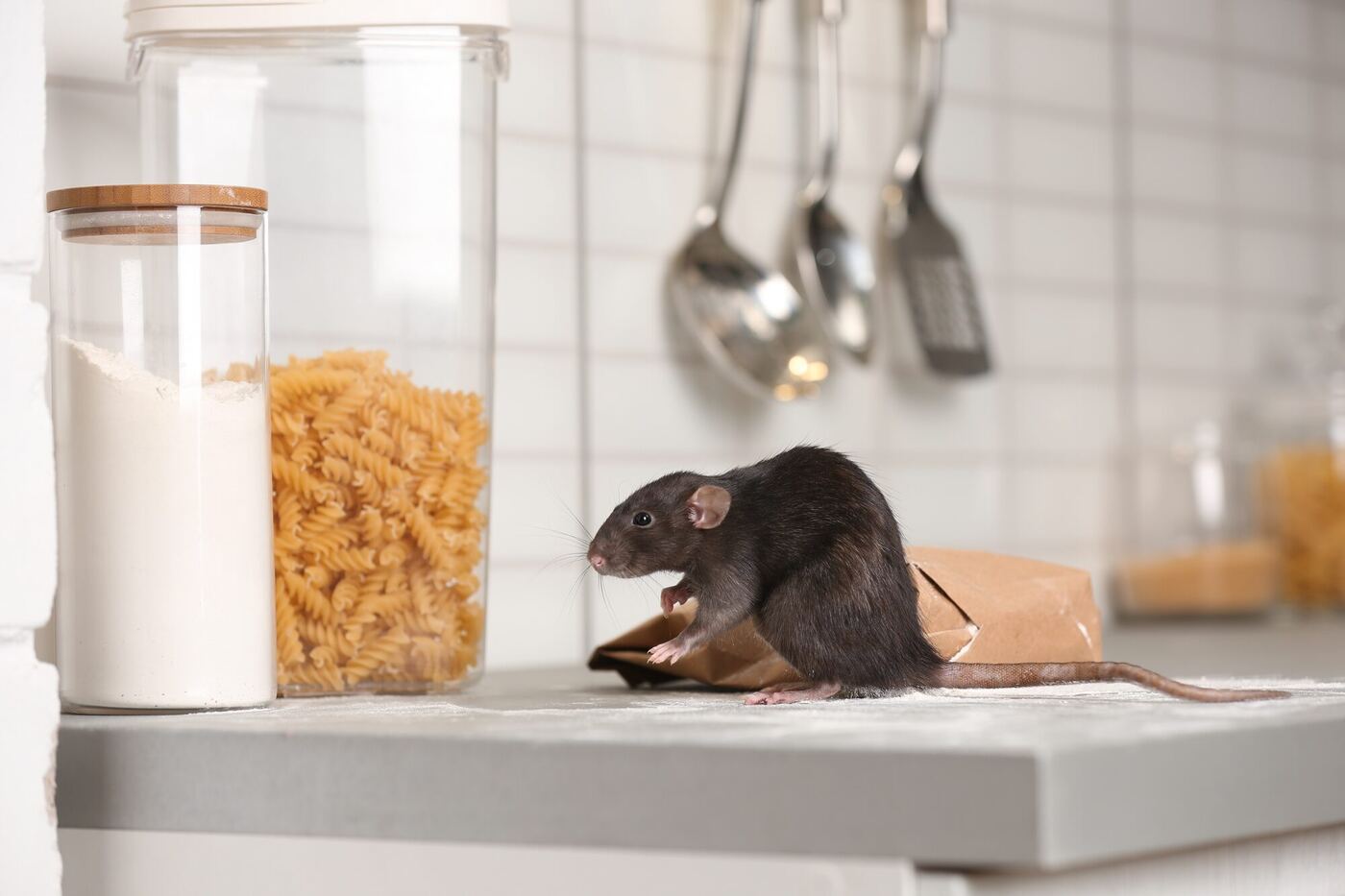
Garage and shed activity is seasonal and the pattern is consistent across Western Pennsylvania. Mice and Norway rats spend the warm months outdoors in gardens, wooded edges and under decks. When nights drop into the forties, usually late September into November, they look for shelter, and an outbuilding is the first thing they reach.
This is why sealing work in late summer is worth far more than the same work in December. Done in August, it prevents the move. Done in winter, it shuts the door on animals that are already inside.
Spring brings a second, smaller wave as populations that overwintered indoors breed and disperse.
The move indoors happens when night temperatures drop, which in this area means October.
Sheds have their own problem
A detached shed is usually easier to fix than a garage, and it is also the one most often left alone until something is ruined.
Most sheds sit either directly on soil, on blocks or on a timber frame, which leaves the floor edge open underneath. That space is sheltered, dry and completely undisturbed, which makes it ideal harborage, and the floor above it is often the thinnest part of the building.
The usual fix is to close the perimeter underneath with hardware cloth taken down into the soil a few inches and turned outward, so nothing can dig under the edge. Combined with lifting stored material off the floor and replacing any rotted sill boards, that handles most shed problems without touching the inside.
Soft contents are the other half. Cushions, blankets, camping gear, bagged compost and old upholstery are nesting material, and anything stored in a shed over winter is worth sealing in a tote rather than left in a bag.
When to stop doing it yourself
Droppings in two or three separate areas, gnawing on wiring or structural wood, a nest found in stored material, or activity that continues after sealing all point to an established population rather than a visitor. At that stage removing the animals comes before sealing, because closing a building with rodents inside creates its own problem.
Stewart Termite & Pest Control has worked on garages, sheds and homes across the Pittsburgh area since 1987. Call 412-822-7610 or request an estimate online.
Frequently Asked Questions
Why do mice get into my garage every year?
It is quiet, less sealed than the house, and it usually holds the food: birdseed, grass seed, pet food and trash cans. The combination makes it the first place rodents reach when nights turn cold.
What is the most common way rodents get into a garage?
The gap under the garage door, where the rubber seal has flattened and the concrete is not level. It is also the easiest to fix.
Can rodents in the garage get into the house?
In an attached garage, yes. The interior door, the shared wall and utility gaps are the usual next step, which is why garage activity often becomes a kitchen problem a few weeks later.
Will mice damage my car?
They can. Rodents gnaw wiring and nest in air boxes and engine bays, particularly in vehicles that sit unused. Lawn equipment and generators get the same treatment.
How should I store birdseed and pet food?
In metal bins or hard plastic with a locking lid. Paper and woven bags are chewed through easily, and a bag on the floor is the single most common draw in a garage.
When should I seal a garage or shed?
Late summer or early fall, before rodents move in for the winter. Sealing after they are inside shuts them in rather than out.