

It is late, the house is quiet, and something is scratching inside the wall. The first thought is usually “rodents.” The more useful second thought is “which kind?” Mice and rats behave differently, do different damage and need different handling, so the answer changes what happens next.
Pittsburgh homes get both. Here is how to tell them apart from the sounds alone, and what each one means for rodent control.
When you hear it

Mice are most active at night, especially the hours just after dark and just before dawn. They move constantly and rarely follow a fixed schedule, so the sound comes in short bursts scattered through the night. Being small and light, their movement sounds quick and erratic.
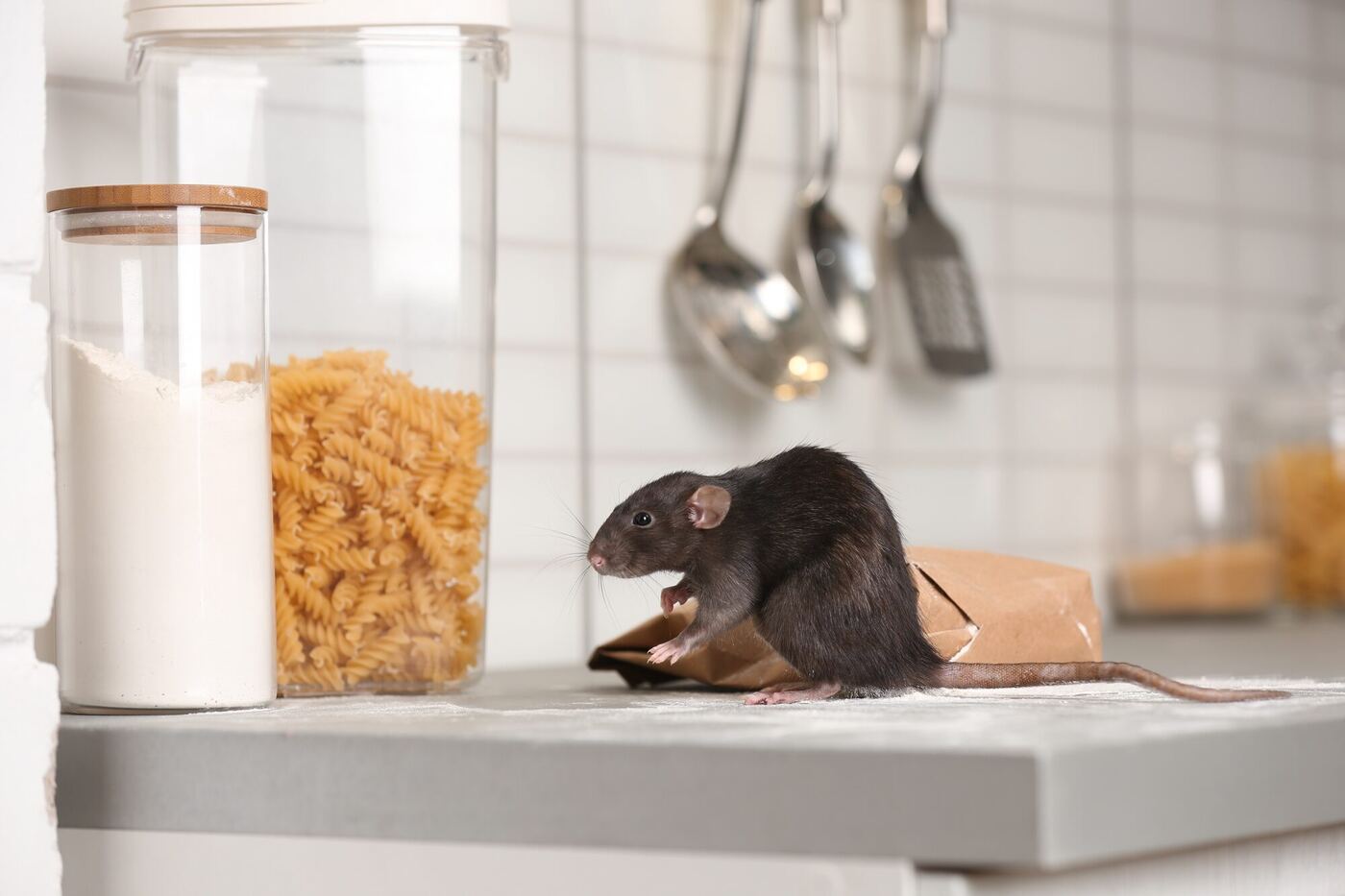
Rats are nocturnal too, but far more routine. They establish regular runs between a nest and a food source, so activity tends to land at roughly the same times each night. Norway rats, the common species in Pittsburgh, are heavy enough to sound deliberate.
If what you hear sounds like something with weight moving around, it is more likely a rat.
House mice are small, light and constantly moving, which is why their noise sounds quick and scattered.
What it sounds like
| Sound | Usually means |
|---|---|
| Light, rapid scratching like paper rustling | Mice |
| Heavy, slower scratching with weight behind it | Rats |
| High pitched squeaking | Mice, often several |
| Low chattering or hissing | Rats |
| Gnawing that sounds persistent and coarse | Either, rats louder |
| A thump or something rolling | Rats, or something being dragged |
Where the sound is coming from
Location narrows it further, because the two species prefer different heights.
Mice climb well and are comfortable anywhere: wall voids on any floor, above ceilings, behind kitchen cabinets, in the insulation of an attic.
Norway rats are burrowers and ground dwellers. They favor basements, crawl spaces, the lowest wall voids and the space under decks and porches. Noise consistently coming from low in the house, or from below the floor, points toward rats.
Noise high in a wall or overhead in an upstairs ceiling is more often mice. Roof rats, which do nest high, are not common in this area.
The other evidence
Sound narrows it down and droppings settle it.
- Mouse droppings are about a quarter inch, thin, pointed at both ends, and scattered widely because mice leave them constantly as they travel
- Rat droppings are around half an inch to three quarters, noticeably thicker, blunter, and tend to be concentrated along runs and near the nest
Other signs: greasy rub marks along baseboards and pipe runs, which rats leave more than mice. Gnaw marks, larger and rougher from rats. Shredded insulation, paper or fabric used for nesting. A persistent musky smell in an enclosed space.
Droppings are the quickest way to confirm which species is present.
Why the difference matters
It is not trivia. The two species need different approaches.
Access points differ. A mouse gets through a gap about a quarter inch wide, roughly the width of a pencil. A rat needs about half an inch. Sealing for mice means addressing far smaller openings, and a house sealed against rats can still be wide open to mice.
Behavior differs. Mice are curious and investigate new objects quickly, which is why they encounter stations readily. Rats are neophobic, meaning they avoid unfamiliar objects for days before approaching, which is why a treatment that looks like it failed in the first week often has not.
Numbers differ. Mice breed faster and a few become many quickly. Rats are fewer but individually do more damage, particularly to wiring, insulation and stored material.
Nest location differs, which changes where the work happens. Mice may be nesting in a wall cavity on the second floor. A Norway rat colony is more likely under a slab, in a crawl space or in a burrow against the foundation outside.
What not to do first
Three common reactions waste time.
Setting traps at random. Both species travel along edges, not across open floor. Traps in the middle of a basement catch nothing. Placement along walls, behind appliances and on the actual runs is most of what makes them work.
Reaching for poison. Rodenticide carries real risks to pets and wildlife, and an animal that dies inside a wall cavity creates a smell problem that lasts weeks. The dangers of using poison for rodent control goes through that properly.
Ignoring it because it stopped. Rodent activity fluctuates with weather, food and breeding. Quiet weeks are common and they do not mean the animals left.
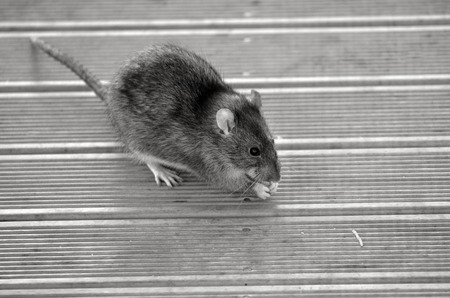
Snap traps set without knowing the species or the runs mostly catch nothing.
Seasonal timing in Pittsburgh
Wall noise is not spread evenly through the year here. It concentrates sharply in fall, and knowing why helps with the timing of any work.
Mice and Norway rats both live outdoors through the warm months, feeding in yards, gardens, alleys and under decks. When night temperatures drop in September and October, outdoor food thins out and the warm structure becomes the better option. They move in through gaps that were there all summer and went unused.
That is why so many households hear nothing for years and then hear scratching every night from mid October. Nothing changed about the house. The weather changed.
It also means sealing work is most valuable in late summer and early fall, before the move happens rather than after.
The first cold nights are when indoor noise complaints spike.

What actually resolves it
Identifying the species, finding how they are getting in, and sealing those openings. Trapping removes the animals present. Exclusion is what stops the next ones, and without it the problem returns every fall. How rodents enter your home covers the entry points that matter in Pittsburgh houses.
What to tell whoever comes out
A few details shorten the job considerably, and they are all things only the household knows.
- Which rooms the noise comes from, and whether it is at floor level, in a wall, or overhead
- What time of night, and whether it is consistent or scattered
- Whether anything has been seen, and where
- Where droppings have turned up, and roughly what size
- Whether food has been chewed into, and in which cabinet
- Any recent work on the house: a new dryer vent, a replaced door, a dug up yard, nearby demolition or construction
That last one matters more than people expect. Rodents move when their habitat is disturbed, and a run of new activity on a street often traces back to a nearby building site or a sewer repair.
Stewart Termite & Pest Control has handled mice and rats in Pittsburgh homes since 1987. If something is moving in your walls, call 412-822-7610 or request an estimate online.
Frequently Asked Questions
How do I know if I have mice or rats in my walls?
Listen to the weight and the schedule. Mice sound light, quick and scattered through the night. Rats sound heavier and more routine, arriving at similar times each night. Droppings confirm it: mouse droppings are about a quarter inch and pointed, rat droppings are half an inch or more and blunt.
What time of night are rodents most active?
Both are nocturnal. Mice are busiest shortly after dark and before dawn, and move throughout the night. Rats follow more predictable routes at consistent times.
Does the location of the noise tell me anything?
Yes. Noise from basements, crawl spaces and low walls suggests Norway rats, which are ground dwellers. Noise high in walls or in an attic is more often mice.
Why did the noise stop on its own?
Rodent activity varies with weather, food and breeding cycles. A quiet stretch rarely means the animals have gone, and the signs usually return.
How small a gap can a mouse use?
About a quarter inch, roughly the width of a pencil. Rats need about half an inch. If the skull fits, the body follows.
Can I just set traps myself?
Traps help if they are placed on actual runs along walls and behind appliances rather than in open floor. They remove the animals present but do nothing about the openings letting more in, which is why exclusion matters more.