

When mice turn up, the hardware store aisle makes poison look like the obvious answer. It is cheap, it is everywhere, and it appears to work. The problems come from how it usually gets used at home: loose blocks pushed behind appliances and forgotten. Several of those problems land after the mice are already dead.
Here is what goes wrong with do it yourself rodenticide, and how bait is handled safely when a professional uses it. Our rodent control service uses locked bait stations and traps placed by a technician and checked on a schedule, which avoids most of what follows.
The dead animal problem
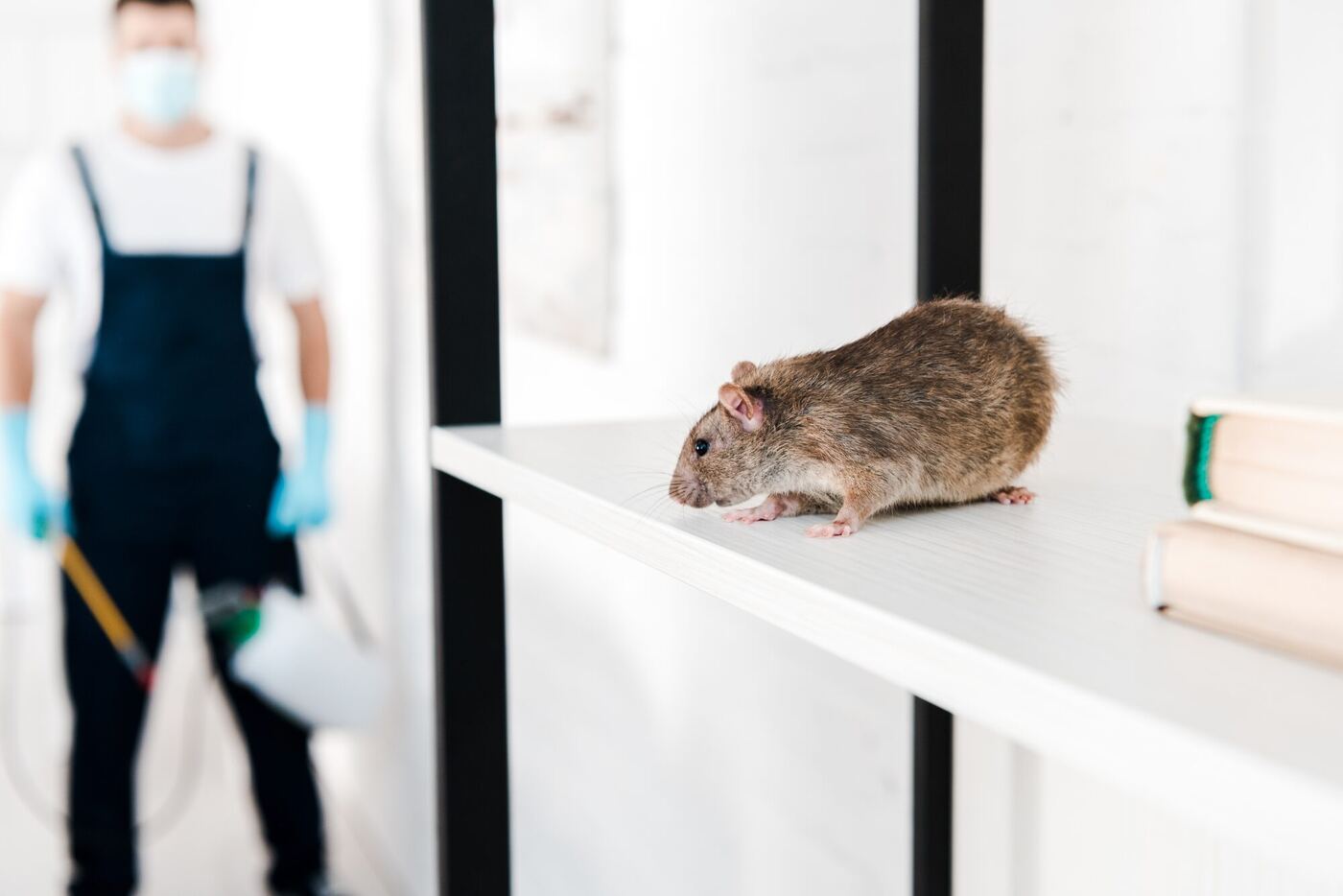
The most common complaint about rodenticide has nothing to do with safety. It is the smell.
Anticoagulant baits take days to kill. In that window the animal keeps moving and usually returns to its nest, which is inside a wall cavity, under insulation, beneath a floor or above a ceiling. That is where it dies.
The result is an odor that builds over several days, peaks for one to three weeks and cannot be cleaned up without opening the wall. In a multi-rodent infestation it happens repeatedly, in different places. Flies often follow.
Traps avoid this, because the animal is where the trap was set, which is one reason a professional program combines bait with trapping and checks both regularly.
Poisoned rodents rarely die outdoors, and a carcass inside a wall cannot be reached.
Risk to pets
This is the risk people do take seriously, and it works in two ways.
Direct eating. Baits are formulated to be attractive, and dogs in particular will find and eat a block left behind a refrigerator or under a stove. The amount needed to harm a small dog or a cat is not large.
Secondary poisoning. A cat or dog that catches and eats a poisoned, slow-moving rodent takes in the material too. The rodent is easier to catch precisely because it is dying, so the pet is more likely to get it than a healthy one.
Some newer rodenticides have no antidote, which matters a great deal at the veterinary emergency stage. With the older anticoagulants, treatment exists but has to start quickly, and owners often do not know anything happened until the animal is unwell.
Wildlife takes the same hit
The same secondary poisoning pathway runs through anything that eats rodents. Hawks and owls, foxes, and neighborhood cats all take in rodenticide through prey.
It is a particular shame where owls are concerned, since a resident pair is a free and genuinely effective rodent control system. Poisoning the prey removes the predator as well.
A poisoned mouse that dies outdoors is eaten by whatever finds it.

Children
Loose bait blocks look like something to eat and end up exactly where small children explore: behind appliances, under sinks, in the backs of cabinets, along basement walls. That is the strongest argument for locked, tamper resistant stations placed by someone trained to position them, rather than blocks set out by hand. If rodenticide is in the house, the national Poison Help line is 1-800-222-1222 and it is worth keeping handy.
Why it often does not solve the problem anyway
Set the harms aside and poison used on its own still has a practical weakness: it kills individuals and changes nothing about why they are there.
Mice are getting in through an opening. The opening is still there after the bait works. The food source, the clutter, the gap under the garage door and the hole around the dryer vent are all unchanged, so the next mice arrive and the cycle restarts. Many households end up buying more bait every few weeks without ever asking how the mice are getting in.
There is also resistance. Rodent populations in many areas have developed resistance to first generation anticoagulants, which pushes people toward stronger products and higher secondary risk rather than toward fixing the entry points.
Why bait is slow by design
It seems like a flaw and it is deliberate. Anticoagulant rodenticides are formulated to act over several days rather than immediately, for a specific behavioral reason.
Rats in particular are cautious about new food. A colony sampling something that killed a member within minutes would associate the food with danger and avoid it entirely, a phenomenon called bait shyness. By delaying the effect for days, the connection is never made and the rest of the colony keeps feeding.
That design choice is what creates the household problems. The delay is exactly the window the animal uses to return to its nest inside the structure, and it is the window where a pet can catch a slowed rodent.
What works better
The approach that actually ends an infestation has three parts, and loose bait from a store is in none of them.
Exclusion. Find and seal the openings. A mouse needs about a quarter inch, a rat about half an inch. Steel wool and sealant for small gaps, hardware cloth for vents, door sweeps, and repairs where utilities enter the building. How rodents enter your home covers where to look.
Trapping and secured stations. Traps placed on actual runs along walls and behind appliances remove the animals present, and locked bait stations placed where pets and children cannot reach them handle what traps miss. Both get checked on a schedule, which is what separates a program from a box of blocks.
Removing what attracts them. Food in sealed containers, pet food off the floor overnight, trash cans closed, clutter cleared from basement and garage walls, bird seed and grass seed stored in metal.
Finding and closing the openings is what stops the next ones.
When bait has a role
Bait does have a real role, and the difference is in how it is used. In a professional program it goes into locked, tamper resistant stations, placed where pets and children cannot get at them, inside and around the building, alongside traps. A technician comes back to check activity and adjust placement rather than leaving it to sit for months.
The version that causes the trouble described above is the one people reach for first: loose blocks from the hardware store, placed by hand and forgotten.
If poison has already been used
Plenty of households call after trying bait, and the situation is recoverable.
Collect and dispose of any remaining blocks, including ones that have been dragged away from where they were placed, which is common. Check behind and under appliances, along basement walls and in the backs of cabinets. Rodents move bait, so a block may be some distance from its station.
If there is an odor, locate it as precisely as possible before opening anything. The smell is often strongest at a particular spot along a wall or ceiling, and in some cases the carcass is accessible from a crawl space or above a drop ceiling without cutting drywall.
Then start on the openings. Any rodent that got in used a route that is still there.
Stewart Termite & Pest Control has handled Pittsburgh rodent problems since 1987, with traps and locked bait stations inside and out and return visits every two to three weeks for the first three months. Call 412-822-7610 or request an estimate online.
Frequently Asked Questions
Why does poison make my house smell?
Rodenticides take days to work, so the animal returns to its nest inside a wall, ceiling or floor before it dies. The odor builds over days, lasts one to three weeks and usually cannot be reached without opening the structure.
Can rodent poison hurt my dog or cat?
Yes, in two ways. Pets eat bait directly, and they are also poisoned by eating a rodent that has taken bait. A dying rodent is easier to catch, which raises the odds.
Is there an antidote to rodenticide?
It depends on the product. Older anticoagulants can be treated if care starts quickly, and some newer active ingredients have no antidote. In any suspected exposure, contact a veterinarian immediately.
Does poison get rid of mice permanently?
No. It kills the animals present and does nothing about the openings they used or the food that drew them, so new rodents arrive. Sealing entry points is what makes it permanent.
What should I use instead of store bought poison?
Seal gaps down to a quarter inch, remove food sources and clutter, and have the animals already inside removed with traps and locked bait stations that are placed and checked by a technician.
Is bait ever appropriate?
Yes, in locked tamper resistant stations placed where pets and children cannot reach them, checked on a schedule and combined with traps. Loose blocks set out by hand are the version that causes problems.