
Waking up with a row of itchy welts naturally sends people looking for an answer, and bed bugs are usually the first thing they land on. Sometimes that is right. Often it is not.
Bites are a weak form of evidence on their own, and the reason is simple: people react to insect bites very differently, and several insects leave marks that look much the same. Here is what actually separates them, and what to look at instead. If the physical signs turn up as well, bed bug control is the next step.
What a bed bug bite looks like
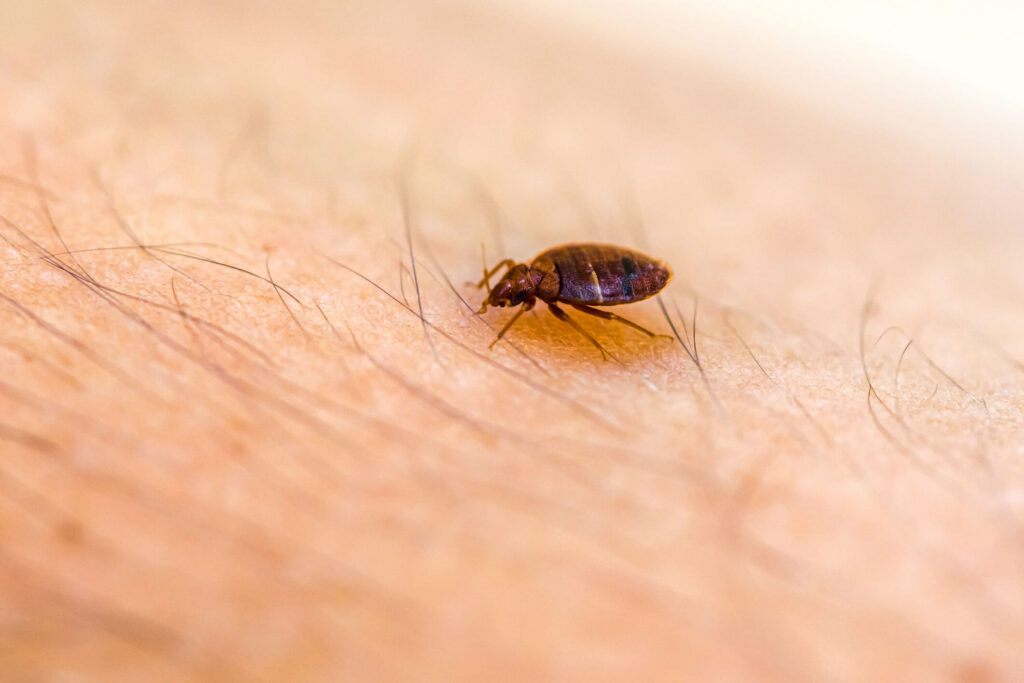
A typical reaction is a small raised red welt, often with a darker center, that itches persistently and may take several days to appear at all.
The distinctive part is the arrangement. Bed bugs frequently feed several times in one session as they are disturbed and resettle, which produces a short line or a tight cluster of three or four bites rather than isolated marks. The old description of breakfast, lunch and dinner captures it.
They appear on skin that was exposed while sleeping: arms, shoulders, neck, face, hands and the lower legs. Skin under close fitting clothing is usually spared.
Reactions vary enormously. Some people swell noticeably, some get a faint mark, and a substantial share of people show no reaction at all, which is one reason an infestation can run for weeks before anyone notices.
Bites are the symptom. They are rarely enough to confirm anything by themselves.
The ones most often confused with them
Flea bites. Small, very itchy, with a distinct red dot at the center, and concentrated on the lower legs and ankles rather than the upper body. Fleas usually mean a pet in the house, or a recent one. The lower body pattern is the fastest separator.
Mosquito bites. Larger, puffier and paler, itching hardest immediately and then fading within a day or so. They appear singly or scattered rather than in a line, and on whatever skin was exposed outdoors in the evening.
Mite bites. Bird and rodent mites produce small itchy welts that can mimic bed bugs closely. The giveaway is context: a bird nest in an eave or soffit, or a rodent problem, with bites often starting suddenly after the animals left and the mites went looking for a new host.
Spider bites. Nearly always a single mark rather than a group. Multiple bites appearing overnight in a pattern are not spider bites, whatever the internet suggests.
Scabies. Intense itching that is markedly worse at night, with a rash concentrated in the finger webs, wrists, elbows and waistline, often with thin track marks. This is a medical issue rather than a pest control one.
Not bites at all. Contact dermatitis, hives, eczema flares, folliculitis and reactions to a new detergent or bedding all get mistaken for bites regularly.
Side by side
| Bed bugs | Fleas | Mosquitoes | |
|---|---|---|---|
| Pattern | Lines or tight clusters | Scattered clusters | Isolated |
| Where | Arms, shoulders, neck, face | Ankles and lower legs | Any exposed skin |
| When | Overnight | Any time | Evening, often outdoors |
| Appearance delay | Hours to several days | Almost immediate | Immediate |
| How long it lasts | Several days to over a week | Days | Usually under a day |
| Center | Darker spot, sometimes | Distinct red dot | None |
Where on the body, and why that helps
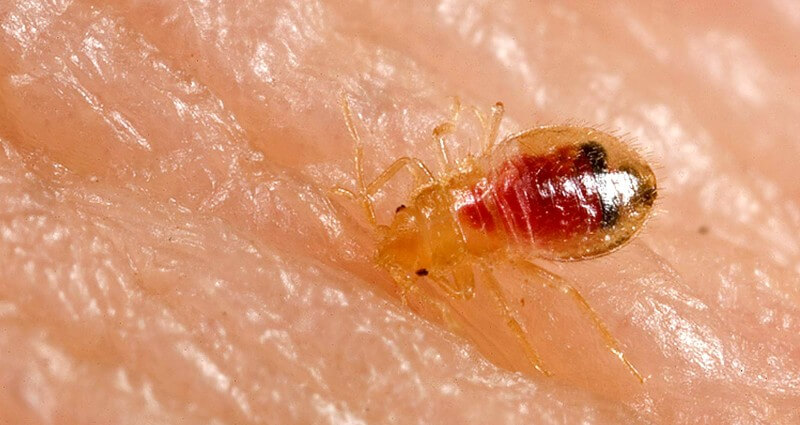
Location is more informative than appearance, because it reflects how each insect finds a host.
Bed bugs come to a person who is lying still, and they feed on whatever skin is exposed. That puts bites on arms, shoulders, the neck, the face, hands and the lower legs, and spares skin under close fitting clothing. Someone who sleeps in long sleeves often gets bitten only on the face and hands, which confuses things considerably.
Fleas jump from floor level, so bites gather on ankles, calves and feet, and only reach higher if someone has been sitting on infested carpet or holding a pet.
Mites tend to produce bites wherever clothing is loose at the neck, waist and sleeves, since they move across the body after arriving.
None of this is conclusive on its own, but combined with when the bites appear it narrows the field quickly.
The pattern of exposed skin while sleeping is a better clue than the marks themselves.
Why bites cannot settle it
Three problems make bite identification unreliable even for a doctor.
Reactions differ by person, so two people sleeping in the same bed can show completely different results, and one may show nothing. That regularly convinces a household that only one person has a problem.
The delay confuses the timeline. A reaction appearing days after the bite makes people blame the wrong night, the wrong room or the wrong trip.
And the marks themselves are not specific. There is no feature of a welt that belongs to bed bugs alone. Doctors will say the same: bites are consistent with bed bugs, never proof of them.
What to look for instead
These signs are definitive in a way that bites are not.
- Dark spots on sheets, the mattress seam or the box spring, roughly the size of a pen dot, which smear reddish brown when wiped with a damp cloth. This is digested blood and it is the most common first find
- Small blood smears on the sheet, from a bug crushed while feeding
- Shed skins, pale translucent shells of each growth stage, often gathered along a seam or in a crevice
- Eggs, about a millimeter, pearly white, glued into cracks
- Live bugs, flat and oval, from apple seed size down to nearly invisible
- A sweet musty smell in a room with a heavy population
Strip the bed and check the mattress seams, the box spring edge and underside, the bed frame joints and the headboard, especially where it meets the wall. Common hiding spots people miss goes further.
Physical evidence on the bed is what confirms it, not the marks on your skin.
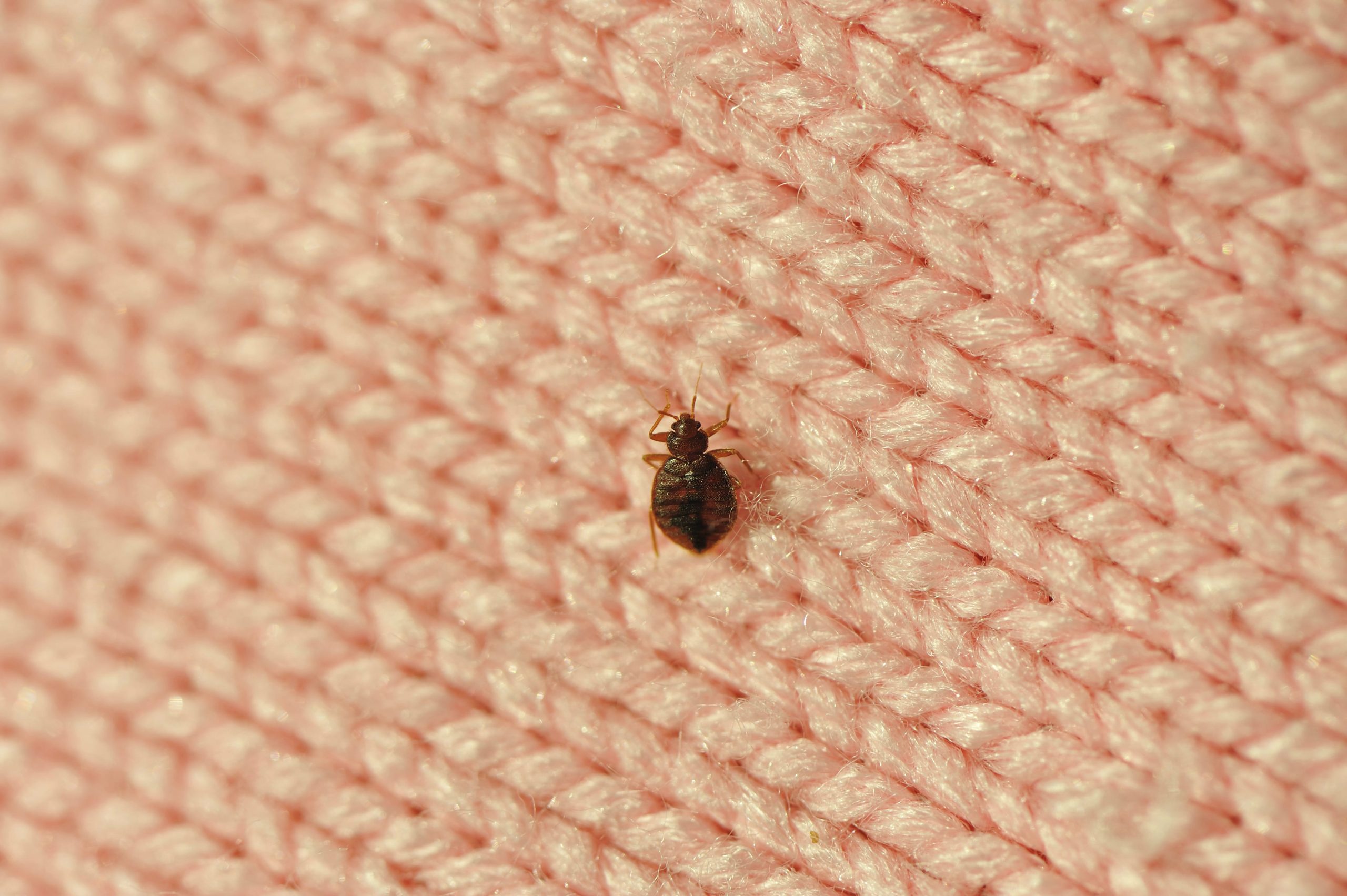
Where the bites came from matters too
Context narrows it quickly. Bites that appeared after a hotel stay, a stay with family, a second hand furniture purchase or a move into an apartment point one way. Bites that started when a pet began scratching point another. Bites that began after birds nested in a soffit point to mites.
Bites only while you are at home, never while away, suggest something in the house. Bites that follow you suggest a skin condition instead.
What to do next
- Treat the bites symptomatically and see a doctor if they are severe, infected or spreading
- Strip the bed and inspect the seams, frame and headboard in good light
- Check the surrounding furniture, not just the bed
- Resist throwing out the mattress, which rarely helps and spreads the problem through the building
- Do not start spraying, which scatters them into the walls and makes the job harder
- Get a proper inspection if you find any physical evidence, or if bites continue with nothing found
Stewart Termite & Pest Control has inspected and treated bed bugs across the Pittsburgh area since 1987. Call 412-822-7610 or request an estimate online.
Frequently Asked Questions
How can I tell if bites are from bed bugs?
Look at the pattern and location. Bed bug bites tend to form lines or tight clusters on skin exposed while sleeping, such as arms, shoulders and neck. Bites alone never confirm it, so check the bed for physical evidence.
What is the difference between flea bites and bed bug bites?
Flea bites concentrate on the ankles and lower legs with a distinct red dot at the center, and usually mean a pet. Bed bug bites appear on the upper body overnight, often in a line.
Why does only one person in the bed get bitten?
Reactions vary a great deal between people, and a significant share show no visible reaction at all. Both people are being bitten; only one is reacting.
How long after a bed bug bite does a mark appear?
Anywhere from a few hours to several days, which is why people often blame the wrong night or the wrong location.
Can a doctor confirm bed bugs from the bites?
No. There is no feature of a welt unique to bed bugs, so a doctor can say the bites are consistent with them but cannot confirm it. Physical evidence in the room is what settles it.
What should I not do if I suspect bed bugs?
Do not throw out the mattress or start spraying. Both spread the problem, the first through the building and the second into wall voids where treatment is harder.