
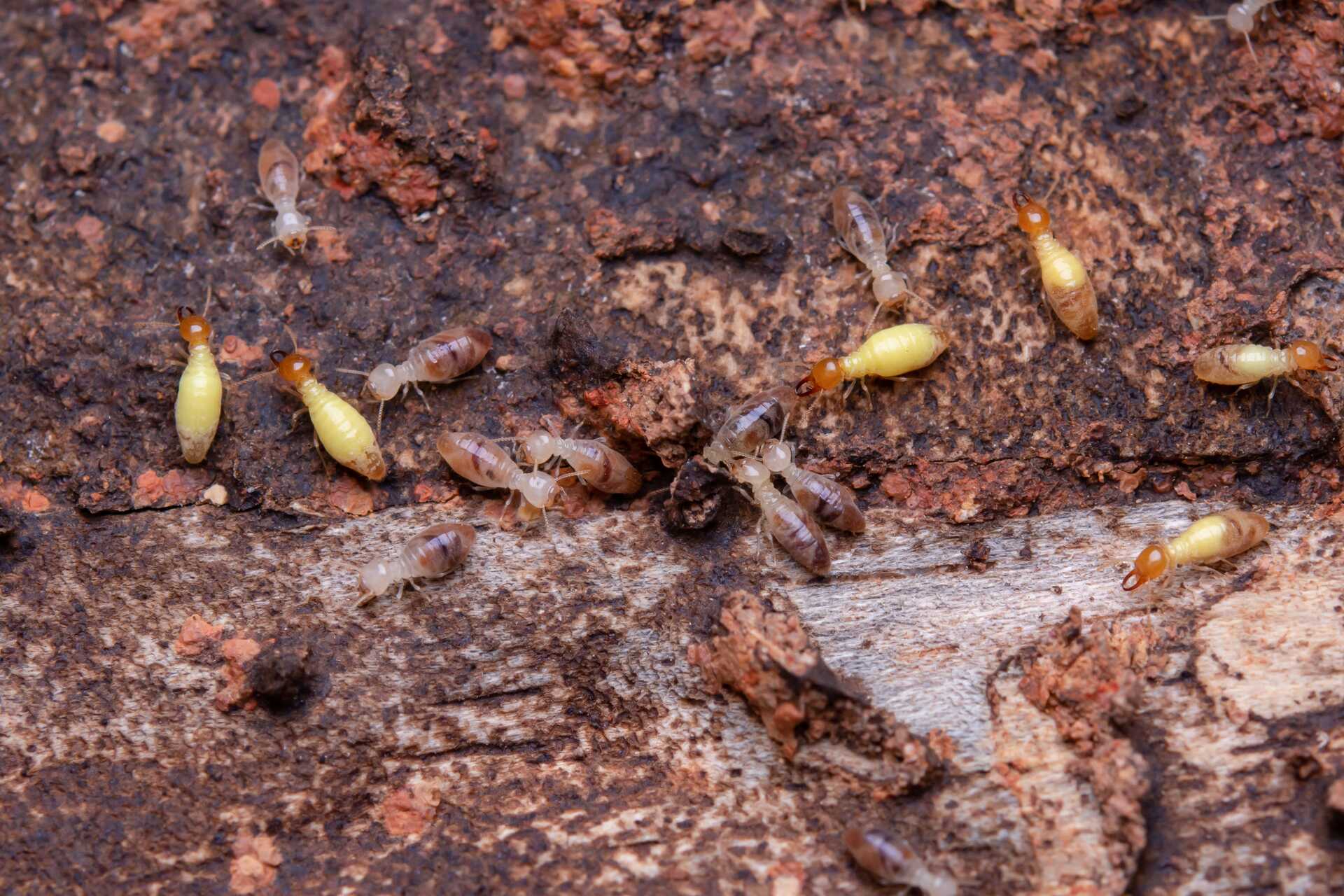
Termites cause billions of dollars in structural damage across the country every year, and Pittsburgh houses are no exception. The difficulty is that they are secretive. By the time damage is obvious, the colony has usually been feeding for months or years.
They do leave evidence, though, and it is findable if you know what the clues are. Catching activity early is the difference between a treatment and a treatment plus a contractor, which is the whole argument for knowing these signs and for periodic termite inspection.
Mud tubes on foundations and joists
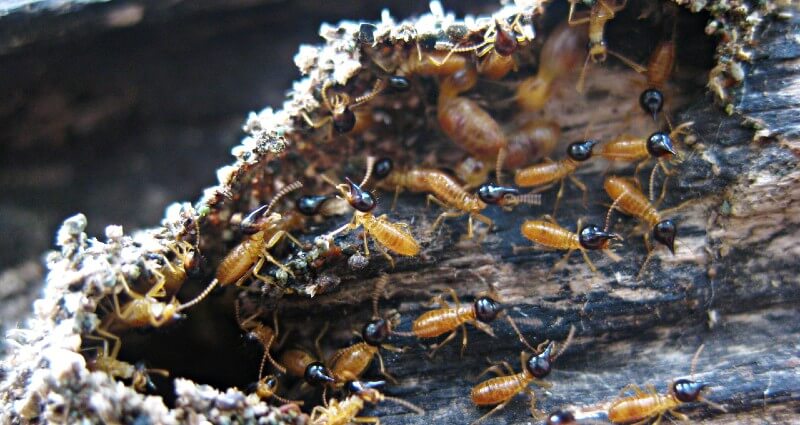
The clearest sign of subterranean termites, the species established throughout Pennsylvania, is the mud tube. Workers build these earthen tunnels to travel between the soil colony and the wood they are eating without drying out or being exposed.
They are roughly pencil width, tan or brown, and look like dried mud trails running up a wall or along a beam.
If you find one, do not break the whole thing open and assume it is dead because nothing is moving inside. Break off a small section, leave the rest intact, and look again in a few days. A repaired tube means an active route.
Mud tubes are about the width of a pencil and run along foundation walls, joists and piers.
Places worth checking:
- Foundation walls, inside and outside
- Basement and crawl space walls, including the inside faces of block
- Floor joists, sill plates and support posts
- Around pipes and utility lines entering the house
- Behind stored boxes and shelving in basements and garages
Wood that sounds hollow
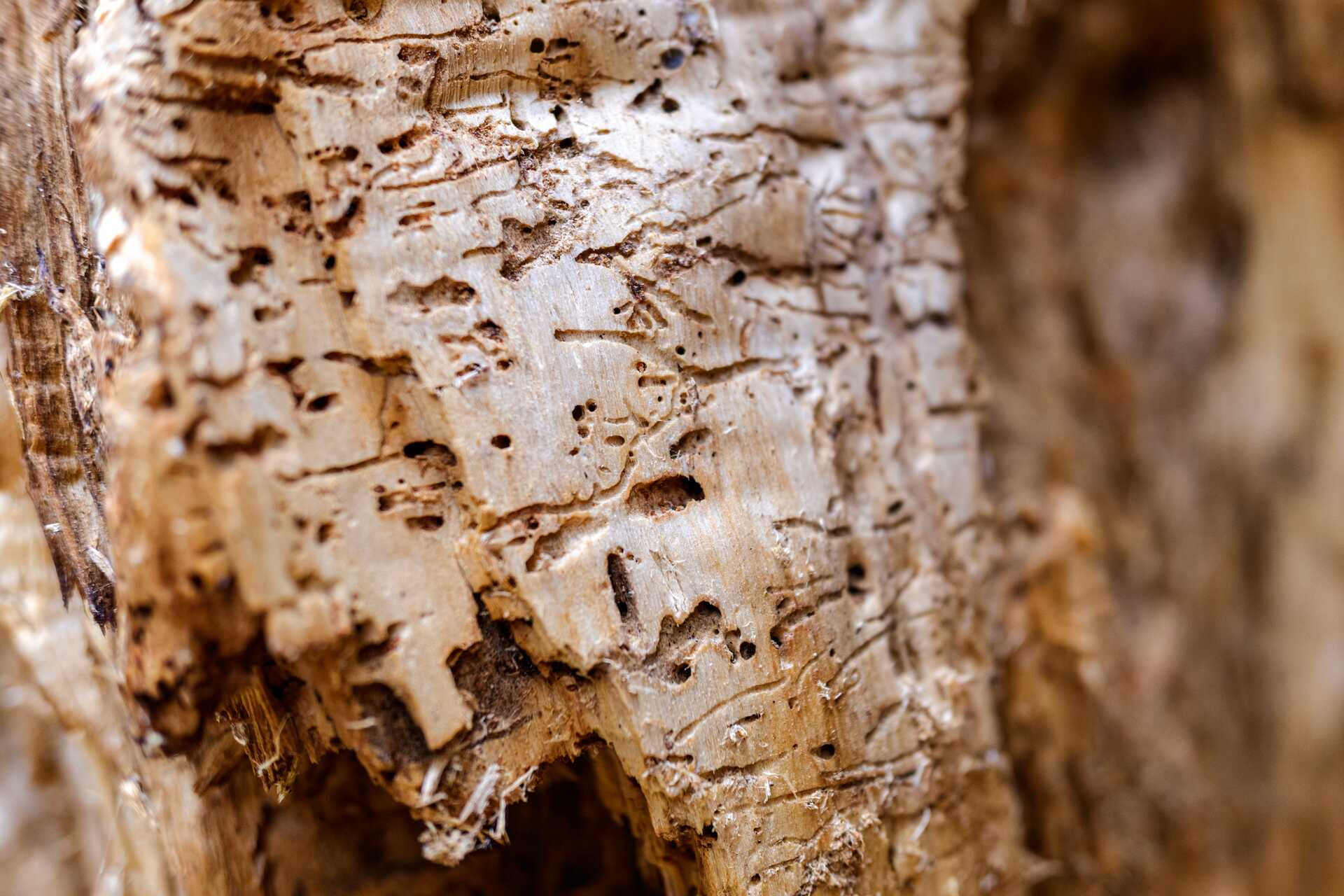
Termites eat wood from the inside out and leave the surface intact, so a board can look perfectly normal while most of its interior is gone. Tapped with a screwdriver handle or a knuckle, damaged wood sounds hollow or papery. Sound timber answers back solid.
Worth tapping: baseboards and door frames, window sills, basement and crawl space beams, exterior trim and siding near grade, deck posts and railings. If something sounds wrong, press on it. If a screwdriver sinks in or the wood crumbles, that is damage rather than a bad acoustic.
Discarded wings near windows and doors
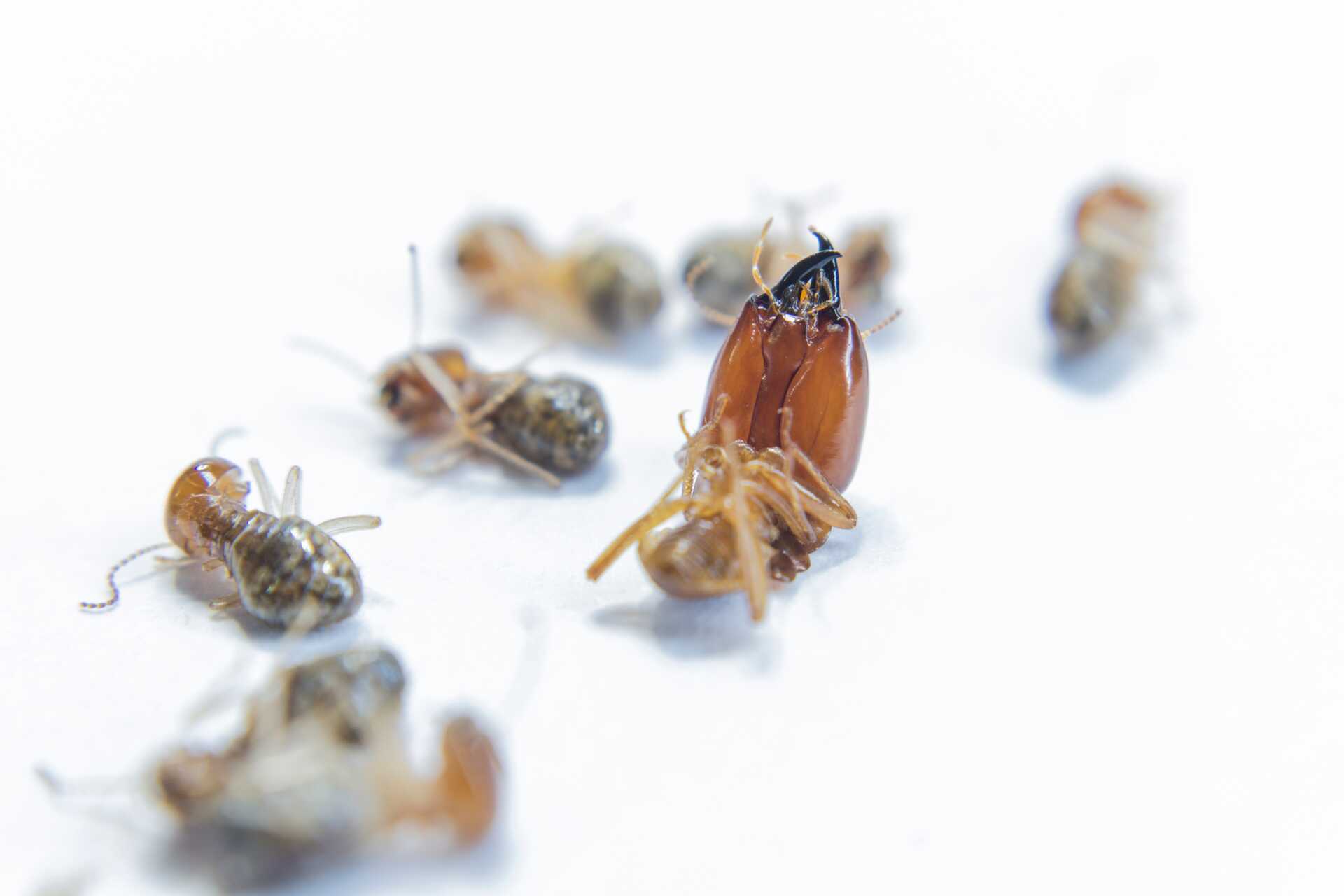
Mature colonies release winged reproductives in spring, usually on warm humid days after rain. They fly, land, shed their wings and pair off. Small piles of matching translucent wings on a window sill, in a window well or by a door are a strong sign a mature colony is nearby.
People regularly mistake swarmers for flying ants. Three differences settle it:
- Termite wings are all the same length. Ant wings come in two sizes
- Termite antennae are straight. Ant antennae are bent
- Termites have a thick straight waist. Ants have a pinched one
Swarmer wings are all the same length, which is the quickest way to tell them from flying ants.
What about frass?
Search online and you will read about frass, the sand-sized pellets termites push out of exit holes. That is a drywood termite sign, and drywood termites are not established in Pennsylvania. They can turn up inside imported furniture or crates, but they are not what damages houses here.
In this area the signals that matter are mud tubes, discarded wings and hollowed wood. If someone tells you to go looking for pellet piles in a Pittsburgh basement, they are reading national advice.
The structural signs people blame on the house
These are the ones most often attributed to an old house settling:
- Doors and windows that suddenly stop closing properly
- Floors that feel soft, spongy or bouncy underfoot
- Paint that bubbles or looks rippled on trim and baseboards
- Small holes in drywall or crumbling baseboard edges
- Sagging in a floor or a ceiling line
Any of these can be settling, moisture or age. The point is not to panic about them, it is that a house doing several of them at once deserves a look underneath rather than a shrug.
Doors that stop fitting and floors that feel soft are often read as settling.
Where Pittsburgh houses give them an opening
Local construction and climate matter. Clay soil holds water against foundations. Older city and South Hills housing often has heavy wood framing, porch posts set near or into soil, and basements where framing sits close to grade. Add humid summers and the conditions are consistently favorable.
The common openings are mundane: downspouts discharging at the foundation, mulch piled against siding, firewood stacked on soil near the house, buried deck or lattice framing, and unventilated crawl spaces. What attracts termites to a house covers the full list.
What gets mistaken for termites
Not every insect in damaged wood is a termite, and the difference changes the treatment entirely.
Carpenter ants are the most common mix up in this area. They do not eat wood, they excavate it to nest, so their galleries are smooth and clean and they push coarse sawdust out of the opening. Termite galleries are packed with soil and look dirty by comparison. Carpenter ants are also visible insects walking in the open, which termites almost never are.
Powderpost beetles leave small round exit holes and fine flour-like dust, usually in hardwood flooring, trim or furniture rather than structural framing.
Old damage is its own category. Wood damaged years ago and treated at the time looks identical to fresh damage. What separates them is whether tubes are being rebuilt and whether live insects turn up when damaged wood is opened.
Termite workers inside wood. Their galleries are packed with soil, unlike the clean galleries carpenter ants leave.

What to do the moment you find something
The useful sequence is short and it mostly involves not doing things.
- Photograph it before touching anything, including the surrounding area for context
- Leave mud tubes intact apart from one small broken section
- Do not spray it. Repellent product scatters workers and destroys the evidence of where they were traveling
- Do not pull out damaged wood or start opening walls
- Note where it is and whether anything nearby is damp
- Have it inspected while the evidence is still readable
An intact scene is worth a great deal to an inspector. The route a colony is using says more about where to treat than the insects themselves do.
A seasonal check that takes twenty minutes
Twice a year, ideally early spring and fall, walk the perimeter and the basement:
- Outside, look along the foundation for mud tubes, and at any point where wood meets soil
- Check that downspouts carry water away and that mulch is back from the siding
- Inside, scan the foundation walls and the sill plate with a flashlight, including behind stored items
- Knock on joists, posts and the sill plate, listening for hollow spots
- In spring, check window sills and wells for shed wings
Nothing on that list catches a colony on day one. What it does is catch one before the damage becomes structural, which is where the cost is.
Stewart Termite & Pest Control has inspected and treated Pittsburgh homes for termites since 1987. If something on this list turned up, call 412-822-7610 or request an inspection online.
Frequently Asked Questions
What is the earliest sign of termites?
Usually mud tubes on a foundation wall, or shed wings near windows in spring. They often show up before damage is noticeable, because termites eat wood from the inside, but by then the colony has been feeding for a while.
How do I know if a mud tube is active?
Break off a small section and leave the rest. If it is rebuilt within a few days, the route is active.
How do I tell termite swarmers from flying ants?
Termites have four wings of equal length, straight antennae and a thick waist. Ants have two wing sizes, bent antennae and a pinched waist.
Is frass a termite sign in Pittsburgh?
Not usefully. Frass pellets come from drywood termites, which are not established in Pennsylvania. Here the signs are mud tubes, shed wings and hollow wood.
Can termite damage look like normal settling?
Yes, and it often does. Sticking doors, soft floors and bubbling paint all have innocent explanations, which is why several of them together is worth investigating.
How often should a Pittsburgh home be inspected?
A yearly professional inspection is reasonable for most houses, more often where there is a history of activity nearby, and a twenty minute homeowner check each spring and fall in between.