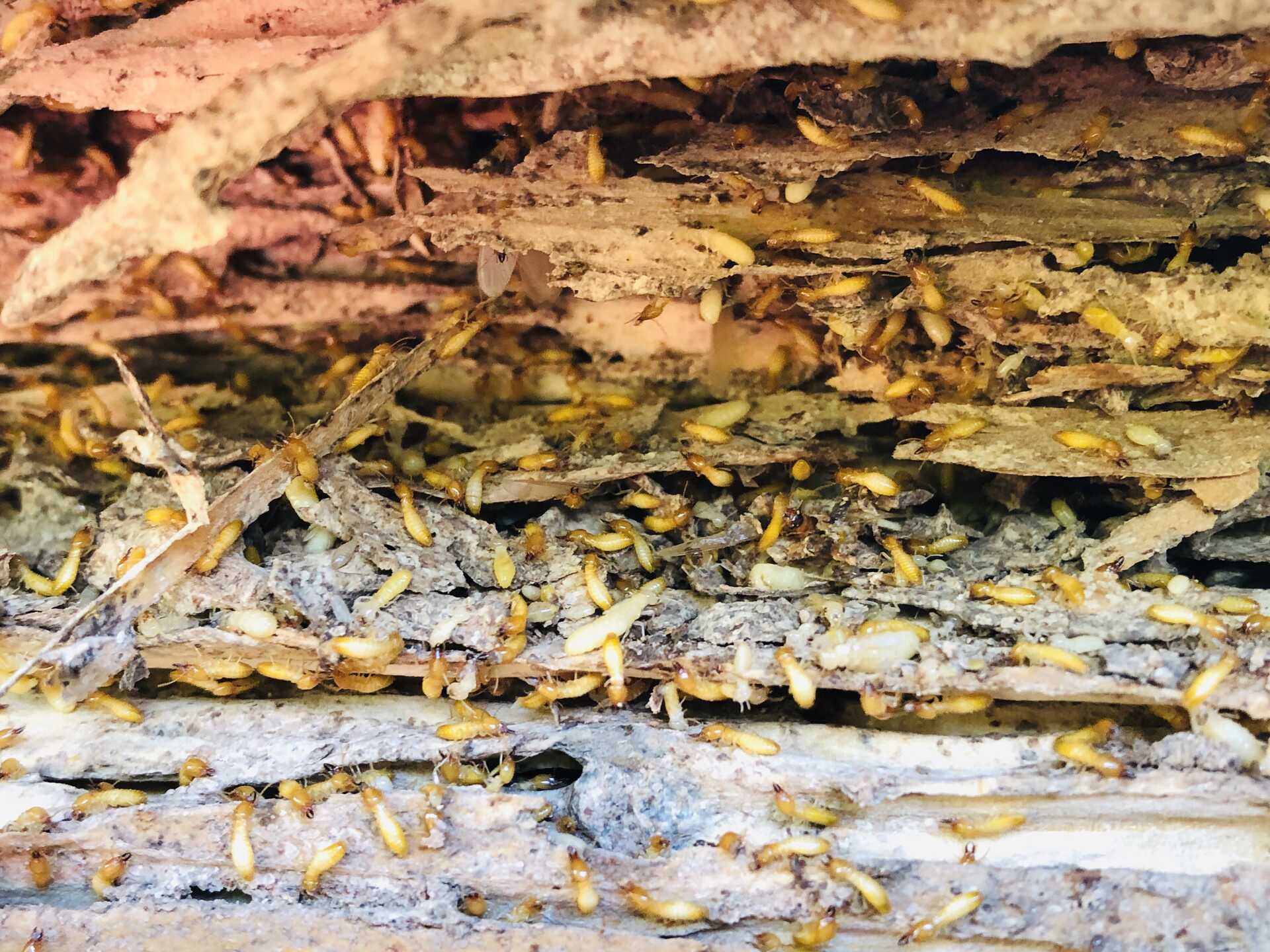
Most homeowners never think about termites until they find damage hiding behind a wall or beneath a floor. By then, these insects may have been feeding for months or even years. Termites are quiet, persistent, and surprisingly efficient at breaking down the wood that holds your home together.
Property owners across the United States spend billions each year dealing with termite structural damage. The real danger is not a dramatic collapse. It is the slow, hidden weakening of beams, joists, and wall studs that you do not notice until repair bills start stacking up.
How Termites Ruin Your House From the Inside Out
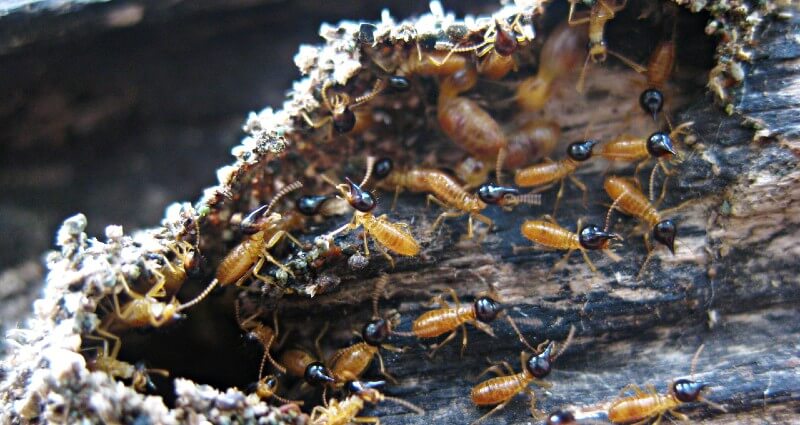
Termites feed on cellulose, the organic compound found in wood, paper, and certain building materials. They work from the inside outward, hollowing out beams while leaving the outer surface intact. That is why so many infestations go undetected for years.
Subterranean termites, the most common species in the U.S., build mud tubes from the soil to reach wood in your home. Formosan termites, a particularly aggressive species, can cause significant harm in as little as six months. When people ask “can termites destroy a house,” the answer is yes, given enough time and the right conditions.
Warning Signs That Termites Are Ruining Your House
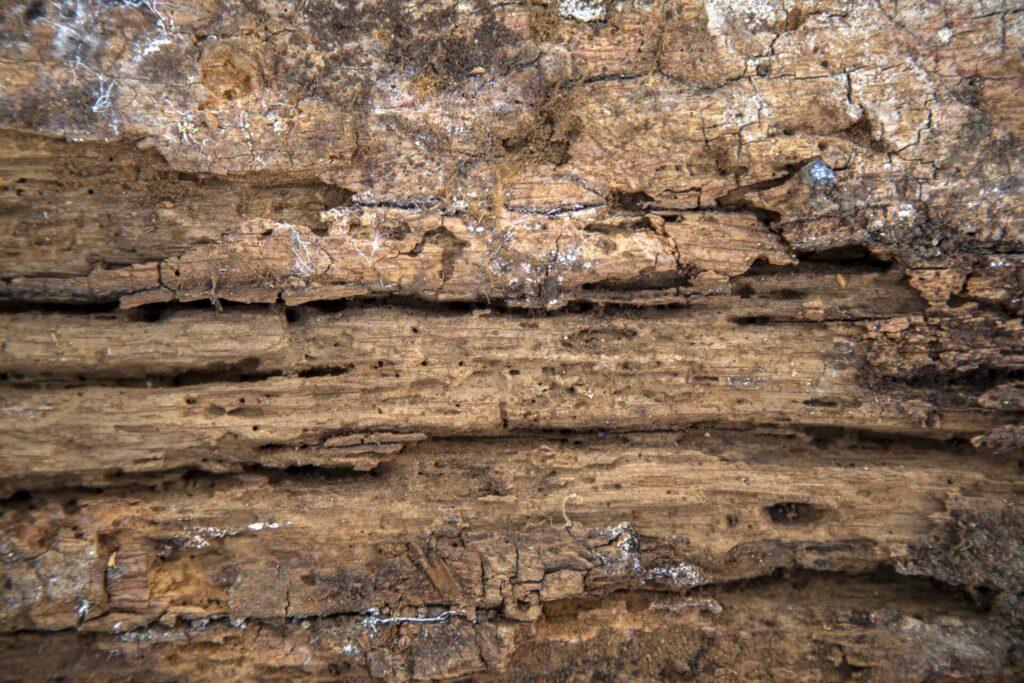
Catching an infestation early can save you thousands. Hollow-sounding wood is one of the most common indicators. If you tap on a baseboard or door frame and it sounds papery or empty, termites are likely responsible.
Mud tubes running along your foundation are another clear signal. Cracked or bubbling paint, sagging floors, and piles of discarded wings near windows are all worth investigating. If you spot any of these, schedule a professional inspection right away.
What Is the Cause of Termites?
Termites are a natural part of the ecosystem, breaking down dead wood and returning nutrients to soil. The problem starts when your home provides what they need: moisture, wood, and easy access. Leaky pipes, poor drainage, and wood-to-soil contact around the foundation are the primary invitations.
Stacking firewood against your house, piling mulch too close to the foundation, and letting gutters overflow all create conditions termites love. Reducing moisture and eliminating direct wood-to-ground contact are the two most effective prevention strategies you can implement today.
Is It Safe to Live in a House Infested With Termites?
Termites do not bite humans, spread diseases, or produce harmful toxins. Living in a home with an active infestation is not an immediate health risk. However, weakened floors, compromised load-bearing walls, and deteriorating roof supports can create genuine safety hazards over time.
I would not recommend ignoring the problem. The longer an infestation persists, the more expensive termite damage repair becomes. A colony active for several years can cause damage totaling tens of thousands of dollars. Addressing the issue early is always the smarter move.
What Kills Termites Instantly?
Liquid termiticides containing fipronil or imidacloprid kill termites on contact and are among the most effective options available. These chemicals are non-repellent, so termites walk through them unknowingly and carry the substance back to the colony. Heat treatment, which raises temperatures above 120 degrees Fahrenheit for at least 30 minutes, is another fast method.
For smaller clusters, a mixture of liquid soap and water can suffocate termites by coating their bodies. DIY methods like boric acid and orange oil work in limited situations. That said, spot treatments do not address the full colony. For a thorough approach, check out this article on Can Pest Control Help With Termites? to see how professionals handle it.
What Bug Can Be Mistaken for Termites?
Homeowners misidentify termites roughly 80 to 90 percent of the time. The most common lookalike is the flying ant. Both insects swarm during warmer months, which makes them easy to confuse. Termites have straight antennae, a broad waist, and four wings of equal length. Flying ants have elbowed antennae, a pinched waist, and uneven wings.
Carpenter ants are another frequent source of confusion because they also damage wood, though they do not eat it. Powderpost beetles and carpenter bees round out the list of common imposters. Correct identification matters because each pest requires a different treatment plan.
Termites vs. Common Lookalikes
| Feature | Termites | Flying Ants | Carpenter Ants |
|---|---|---|---|
| Antennae | Straight, bead-like | Elbowed | Elbowed |
| Waist | Broad, uniform | Pinched, narrow | Pinched, narrow |
| Wings | Four equal-length | Front wings longer | Front wings longer |
| Wood Damage | Eats wood, mud-lined tunnels | No wood damage | Smooth galleries, no eating |
How Much Does Termite Damage Cost to Repair?
The financial toll depends on how long the colony has been active. Minor repairs might run a few hundred dollars. Major termite structural damage to load-bearing walls or roof supports can cost $3,000 to over $8,000. In extreme cases, homes have required over a million dollars in repairs.
Most standard homeowners insurance policies do not cover termite damage because insurers consider it preventable. That makes proactive prevention a financial necessity. The U.S. Environmental Protection Agency recommends annual inspections and maintaining termiticide barriers as part of a comprehensive protection plan.
Can Termites Ruin Your House if You Act Early?
Early action dramatically reduces your risk. A colony detected in its first year is far easier and less expensive to treat than one feeding for a decade. Professional companies use liquid barriers, bait systems, and direct wood treatments to eliminate colonies. The cost of treatment is almost always a fraction of the cost of termite damage repair.
I recommend scheduling an annual inspection, especially in warm, humid regions. Between inspections, watch for mud tubes, discarded wings, and hollow-sounding wood. Reduce moisture around your foundation, fix leaks promptly, and keep firewood away from the house.
Protecting Your Home Before Termites Become a Problem
Prevention beats treatment every time. Start by eliminating wood-to-soil contact around your foundation. Replace wooden lattice or posts sitting on the ground with concrete or pressure-treated alternatives. Grade the soil so water flows away from the foundation.
Seal foundation cracks with cement or a patching compound. Keep crawl spaces ventilated and dry. Trim vegetation so it does not touch exterior walls. When homeowners ask can termites destroy a house, the honest answer is that they absolutely can. But with the right prevention strategy, they do not have to.