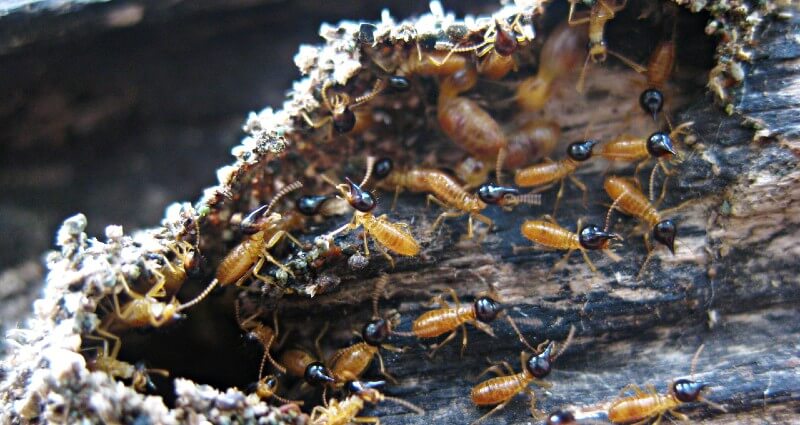
Termites are among the most pervasive and damaging pests in the world, and they are found in nearly every region of the United States. Termites nest primarily outside deep in the ground and forage to feed on structures unseen, though they may consume boxes, drywall coverings, and other paper material. A termite infestation inside walls or in floors can be especially damaging to your home.
Our Unique Approach To Termite Inspection & Treatment Service
Stewart Termite & Pest Control has specialized training and decades of experience dealing with termites in Pittsburgh, PA, and undergo specific protocols to ensure the total and complete extermination of termites invading your home. Stewart Termite & Pest Control performs a comprehensive inspection to locate all the areas in your home that are being affected by termites, followed by precision baiting, a proven method to exterminate the entire colony of termites, as well as close monitoring to guarantee the full removal of termites.
1. TERMITE INSPECTION
Our thorough termite inspections are performed by one of our specialists who has advanced and ongoing training to keep sharp on revolutionized modern techniques. With years of experience in the field and remarkable skills to perform a detailed inspection; they can gather the evidence that shows where they were and where they are. After meticulously going over your Pittsburgh, PA home, our experts will chart where the termites are throughout your home. Knowing where the termites can better coordinate a plan of attack to ensure effective treatments.
2. TERMITE CONSULTATION & CUSTOM TREATMENT PLAN
Before choosing the treatment plan, Stewart Termite & Pest Control will include a consultation service where you can get answers to all your questions. We will happily explain the inspection and the different treatment options available at that time we will design a custom treatment program that is best for you. During the services, we will continue to consult on progress.
If you have termites, or suspect termites might be present in your Pittsburgh, Pennsylvania home, give us a call today to learn more and to schedule an appointment with an expert termite exterminator.
Why Choose Stewart Termite & Pest Control
We’re passionate about helping people just like you get rid of unwanted pest problems. As such, we are proud to be the only pest control company in Pittsburgh, PA promising excellence in value, service, and trust.
Value
After your pest inspection, we’ll provide you with a quote that makes sense for your budget and unique needs.
Service
We’re not happy unless you are. So if you’re not satisfied with your most recent service, we’ll make it right.
Trust
We know you are putting a lot of trust in our hands. So we promise to treat you and your home with respect.
Yes! Termite Inspections are 100% FREE for homeowners. During this time, we will check for termites and conditions that are conducive to their existence. To schedule your termite inspection, call 412-822-7610 today!
If you have a termite problem, you need to act fast! These pests cause an estimated $5 billion in damages each year. So please give us a call at 412-822-7610! We’ll do our best to treat your home within 24-48 hours.
Yes! We guarantee our liquid treatment and bait stations for one year. This includes an inspection, report, and re-treatment if any termites are found.
Stewart Termite & Pest Control will get to the termites before they get to you! Our termite treatment creates a protective barrier around your home, plus we check your property every year for termite activity. If we discover termites during this time, we’ll re-treat your home at no cost to you! This truly is the best way to protect your home from these pests.
Absolutely! Termites cause an estimated $5 billion in property damage and repairs every year across the United States. So if your home isn’t protected with a termite treatment like ours, your home is susceptible to termite damage which may go unnoticed until it’s too late! So please give us a call at 412-822-7610 to schedule your termite inspection.
Save 20% on Your Annual Pest Control!
Switch to an Annual Pest Control Plan and get 20% off when you purchase your Annual plan in advance.
Fantastic work! He came super fast, worked with my schedule, took him 15 minutes, and got rid of the yellow jackets that made the arch of the kitchen door their home. The best part is that it was so so affordable, and had a guarantee in case we needed additional time. It couldn’t be any better!– Pat P. in Pittsburgh, PA
Fantastic company! My family has used them for the last five years for a variety of pest-related issues at our house in the South Hills of Pittsburgh, and Stewart always had the lowest prices and best service. We will be using them again when we move into our new home and recommending them far and wide. A++!– Dave K. in Pittsburgh, PA
I hired Greg to deal with a ground yellow jacket nest. He came when he said he would, was very professional, and dealt with the nest quickly and effectively. He’ll definitely be at the top of my list the next time I have any sort of yellow jacket or other pest issues. Thanks again!– Tell V. in Pittsburgh, PA
pest control, mosquito, termites, home protection plan, mice, raccoon, pest, exterminator near me, rat control, bed bug exterminator cost, drywood termites, termite control services, mosquito treatment, pest inspection, termite inspection, rodent control, ant control, bed bug inspection, rodent, pest services, bed bug treatment, mosquito control, wasps, carpenter bee, spotted lanternfly, subterranean termites, pest control services, pest control experts, pest control solutions, pest control service, pest control treatments, roof rats, american roaches, american cockroaches, bed bugs, carpenter ants, beetles, commercial pest control, pest management, termite, termite treatment cost, termite companies near me, termite inspection near me, termite exterminator, termite inspection cost, termites in house, termite exterminators near me, best termite company near me, termite company, termite tenting, termite control, termite treatment, termite service, termite removal, termite infestation, integrated pest management, treatment, termiticide
termite control pittsburgh, termite treatment pittsburgh, termite inspection pittsburgh, termite exterminators, pest control pittsburgh, remove termites pennsylvania, termite removal pittsburgh, pittsburg termite inspection, termite control pittsburgh pa, stewart pest control, termite service company pittsburgh, monthly termite treatment pittsburgh, monthly termite service pittsburgh