
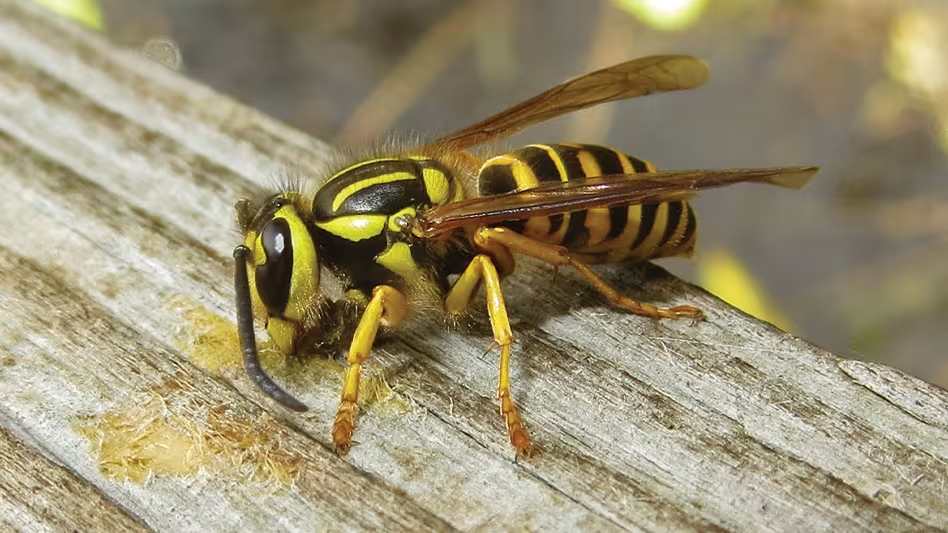
Yellowjackets are tolerable in June and genuinely difficult in late August. The same insects that ignored everyone all summer start landing on drinks, hovering over food and stinging with very little provocation.
The change is real rather than imagined, and it comes down to the colony’s annual cycle. Once you know what is driving it, both the timing and the response make sense. For a nest on or near a building, wasp and bee removal handles it safely.
The colony is at its largest
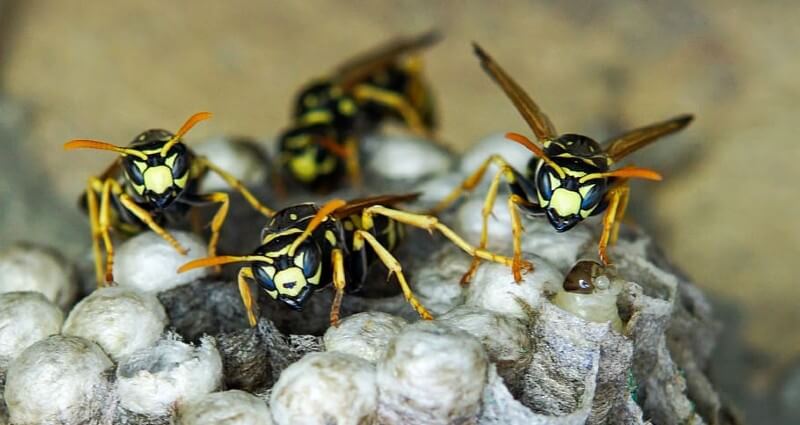
A yellowjacket colony starts over every year. A single overwintered queen emerges in spring, builds a small nest and raises the first few workers herself.
From there it compounds. Those workers take over foraging and building, the queen does nothing but lay, and the population grows through the summer. By August a ground nest can hold a few thousand workers, and a large one considerably more.
So part of the answer is simply numbers. The same yard that had a handful of wasps in June has hundreds by late August, and the odds of an encounter rise accordingly.
A colony that started with one queen in spring peaks in late summer.
The food they want changes
This is the part that actually explains the behavior at a picnic table.
For most of the season, yellowjacket workers hunt protein. They catch caterpillars, flies and other insects, chew them up and feed them to the larvae back at the nest. They are, through this period, genuinely useful predators and they have no interest in your lunch.
In exchange, the larvae secrete a sugary liquid that the adult workers feed on. That exchange is the colony’s internal economy, and it works right up until the end of summer.
In late summer the colony stops raising new workers and switches to raising next year’s queens and males. As the worker larvae disappear, the sugar supply that kept the adult workers fed dries up. Thousands of adults are left with nothing to do and nothing to eat, and they go looking for sugar wherever it is: fallen fruit, trash cans, soda, ice cream, beer and anything sweet on an outdoor table.
That is why they are suddenly interested in people. It is not increased aggression so much as desperation plus proximity.
They are also defending more
The colony has its largest investment to protect in late summer, including developing queens that will overwinter and start next year’s nests. Defensive response around the nest is correspondingly strong, and the radius over which they will respond is larger.
Combined with the numbers, that makes accidentally disturbing a nest in August much more serious than the same mistake in June. Yellowjackets can sting repeatedly, and they release an alarm pheromone that recruits others, so one disturbance can produce many stings in seconds.
Where this goes wrong around a house
The majority of stings happen because nobody knew a nest was present until a mower, a hedge trimmer or a footstep set it off.
- Ground nests in an old rodent burrow, under a shrub, beside a path or in a bank. Mowing over one is the classic incident
- Wall voids, entered through a gap in siding, a vent or a utility penetration, with the nest entirely hidden
- Soffits, eaves and roof overhangs
- Under decks and porch steps, and inside hollow railings
- Sheds, garages and outbuildings, particularly behind stored material
- Dense shrubs and ivy against a wall
Watching for a steady stream of insects going in and out of one point, for a few minutes, locates most nests without getting close.
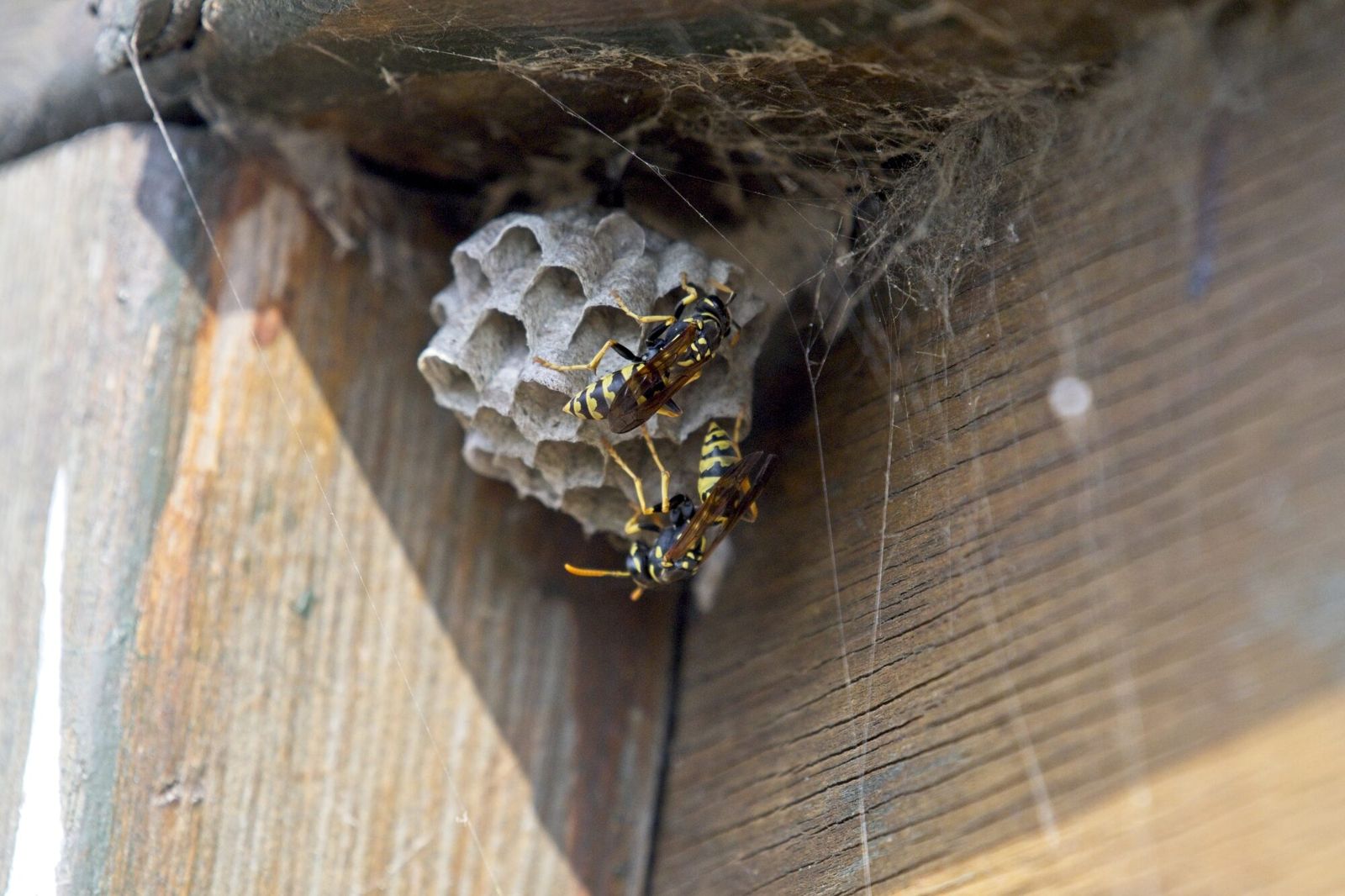
A nest tucked under eaves is easy to miss until someone gets close.
Reducing the problem outdoors
- Keep trash cans sealed and move them away from where people sit. An unlidded trash can is the single biggest draw in a yard
- Clear fallen fruit from under trees regularly
- Cover food and drinks outdoors, and use cups with lids. A can left open is the classic route to a sting in the mouth
- Rinse recycling before it goes out
- Clean grills and outdoor tables after use
- Avoid swatting. A crushed yellowjacket releases alarm pheromone that brings others
- Move calmly away rather than flailing, which is read as an attack
Why DIY nest removal goes badly
Retail wasp sprays work on a small, visible, accessible nest early in the season. In late summer, on a large nest, they tend to produce a cloud of defensive workers and a person on a ladder.
Ground nests are worse, because the entrance rarely sits directly above the nest and the spray often misses the colony entirely while thoroughly annoying it. Wall void nests are worse still: spraying the entrance can drive the colony inward, and wasps that cannot get out the usual way frequently come through into living space instead.
Pouring gasoline, boiling water or anything similar into a ground nest is both ineffective and dangerous, and it damages the ground besides.
The sensible rule is that a nest reachable from the ground, small, and early in the season is a reasonable DIY job in the evening with an escape route planned. Anything in a wall, on a roof, large, or in late summer is not.
What happens next
The season ends decisively. As temperatures drop, the workers die off, and the only survivors are newly mated queens, which leave to overwinter under bark, in leaf litter, in wall voids and in sheltered crevices.
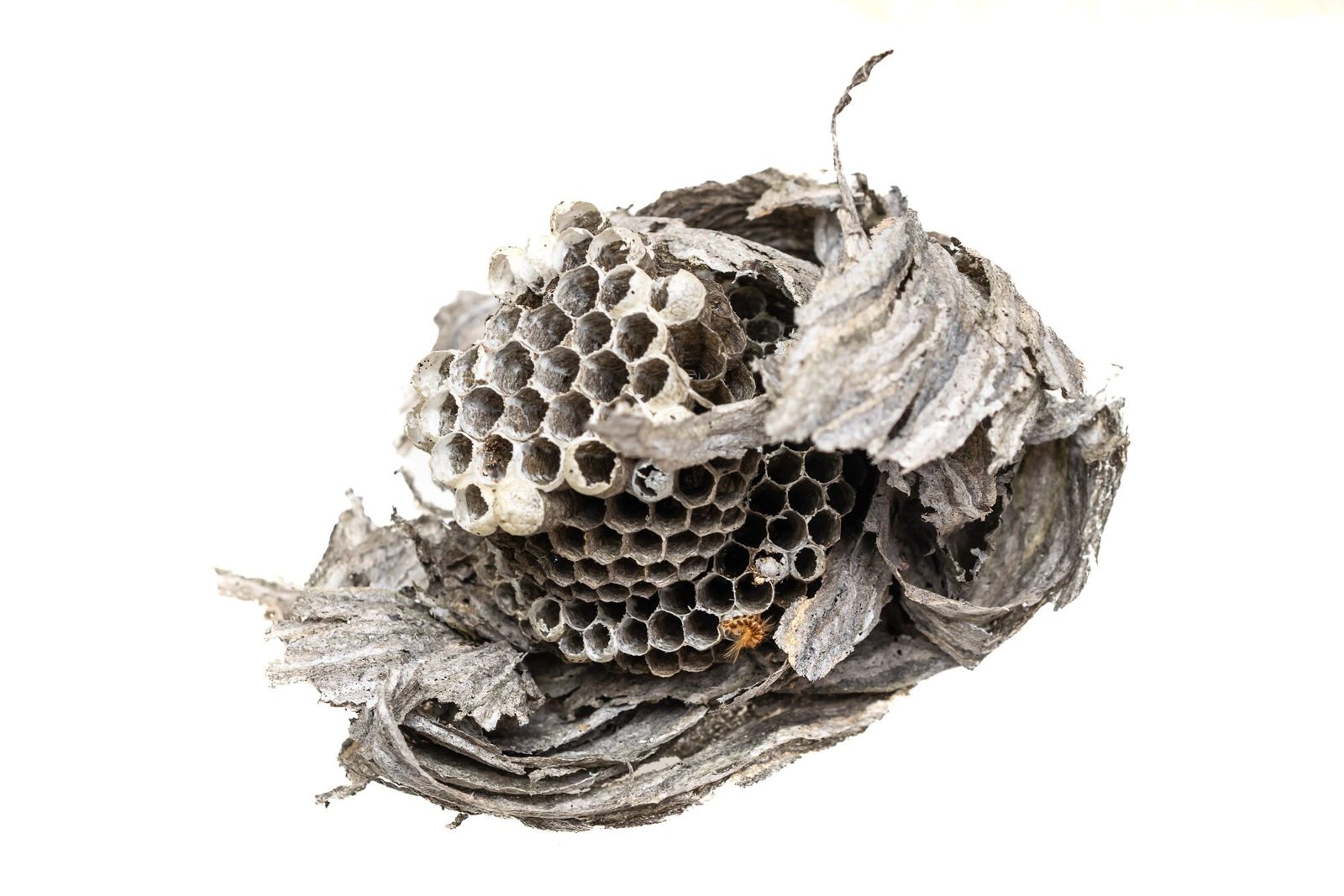
The old nest is abandoned and never reused. A paper nest hanging in a tree in December is empty, and so is a ground nest.
That matters for two reasons. An old nest in winter is no danger, and taking it down then is safe and keeps the spot from looking like a proven site. And the right time to deal with next year’s problem is spring, when a single queen is building a nest the size of a walnut and can be dealt with easily. Why wasps return to the same spot covers that cycle.
An old nest. The colony dies off in fall, and the nest is never reused.
When to call rather than handle it
A nest in a wall void, soffit or roof space. A ground nest in an area people or pets use. Any nest in late summer with heavy traffic. Any situation involving a ladder. And anything at all if someone in the household has a known sting allergy, where the sensible approach is to treat it as a medical risk rather than a nuisance.
Stewart Termite & Pest Control has removed wasp and yellowjacket nests across the Pittsburgh area since 1987. Call 412-822-7610 or request an estimate online.
Frequently Asked Questions
Why do yellowjackets get more aggressive in late summer?
The colony is at its largest and has stopped raising workers, so the sugary secretion the worker larvae provided to the adults dries up. Thousands of adults go looking for sugar, which puts them at picnic tables and trash cans.
Why are they suddenly interested in my food?
Earlier in the season they hunt insect protein for the larvae. Once the larvae are gone, they switch to seeking sugar, which is what brings them to drinks, fruit and trash.
What should I do if yellowjackets are around me?
Move away calmly and do not swat. A crushed yellowjacket releases an alarm pheromone that recruits others, and rapid movement is read as an attack.
Can I spray a yellowjacket nest myself?
Only if it is small, visible, reachable from the ground and early in the season. Ground nests, wall voids, roof level nests and anything in late summer are jobs where the risk is real.
Do wasps reuse their nest the next year?
No. The colony dies off with cold weather and only newly mated queens survive, overwintering elsewhere. The old nest is abandoned permanently.
When is the best time to deal with wasps?
Spring, when a single queen is starting a nest the size of a walnut. The same nest in August holds thousands of workers and is a far harder job.