
Carpenter bees are the large, slow flying bees that hover around a deck railing or a porch eave in spring and seem more interested in confronting you than in anything else. The hovering is harmless. What they do to the wood is not.
They bore into bare timber to nest, reuse and extend the same galleries year after year, and attract woodpeckers that do considerably more damage getting at the larvae. Here is what to look for. For an active problem on a structure, bee and wasp control handles it.
What they are, and what they are not
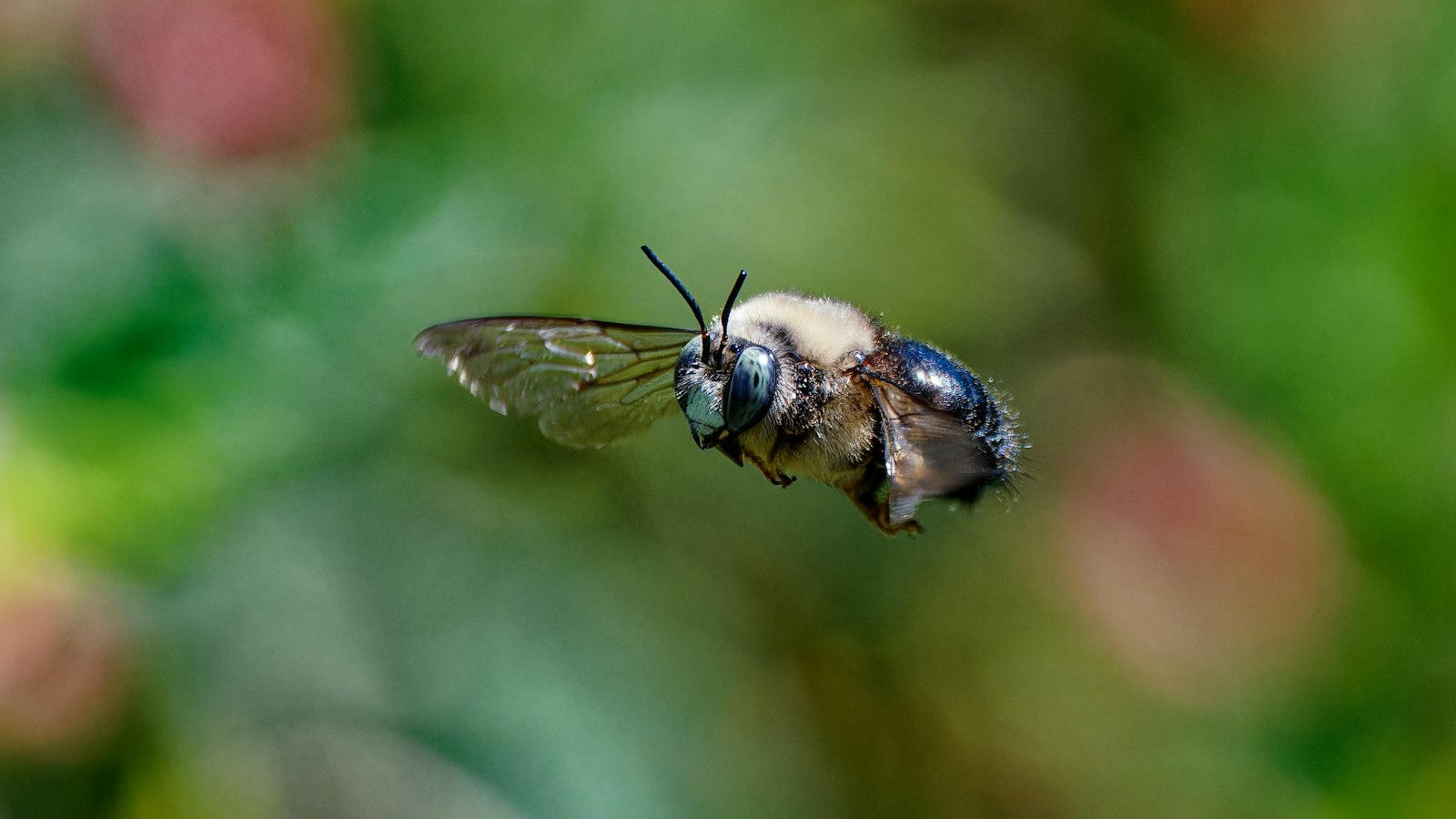
Carpenter bees look much like bumble bees and behave nothing like them.
The quickest separator is the abdomen: a carpenter bee’s is shiny, black and mostly hairless, while a bumble bee’s is fuzzy and banded. Carpenter bees are also solitary rather than social, so there is no colony and no hive, just individual females each working her own gallery.
The aggressive looking hovering is the male, who has no sting at all and is defending territory by bluffing. Females can sting but almost never do unless handled. So the insect dive bombing you on the porch is the one that physically cannot hurt you.
They are also pollinators, which is worth weighing. The case for action is structural rather than a matter of getting rid of bees generally.
An eastern carpenter bee. Note the shiny, mostly hairless black abdomen.
The hole is unmistakable
A carpenter bee entrance is a startlingly neat circle, about half an inch across, looking almost like it was drilled. Few other pests in a Pennsylvania home leave a hole like it.
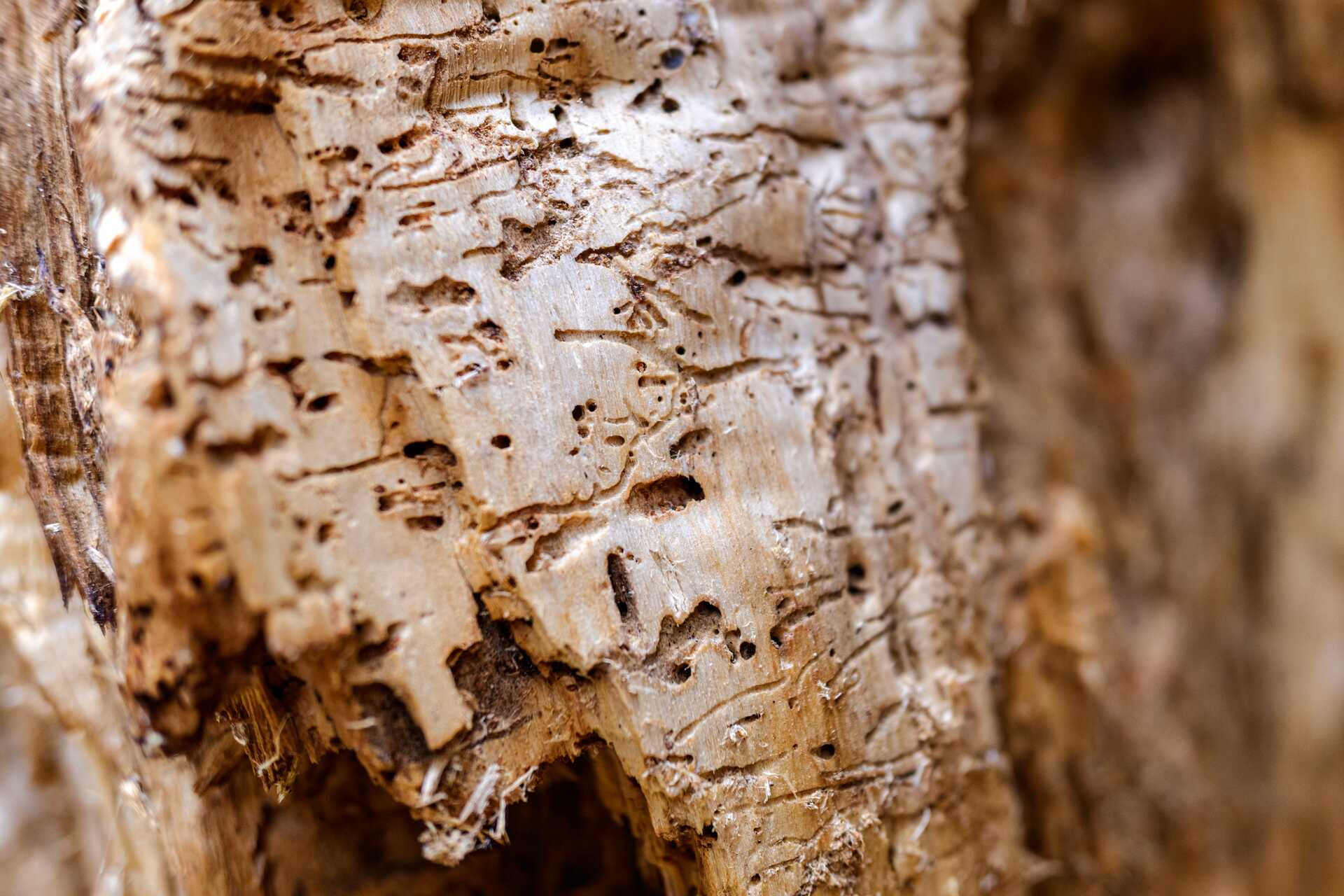
The gallery behind it turns at a right angle and runs along the grain, typically four to six inches in the first year. The bee does not eat the wood; she excavates it and discards the shavings, so coarse sawdust gathers directly below the hole.
You will often see a yellowish brown staining streaking down the wood beneath the entrance, which is waste, and it is frequently the first thing a homeowner notices.
Why the damage compounds
A single gallery is not a structural problem. The issue is what happens over time.
Carpenter bees return to the same wood each year, and rather than starting fresh they reuse and extend existing galleries, and offspring often nest in the same timber. A board with three holes can hold several feet of branching tunnel after a decade, and a heavily used fascia or rafter end can be substantially hollowed.
The tunnels also admit water into the interior of the wood, which brings rot, and rot brings carpenter ants, which want exactly that kind of softened timber.
And then there are woodpeckers, which is usually the part that forces action. They hear or detect the larvae and open the gallery along its length to get at them, turning a half inch hole into a long ragged gash. The repair bill for the woodpecker damage is often larger than for the bees themselves.
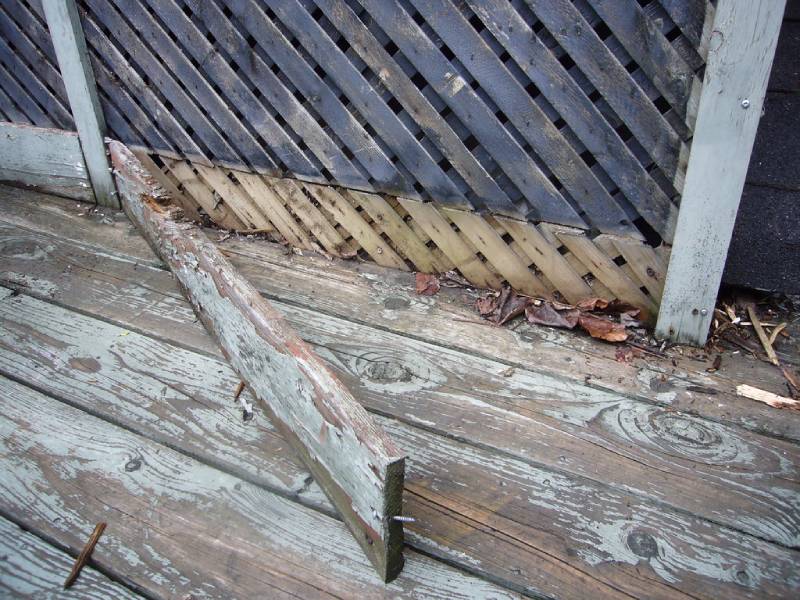
Bare, weathered deck and porch wood is exactly what they look for.
Where they go
They want bare, unpainted, weathered softwood, and they prefer wood that is horizontal or on the underside of something.
- Deck railings, rails and the undersides of boards
- Fascia boards and rafter tails
- Soffits and the underside of eaves
- Porch ceilings, posts and beams
- Window and door trim where paint has failed
- Wooden siding, especially cedar
- Fence rails and posts, pergolas and arbors
- Sheds, barns and outbuildings, which are usually unpainted and take the worst of it
- Outdoor furniture and play structures
They will take pressure treated wood, which surprises people, and they generally avoid hardwoods and well painted surfaces.
The season
Adults overwinter inside the old galleries and emerge in spring, usually April into May here. They mate, the females excavate or extend a gallery, provision cells with pollen and lay eggs, and the new generation emerges in late summer. Those adults feed, then return to galleries to overwinter.
That cycle gives two useful windows. Spring, when adults are active and treatment reaches them as they enter and leave. And late fall through winter, when the galleries can be treated and sealed with nothing emerging later to reopen them.
What to do about it
- Treat the galleries before sealing. Sealing a live gallery traps bees that simply chew a new exit, often alongside the plug
- Seal the holes afterwards, in fall or winter, with wood filler or a dowel and glue rather than caulk alone, then prime and paint over
- Paint or varnish exposed softwood. This is the single most effective prevention. Stain alone is much less of a deterrent than paint
- Replace rotted sections rather than filling them, since compromised wood invites more
- Consider hardwood or composite for railings and trim on a structure that gets hit every year
- Check in early spring and deal with new activity before galleries are established
Sealing is the step people skip, and it is why the same deck is treated every year. An unsealed gallery is next spring’s starting point.
Tunnels inside softwood. Galleries run along the grain behind the entrance hole.
Telling the damage apart from other wood pests
Three wood problems get confused, and the signs separate them cleanly.
Carpenter bees leave a single neat round hole about half an inch across on an exposed surface, with coarse sawdust below and staining streaking down. The gallery runs along the grain behind a right angle turn.
Carpenter ants leave a slit or irregular opening rather than a round hole, and push out frass that contains insulation fragments and insect parts alongside the shavings. Their galleries are smooth and follow the softer growth rings, and they want wood that is already damp.
Termites leave no visible opening and no debris at all, because they pack their galleries with soil. Surface wood looks intact while the inside is gone, and mud tubes may run up a foundation wall.
The practical point is that a round hole with sawdust below is good news by comparison. The two that leave nothing visible are the ones that cause the serious damage.
What does not work
Carpenter bee traps have mixed results at best and can give a false sense that the problem is handled while the galleries continue. Citrus and almond oil sprays repel briefly and need constant reapplication. Plugging holes with steel wool alone leaves an entrance that is still obvious to a returning bee, and is not a substitute for treatment and a proper patch.
Swatting the hovering male accomplishes nothing at all, since he is not the one making holes.
When it is worth calling
Several holes in the same board or run of trim. Any activity in fascia, soffit or rafter ends, where access is a ladder problem and the wood is structural. Woodpecker damage, which indicates an established population and compounds quickly. Staining and sawdust at multiple points along a deck or porch. Or a recurring problem on a building that has been treated before without sealing.
A property with carpenter bees in structural wood is also worth checking for the follow on problems, since the moisture route those galleries create is exactly what carpenter ants are looking for.
Stewart Termite & Pest Control has handled carpenter bees on Pittsburgh homes, decks and outbuildings since 1987. Call 412-822-7610 or request an estimate online.
Frequently Asked Questions
How do I know if I have carpenter bees?
Look for a neat round hole about half an inch across in bare wood, coarse sawdust below it, and yellowish brown staining streaking down from the entrance.
Are carpenter bees dangerous?
Barely. The aggressive looking hovering male has no sting at all, and females sting only if handled. The concern is structural damage rather than stings.
How much damage do carpenter bees cause?
One gallery is minor. The problem is that they reuse and extend the same tunnels every year, and woodpeckers open the galleries along their length to reach the larvae, which does far more damage.
What wood do carpenter bees prefer?
Bare, unpainted, weathered softwood, especially horizontal surfaces and undersides: deck rails, fascia, soffits, porch ceilings, fence rails and sheds. They will use pressure treated wood too.
Should I plug the holes?
Yes, but after treatment and in fall or winter. Sealing a live gallery traps bees that chew a new exit, and an unsealed gallery is where next spring’s activity starts.
How do I prevent carpenter bees?
Paint or varnish exposed softwood, which is the most effective single step, replace rotted sections rather than filling them, and check in early spring for new holes.