
You wipe the counters, sweep the floor and kill every ant in sight. For a few hours, maybe a day, they are gone. Then they are back, in the same line, along the same edge of the same counter.
It is not that the cleaning failed. Cleaning addresses what the ants left behind, not what sent them. Here is what is actually happening, and what ends it. If it has been going on for weeks, ant control works on the colony rather than the trail.
You are killing the workers
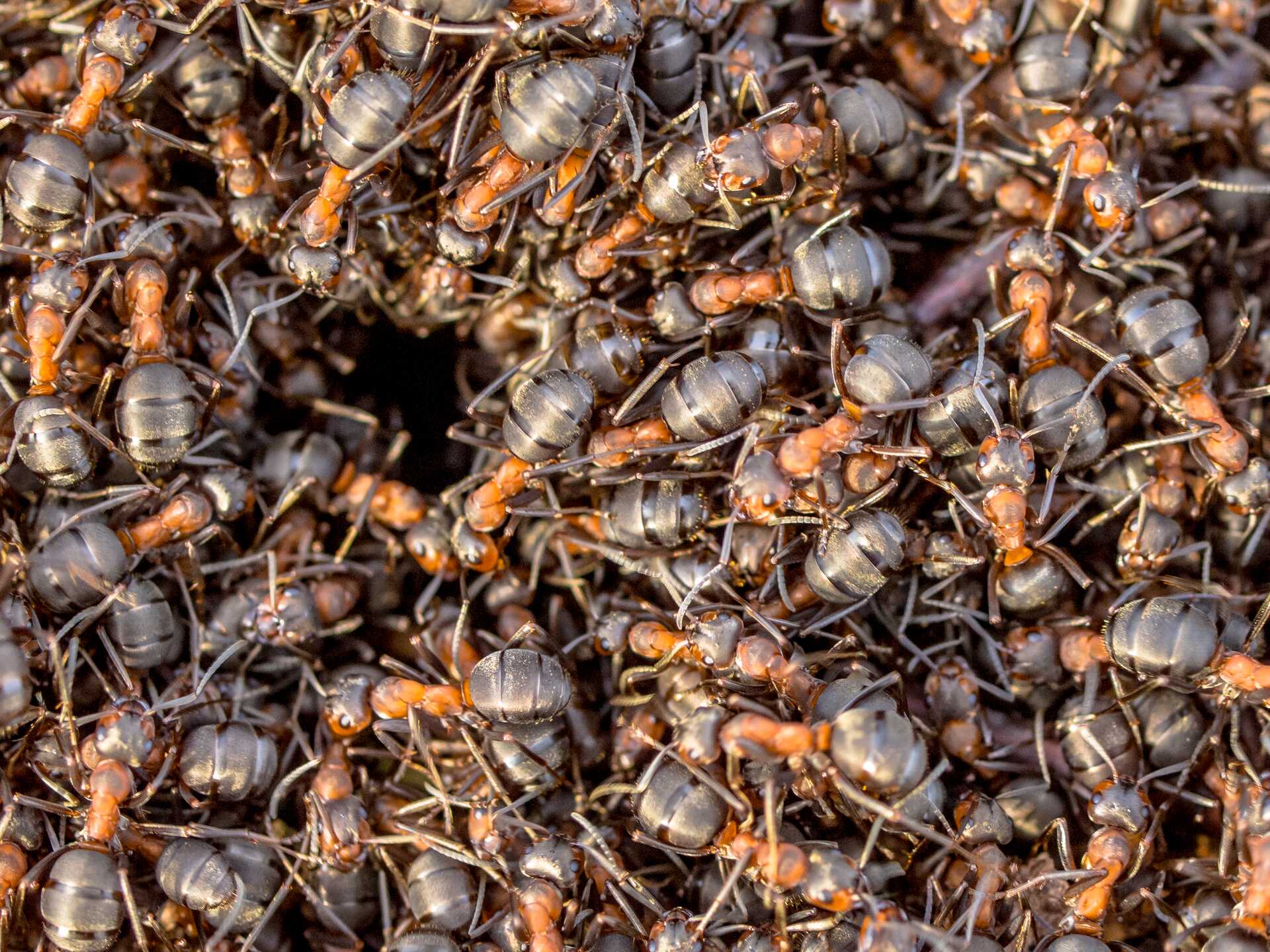
The ants in the kitchen are a tiny fraction of the colony. They are foragers, sent out to find food and water and report back. Killing them does nothing to the nest, where the queen keeps producing replacements.
It is the difference between mowing grass and removing roots. Colonies range from a few hundred to several hundred thousand depending on species, and foragers are replaced almost immediately.
This is why the ants reappear on the same schedule. Nothing about the colony changed.
The ants on a counter are foragers. The colony behind them can run to hundreds of thousands.
The scent trail survives the cleaning
Ants navigate by pheromone. A scout that finds food lays a chemical trail back to the nest, and every ant that follows it and finds food reinforces it. That is why a line of ants looks so organized: each one is reading the one before.
Ordinary cleaning removes crumbs and some of the trail, and not all of it. Faint chemical markers survive on surfaces, in grout lines, along the underside of a counter edge and in the seam between a countertop and a backsplash. Ants detect what we cannot.
If you are going to wipe a trail, the useful approach is a detergent or a vinegar solution along the entire route rather than just the visible section, and particularly along edges and seams rather than open floor.
The food is not what you think
Kitchens get cleaned and ants keep coming, which leads people to assume something is wrong with the cleaning. Usually the supply is somewhere nobody looks.
- Spills in the gap between a stove and a counter, or under a dishwasher
- Pet food left down, and the dust around the bowl
- Grease film on the wall behind a stove
- Recycling with residue in it, bottles and cans rinsed only roughly
- Fruit on a counter, and the ring a juice glass leaves
- The crumb tray of a toaster
- Trash bags and the bottom of the trash can
- Honey, syrup and jar lids in a cabinet
Ants need very little. A few grains of sugar sustains a trail for weeks.
A few grains behind an appliance supports a trail for weeks.
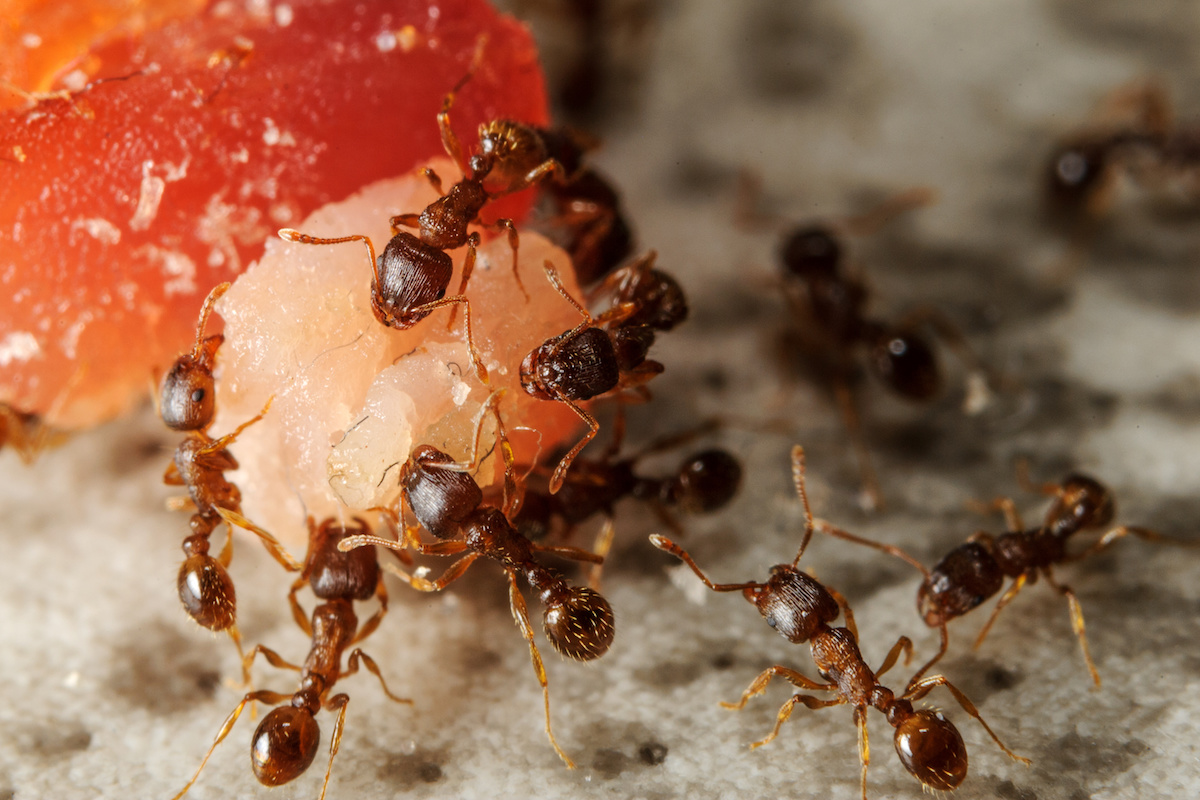
Many ants are not after food at all
This trips people up. Several species common in Pittsburgh houses are drawn to moisture as much as to food, which is why ant trails turn up in bathrooms, around a dishwasher, under a sink and along a basement wall where there is nothing to eat.
Carpenter ants go further again: they are drawn to damp wood because it is easier to excavate for a nest. Ants appearing repeatedly in one spot with no food nearby is worth treating as a moisture question rather than a cleaning one. Telling carpenter ants from other ants covers the identification.
The nest may not be in the house
A trail along a baseboard does not mean the colony lives behind it. Many foraging ants nest outdoors, under a patio slab, in a retaining wall, beneath mulch against the foundation or under a paving joint, and come inside only to feed.
That matters for two reasons. Indoor treatment alone will not reach an outdoor nest, and sealing the entry point simply moves the trail to another gap. The nest itself has to be found and dealt with.
Why sprays make it last longer
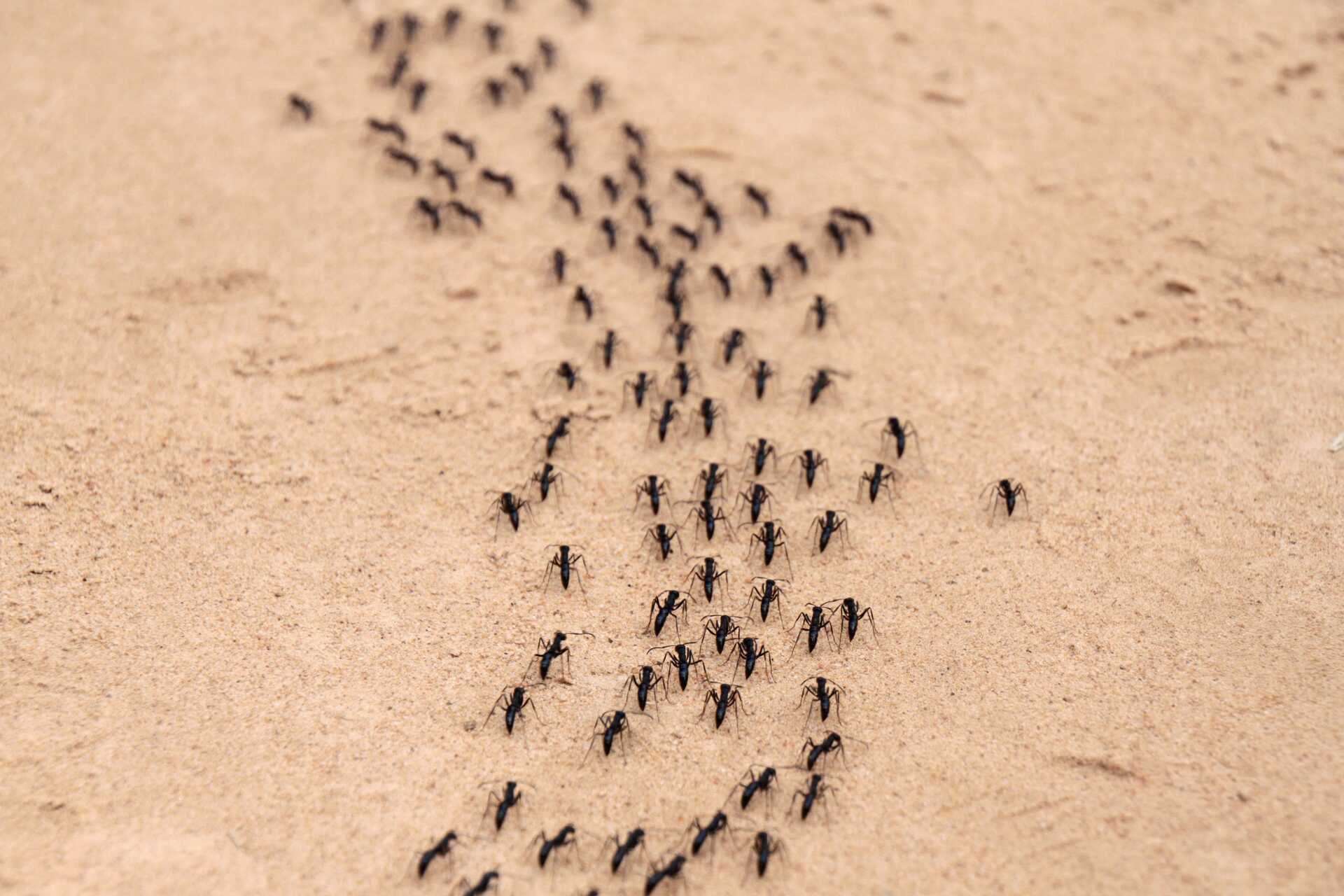
The reflex is a can of spray, and most retail ant sprays are repellent, which ants detect and avoid.
Spraying a trail kills the ants present and tells the rest of the colony that route is dangerous. They reroute. A single trail in the kitchen becomes several trails in different rooms, and in some species the colony responds to the pressure by budding, splitting into multiple smaller nests.
What was one problem is now three, each harder to find. The biggest mistakes people make with ants goes through this in more detail.
Baits work the opposite way. Workers carry the material back and feed it to the colony, including the queen, which is why bait appears to do nothing for several days and then everything stops at once.
Repellent spray scatters a colony rather than removing it.
The species that cause this in Pittsburgh
Three come up constantly in local houses, and they behave differently enough to matter.
Odorous house ants are small, dark and the usual culprit on a kitchen counter. Crushed, they smell faintly of rotten coconut. They nest in wall voids, under floors and outdoors under objects, and they bud readily, which is why spraying them makes things worse.
Pavement ants nest under slabs, driveways, patios and sidewalk joints, and come in at ground level. Small mounds of excavated soil at a paving seam are the giveaway.
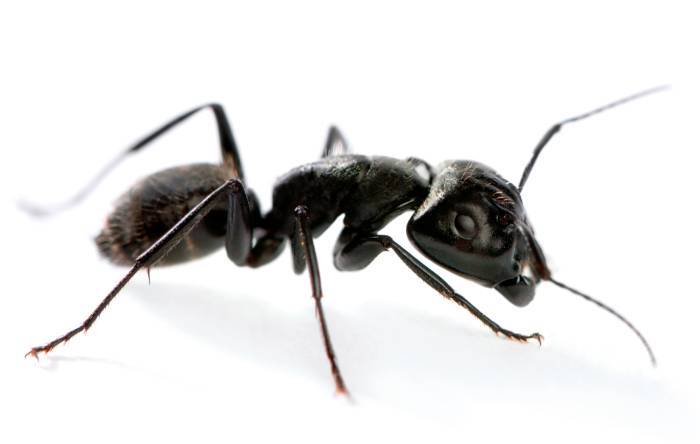
Carpenter ants are much larger, usually black, and excavate damp wood to nest. They do structural damage rather than just foraging, so they are the one species where identification changes the whole response.
A fourth species, pharaoh ants, is mainly an apartment building and commercial kitchen pest rather than a house pest, but it is the clearest example of why repellents backfire: sprayed colonies bud into several new ones.
Size and shape separate a carpenter ant from the small ants on a counter.
What actually ends it
- Identify the species, because carpenter ants and sugar feeding house ants need different handling
- Follow the trail to find where it enters, and if possible where it leads outside
- Stop spraying trails, and let the ants keep using the route while bait does its work
- Remove the food and moisture supporting them, including the hidden ones above
- Treat the colony, not the foragers
- Seal the entry point afterwards, not before
The order matters. Sealing first, or spraying first, is what turns a two week problem into a season of it.
Stewart Termite & Pest Control has handled Pittsburgh ant problems since 1987. If the same trail keeps coming back, call 412-822-7610 or request an estimate online.
Frequently Asked Questions
Why do ants keep coming back after I clean?
Cleaning removes the foragers and some of the scent trail, not the colony. The queen keeps producing workers, and faint pheromone markers survive on surfaces and edges, so the trail re-forms.
How do I get rid of an ant trail for good?
Treat the colony rather than the trail, usually with bait the workers carry back to the nest. Wiping the route with detergent or vinegar helps, but only alongside treatment.
Why are there ants when there is no food out?
Several common species are drawn to moisture as much as food, which is why trails appear in bathrooms, under sinks and along basement walls. Carpenter ants specifically seek damp wood for nesting.
Does killing ants attract more ants?
Not directly, but crushing them releases alarm pheromone, and repellent sprays push a colony to reroute or split into several nests, which makes the problem larger.
Is the ant nest inside my house?
Often not. Many foraging ants nest outdoors under slabs, walls, mulch or paving and only come inside to feed, which is why indoor treatment alone does not resolve it.
Why does ant bait seem to make things worse at first?
More ants appear because bait is a food source they recruit to. That is the material being carried back to the colony, and activity usually drops sharply within a week or two.